Before you start
Colonial Williamsburg is the restored eighteenth-century capital of Virginia, a living-history museum in the town of Williamsburg, between the James and York rivers. Its Historic Area is run by the Colonial Williamsburg Foundation, a private charity, and combines original buildings with careful reconstructions on their old foundations, staffed by costumed interpreters and working tradespeople. You can stroll the streets freely, but going inside most buildings requires a ticket, which you can buy at the Visitor Center or online. Duke of Gloucester Street, the town’s main street, runs for about a mile, and the streets are closed to most traffic. The route starts at the Capitol at the eastern end, follows the street west past the Raleigh Tavern and Market Square, detours up the Palace Green, returns past Bruton Parish Church, and finishes at the College of William & Mary.
Use it as a self-guided tour of Colonial Williamsburg: 8 stops in visit order, each played when you’re ready, at your own pace.
 Free preview · Stop 1
The Capitol
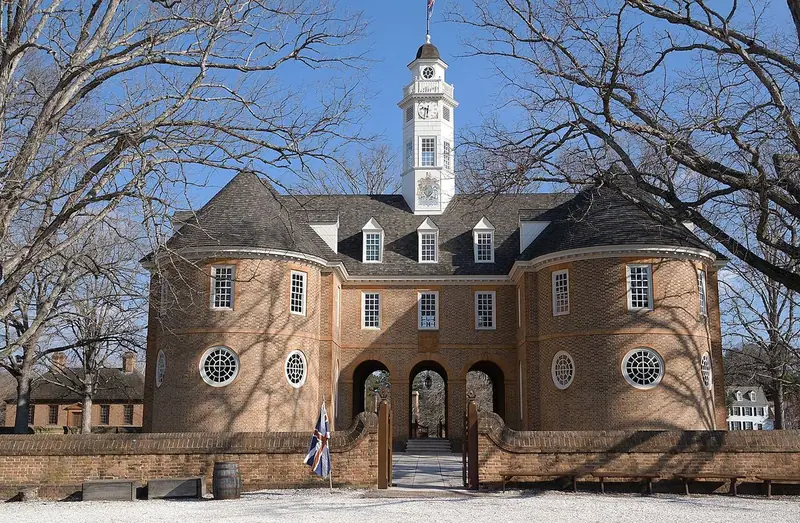
Begin at the eastern end of Duke of Gloucester Street, at the H-shaped brick building with a tall cupola. It is a reconstruction, built in the 1930s on the original foundations, of the Capitol completed in 1705, the seat of Virginia’s colonial government. One wing housed the House of Burgesses, the elected assembly whose roots go back to 1619, the first such assembly in English America; the other held the governor’s council and the General Court. In the second Capitol on this site, in 1765, Patrick Henry spoke out against the Stamp Act, and in May 1776 a Virginia convention meeting here voted to instruct its delegates in Philadelphia to propose independence. Look for the two chambers, joined by an arcade, and imagine Washington, Jefferson and Henry among the burgesses who sat here.
Photo: Smash the Iron Cage · CC BY-SA 4.0 · Wikimedia Commons
What to see at Colonial Williamsburg: 8 stops, in visit order
- 01
 The CapitolSeat of colonial governmentFree preview
- 02
 Raleigh TavernWhere patriots metIn the guide
- 03
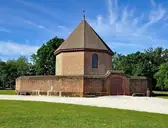 Magazine and CourthouseMarket SquareIn the guide
- 04
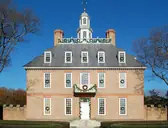 Governor’s PalaceResidence of royal governorsIn the guide
- 05
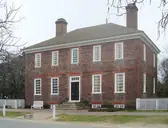 George Wythe HouseHome of Jefferson’s teacherIn the guide
- 06
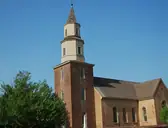 Bruton Parish ChurchChurch of the colonial capitalIn the guide
- 07
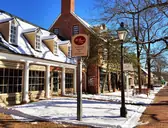 Duke of Gloucester StreetTrades and shopsIn the guide
- 08
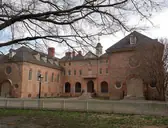 Wren BuildingCollege of William & MaryIn the guide
Site map of Colonial Williamsburg
History of Colonial Williamsburg
Williamsburg was built by the people of colonial Virginia, the first permanent English colony in North America, founded at Jamestown in 1607. The land had long been home to Algonquian-speaking peoples of the Powhatan paramount chiefdom. The colony’s capital moved here from Jamestown in 1699, and for eighty years Williamsburg was the political centre of Virginia, until the capital moved to Richmond in 1780. About half of the town’s eighteenth-century inhabitants were Black, most of them enslaved, and their labour built and ran much of the town. Virginia was a British colony until it joined the struggle for independence in 1776, and British rule over the colonies ended with the Treaty of Paris in 1783. The restoration began in 1926, led by the local rector W.
The full history continues in the guide.
Colonial Williamsburg guide: questions
How many stops does the Colonial Williamsburg guide have?
8 stops, in visit order: 1. The Capitol; 2. Raleigh Tavern; 3. Magazine and Courthouse; 4. Governor’s Palace; 5. George Wythe House; 6. Bruton Parish Church; 7. Duke of Gloucester Street; 8. Wren Building.
Can I do a self-guided tour of Colonial Williamsburg with this guide?
Yes. The guide is made for a self-guided tour: 8 stops in visit order, each with a photo, a story and a voice, so you can explore Colonial Williamsburg at your own pace, without joining a group. Download it before you go and it works offline.
How long is each guide?
The 8 stops add up to about 6 minutes of listening in total. You play each stop when you’re ready, so you can go at your own pace.
Does the guide work offline?
Yes, once it’s downloaded. The guide is a single self-contained web page (about 8.1 MB) with the photos, text and audio built in. Download it to your phone before you go (Wi-Fi is best); after that it opens in any modern browser on iPhone or Android, with no app, account or mobile signal needed.
Does it use GPS or need my location?
No. The guide doesn’t use GPS and doesn’t know where you are: you play each stop when you reach it. It works on iPhone and Android in any modern browser, and it’s in English.
What’s included?
One self-contained HTML guide: 8 stops in visit order, each with a photo, text and a voice, plus the story of who built the site.
Who built Colonial Williamsburg?
Williamsburg was built by the people of colonial Virginia, the first permanent English colony in North America, founded at Jamestown in 1607. The land had long been home to Algonquian-speaking peoples of the Powhatan paramount chiefdom.
Where is Colonial Williamsburg?
Colonial Williamsburg is the restored eighteenth-century capital of Virginia, a living-history museum in the town of Williamsburg, between the James and York rivers.
Is there a free audio guide to Colonial Williamsburg?
The first stop, The Capitol, is free to read and hear on this page, so you can try the Colonial Williamsburg audio tour before you buy. The full guide, with all 8 stops, is a one-off purchase: download it once and it’s yours to keep, working offline.
Is the Colonial Williamsburg guide worth it?
If you’d like to know what you’re looking at, yes. For $10 you get 8 stops in visit order, each with a photo, a short history and a voice you play when you’re ready, plus a site map of the stops, and about 6 minutes of listening in all. It’s short on purpose, so you spend your time looking, not listening. It’s yours to keep, works offline and needs no app. The first stop is free on this page, so you can try it before you buy. If you’d like hours of detail, a guided tour will go deeper.
Audio guide or guided tour?
It depends how you like to visit. This guide lets you explore Colonial Williamsburg at your own pace, at any time, for a one-off price. A guided tour gives you a live expert you can ask questions, but at fixed times and usually for a higher price. Many people use both: a tour for the big picture, and the guide to read beforehand or to revisit the stops in their own time.
Is this the official Colonial Williamsburg guide?
No. It’s an independent guide by The Historian Guide, not affiliated with or endorsed by the operator of Colonial Williamsburg. For tickets and opening hours, check the official site operator before you go.
Does the guide include entry tickets or opening hours?
No. The guide is a digital companion only. Admission to Colonial Williamsburg is separate, so check the official site operator for current tickets and opening hours before you go.
- Stop 1 · The Capitol: Smash the Iron Cage · CC BY-SA 4.0 · Wikimedia Commons · resized
- Stop 2 · Raleigh Tavern: William the Younger · CC BY-SA 4.0 · Wikimedia Commons · resized
- Stop 3 · Magazine and Courthouse: P. Hughes · CC BY 4.0 · Wikimedia Commons · resized
- Stop 4 · Governor’s Palace: Fletcher6 · CC BY-SA 3.0 · Wikimedia Commons · resized
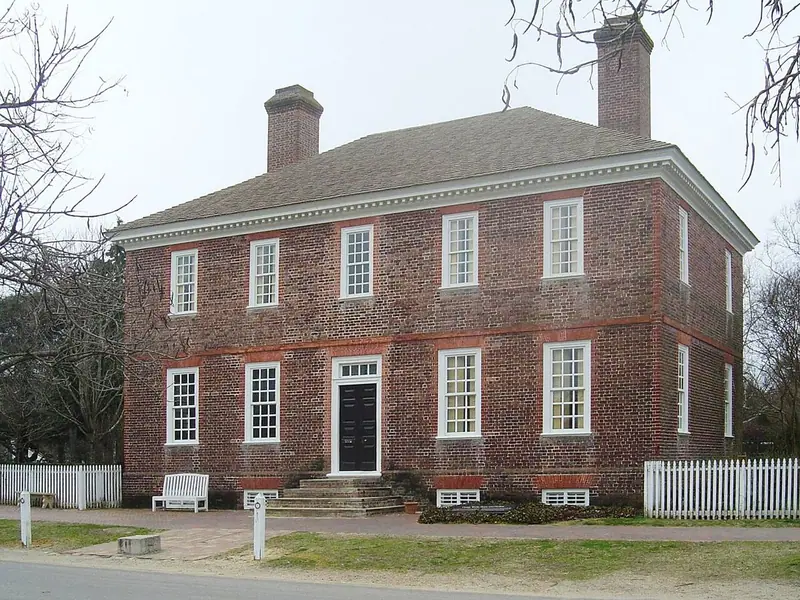
- Stop 5 · George Wythe House (also the cover): Cbaile19 · CC0 · Wikimedia Commons · resized
- Stop 6 · Bruton Parish Church: Harvey Barrison from Massapequa, NY, USA · CC BY-SA 2.0 · Wikimedia Commons · resized
- Stop 7 · Duke of Gloucester Street: David Broad · CC BY 3.0 · Wikimedia Commons · resized
- Stop 8 · Wren Building: Smash the Iron Cage · CC BY-SA 4.0 · Wikimedia Commons · resized


All photographs from Wikimedia Commons under the licences shown.
More guides in United States
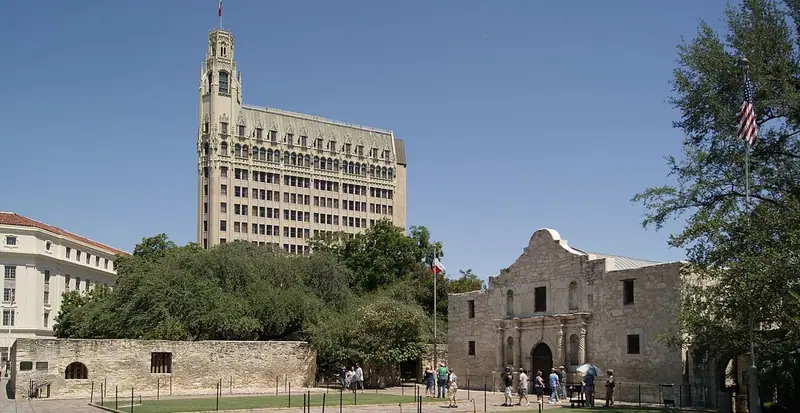 Spanish Colonial7 stops · 1718–1782
Alamo and San Antonio Missions audio guide
From the battle-scarred Alamo to Mission San José and the Espada Aqueduct, the five missions that made San Antonio.
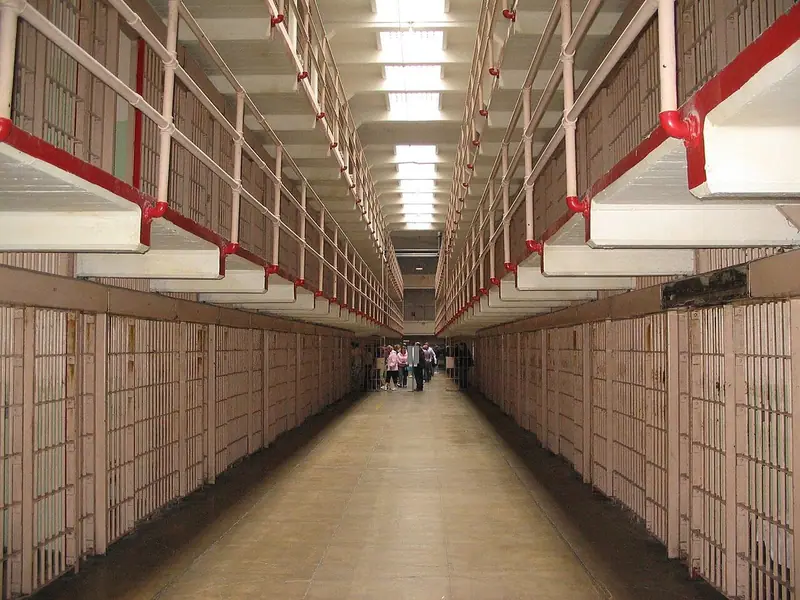 Modern8 stops · 1853–1963
Alcatraz audio guide
Step off the boat into the cellhouse, walk D Block and the yard, and hear the story of the 1962 escape.
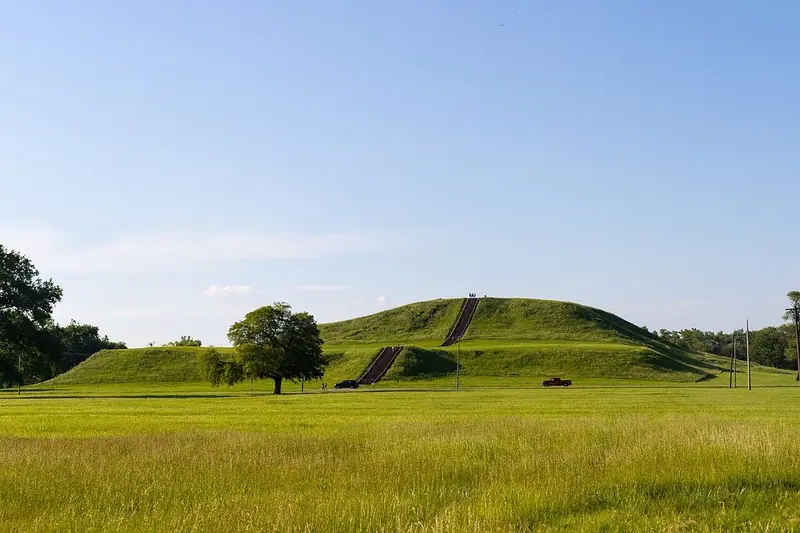 Mississippian8 stops · c. 1050 – 1350 CE
Cahokia Mounds audio guide
The largest pre-Columbian city north of Mexico, with Monks Mound, the Grand Plaza and the remains of its solar calendar posts.
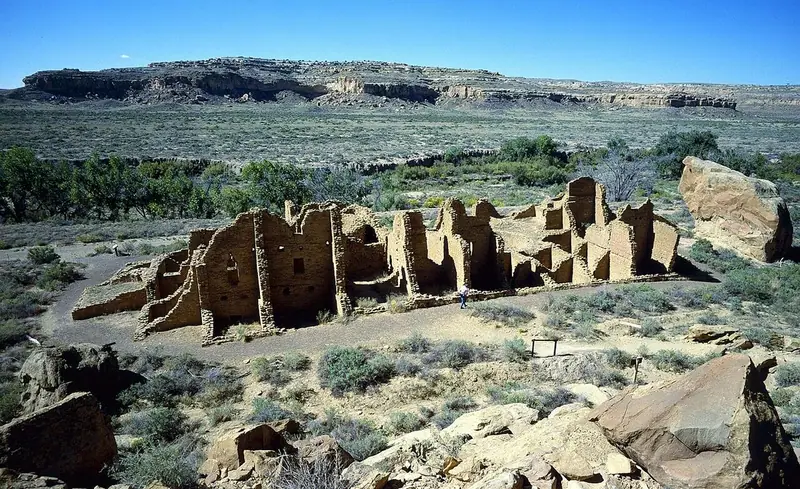 Ancestral Puebloan8 stops · c. 850–1150 CE
Chaco Canyon audio guide
The great houses of Pueblo Bonito and Chetro Ketl, planned buildings of stone that rose several storeys high.
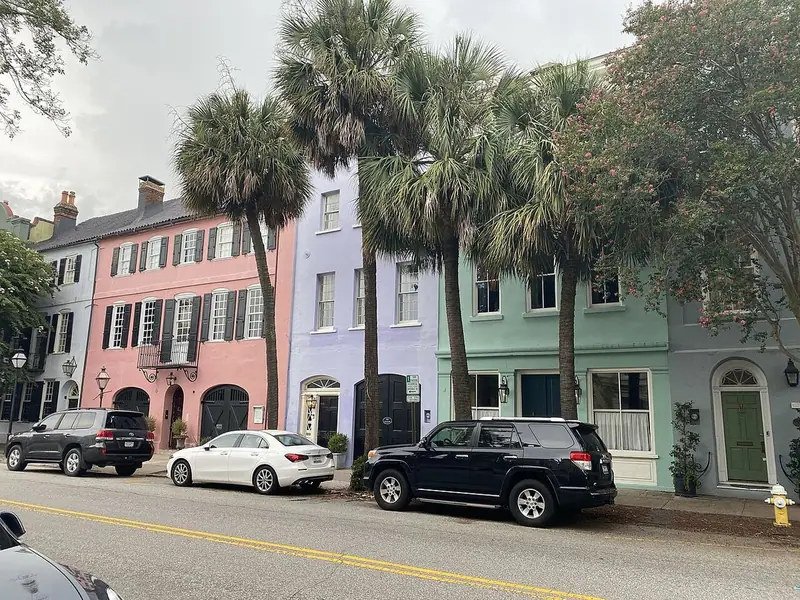 Colonial American12 stops · 17th–20th century CE
Charleston audio guide
Mother Emanuel and Beth Elohim, St Philip’s and the Huguenot Church, the Old Slave Mart, the Four Corners of Law, Rainbow Row and the Battery.
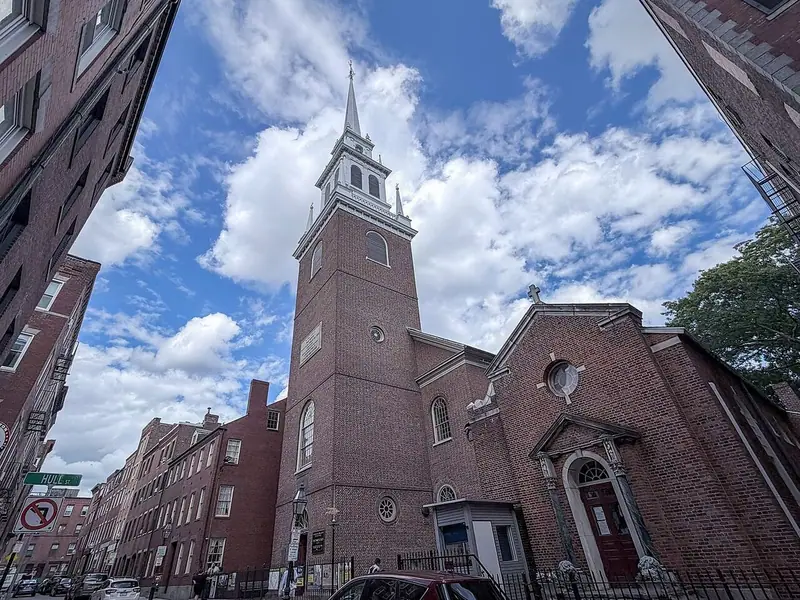 Colonial American9 stops · 1660s–1790s
Freedom Trail audio guide
Follow the red line from Boston Common past Faneuil Hall and Paul Revere’s house to the USS Constitution.
Every guide, in every country
Colonial Williamsburg and every other guide we publish, including future ones. One payment, no subscription.