Before you start
Charleston stands on a low peninsula between the Ashley and Cooper rivers, where they meet to form a wide harbour on the Atlantic coast of South Carolina. Founded by the English in 1670, it grew into one of the richest cities in colonial America, built on the trade in rice, indigo and cotton and on the labour of enslaved Africans and their descendants. Its streets of brick and stuccoed houses, with tall church spires and shady gardens, have survived fire, war, earthquake and hurricanes. This guide starts at Mother Emanuel church in the north of the old city, walks south through its churches, markets and public buildings, and ends at the gardens on the tip of the peninsula, looking out over the harbour to Fort Sumter.
Use it as a self-guided tour of Charleston: 12 stops in visit order, each played when you’re ready, at your own pace.
 Free preview · Stop 1
Mother Emanuel AME Church
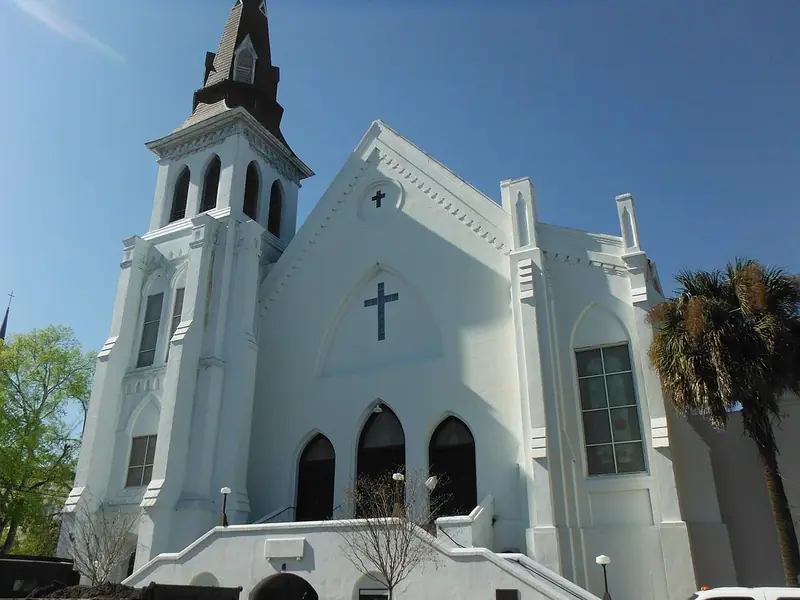
Begin at Emanuel African Methodist Episcopal Church on Calhoun Street, known as Mother Emanuel, the oldest church of its denomination in the South. Its roots go back to the free and enslaved Black Methodists of the city, who in 1816 left the white-led churches to form their own congregation. One of its founders was Denmark Vesey, a free carpenter. In 1822 he was accused of planning a great rising of the enslaved, and he and many others were hanged; the church was burned, and for decades its members had to worship in secret. After the Civil War the congregation was reorganised, and built a wooden church here in 1872. It was damaged in the earthquake of 1886, and the present brick church, in the Gothic Revival style, was built in 1891 and 1892. On 17 June 2015 a white supremacist murdered nine members of the church during a Bible study. Please be respectful here.
Photo: EvanGuthrie · CC BY-SA 4.0 · Wikimedia Commons
What to see at Charleston: 12 stops, in visit order
- 01
 Mother Emanuel AME ChurchA church of freedom and faithFree preview
- 02
 Kahal Kadosh Beth ElohimA Greek temple for a Jewish congregationIn the guide
- 03
 Market Hall and the City MarketA market four blocks longIn the guide
- 04
 The Circular Congregational ChurchGraves and the Gateway WalkIn the guide
- 05
 St Philip's ChurchA steeple above Church StreetIn the guide
- 06
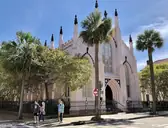 The Huguenot Church and the Dock Street TheatreFrench Protestants and the first theatreIn the guide
- 07
 The Old Slave MartWhere human beings were soldIn the guide
- 08
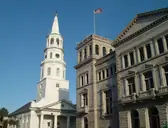 The Four Corners of LawChurch, city, county and nationIn the guide
- 09
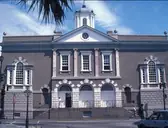 The Old Exchange and Provost DungeonCustoms house, prison and ballroomIn the guide
- 10
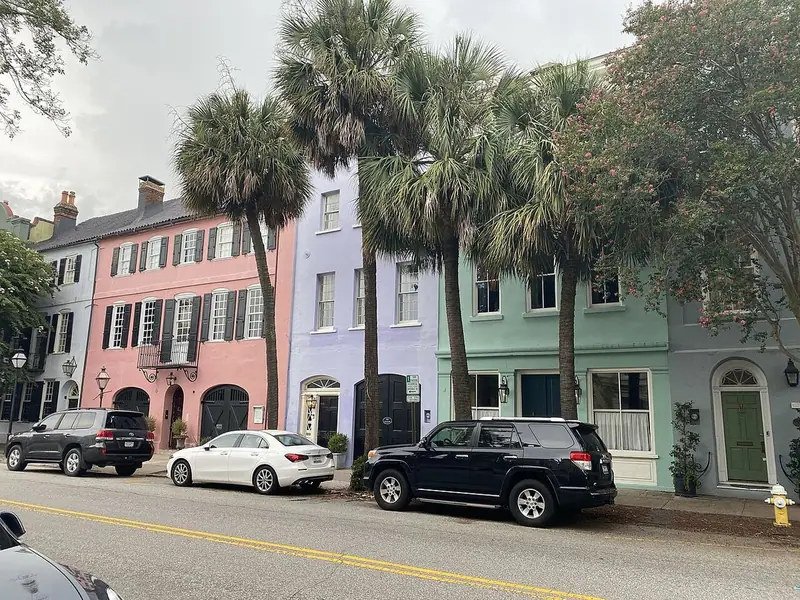
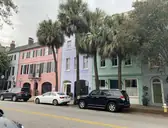 Rainbow RowHouses in pastel coloursIn the guide
- 11
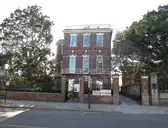 The Nathaniel Russell HouseA staircase that seems to floatIn the guide
- 12
 White Point Garden and the BatteryThe tip of the peninsulaIn the guide
History of Charleston
This coast was home to Native American peoples such as the Kiawah long before the English came. In 1670 English settlers founded Charles Town, named after King Charles the Second, on the west bank of the Ashley River, and in 1680 they moved it to this peninsula, which was easier to defend. The colony welcomed Protestants of many kinds, French Huguenots and Jews, and Charleston became a city of many churches. Its wealth came from plantations worked by enslaved people, and many of those brought from Africa to North America landed here. During the Revolution the British held the city from 1780 to 1782. In April 1861 the first shots of the Civil War were fired on Fort Sumter in the harbour.
The full history continues in the guide.
Charleston guide: questions
How many stops does the Charleston guide have?
12 stops, in visit order: 1. Mother Emanuel AME Church; 2. Kahal Kadosh Beth Elohim; 3. Market Hall and the City Market; 4. The Circular Congregational Church; 5. St Philip's Church; 6. The Huguenot Church and the Dock Street Theatre; 7. The Old Slave Mart; 8. The Four Corners of Law; 9. The Old Exchange and Provost Dungeon; 10. Rainbow Row; 11. The Nathaniel Russell House; 12. White Point Garden and the Battery.
Can I do a self-guided tour of Charleston with this guide?
Yes. The guide is made for a self-guided tour: 12 stops in visit order, each with a photo, a story and a voice, so you can explore Charleston at your own pace, without joining a group. Download it before you go and it works offline.
How long is each guide?
The 12 stops add up to about 9 minutes of listening in total. You play each stop when you’re ready, so you can go at your own pace.
Does the guide work offline?
Yes, once it’s downloaded. The guide is a single self-contained web page (about 11.7 MB) with the photos, text and audio built in. Download it to your phone before you go (Wi-Fi is best); after that it opens in any modern browser on iPhone or Android, with no app, account or mobile signal needed.
Does it use GPS or need my location?
No. The guide doesn’t use GPS and doesn’t know where you are: you play each stop when you reach it. It works on iPhone and Android in any modern browser, and it’s in English.
What’s included?
One self-contained HTML guide: 12 stops in visit order, each with a photo, text and a voice, plus the story of who built the site.
Who built Charleston?
This coast was home to Native American peoples such as the Kiawah long before the English came. In 1670 English settlers founded Charles Town, named after King Charles the Second, on the west bank of the Ashley River, and in 1680 they moved it to this peninsula, which was easier to defend.
Where is Charleston?
Charleston stands on a low peninsula between the Ashley and Cooper rivers, where they meet to form a wide harbour on the Atlantic coast of South Carolina.
Is there a free audio guide to Charleston?
The first stop, Mother Emanuel AME Church, is free to read and hear on this page, so you can try the Charleston audio tour before you buy. The full guide, with all 12 stops, is a one-off purchase: download it once and it’s yours to keep, working offline.
Is the Charleston guide worth it?
If you’d like to know what you’re looking at, yes. For $10 you get 12 stops in visit order, each with a photo, a short history and a voice you play when you’re ready, about 9 minutes of listening in all. It’s short on purpose, so you spend your time looking, not listening. It’s yours to keep, works offline and needs no app. The first stop is free on this page, so you can try it before you buy. If you’d like hours of detail, a guided tour will go deeper.
Audio guide or guided tour?
It depends how you like to visit. This guide lets you explore Charleston at your own pace, at any time, for a one-off price. A guided tour gives you a live expert you can ask questions, but at fixed times and usually for a higher price. Many people use both: a tour for the big picture, and the guide to read beforehand or to revisit the stops in their own time.
Is this the official Charleston guide?
No. It’s an independent guide by The Historian Guide, not affiliated with or endorsed by the operator of Charleston. For tickets and opening hours, check the official site operator before you go.
Does the guide include entry tickets or opening hours?
No. The guide is a digital companion only. Admission to Charleston is separate, so check the official site operator for current tickets and opening hours before you go.
- Stop 1 · Mother Emanuel AME Church: EvanGuthrie · CC BY-SA 4.0 · Wikimedia Commons · resized
- Stop 2 · Kahal Kadosh Beth Elohim: Oleg Yunakov · CC BY-SA 4.0 · Wikimedia Commons · resized
- Stop 3 · Market Hall and the City Market: Brian Zinnel · CC BY-SA 4.0 · Wikimedia Commons · resized
- Stop 4 · The Circular Congregational Church: David Ratledge · CC BY 4.0 · Wikimedia Commons · resized
- Stop 5 · St Philip's Church: Billy Hathorn · CC BY-SA 3.0 · Wikimedia Commons · resized
- Stop 6 · The Huguenot Church and the Dock Street Theatre: Warren LeMay from Covington, KY, United States · CC0 · Wikimedia Commons · resized
- Stop 7 · The Old Slave Mart: Warren LeMay from Covington, KY, United States · CC0 · Wikimedia Commons · resized
- Stop 8 · The Four Corners of Law: Brian Zinnel · CC BY-SA 4.0 · Wikimedia Commons · resized
- Stop 9 · The Old Exchange and Provost Dungeon: JERRYE & ROY KLOTZ MD · CC BY-SA 3.0 · Wikimedia Commons · resized
- Stop 10 · Rainbow Row (also the cover): Thomson200 · CC0 · Wikimedia Commons · resized
- Stop 11 · The Nathaniel Russell House: Dougtone · CC BY-SA 2.0 · Wikimedia Commons · resized
- Stop 12 · White Point Garden and the Battery: Antony-22 · CC BY-SA 4.0 · Wikimedia Commons · resized


All photographs from Wikimedia Commons under the licences shown.
More guides in United States
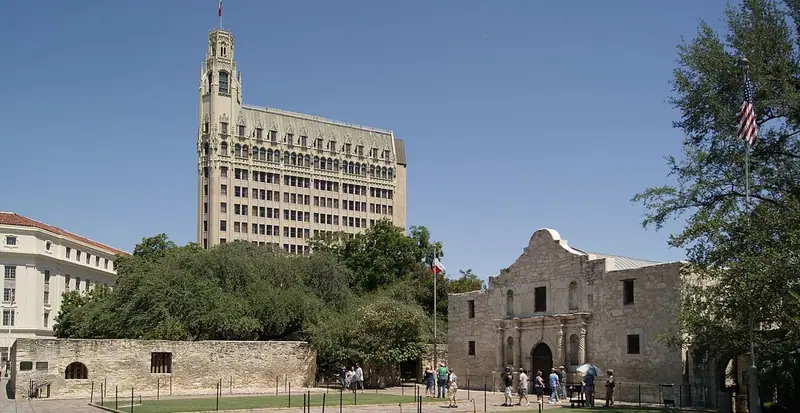 Spanish Colonial7 stops · 1718–1782
Alamo and San Antonio Missions audio guide
From the battle-scarred Alamo to Mission San José and the Espada Aqueduct, the five missions that made San Antonio.
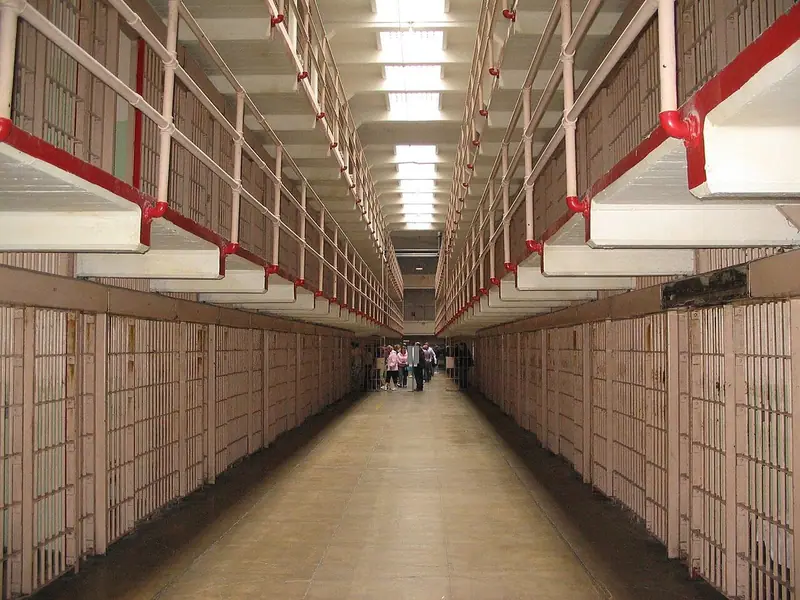 Modern8 stops · 1853–1963
Alcatraz audio guide
Step off the boat into the cellhouse, walk D Block and the yard, and hear the story of the 1962 escape.
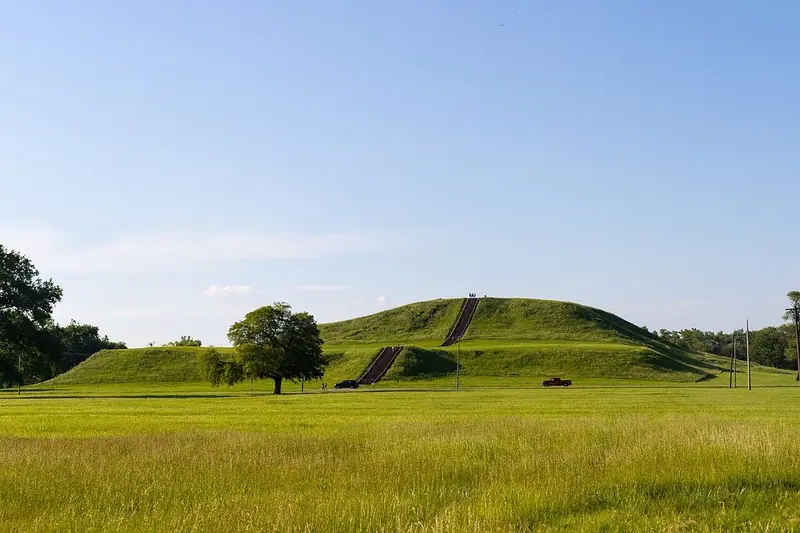 Mississippian8 stops · c. 1050 – 1350 CE
Cahokia Mounds audio guide
The largest pre-Columbian city north of Mexico, with Monks Mound, the Grand Plaza and the remains of its solar calendar posts.
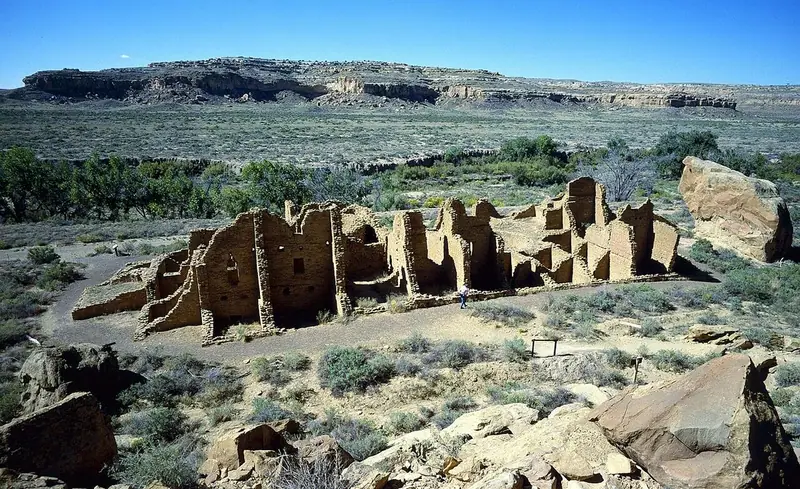 Ancestral Puebloan8 stops · c. 850–1150 CE
Chaco Canyon audio guide
The great houses of Pueblo Bonito and Chetro Ketl, planned buildings of stone that rose several storeys high.
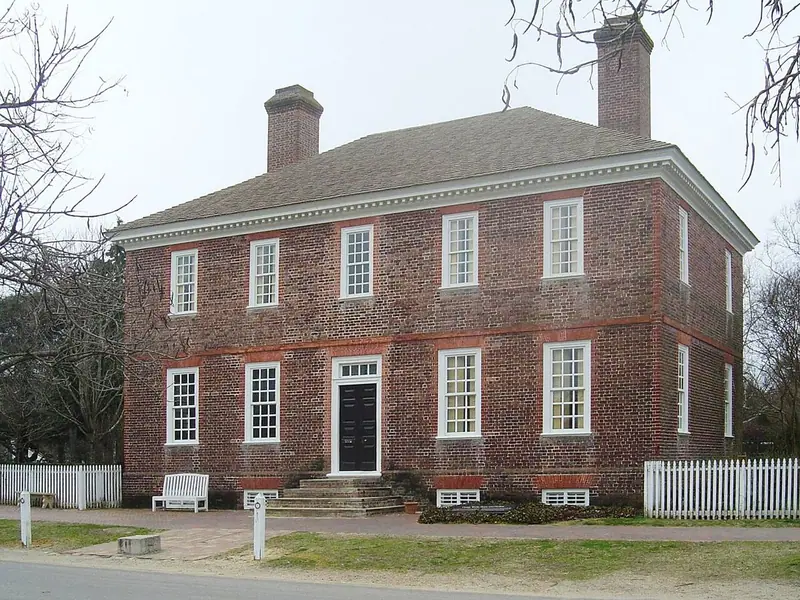 Colonial American8 stops · 1699–1780
Colonial Williamsburg audio guide
Duke of Gloucester Street, from the Capitol to the Governor’s Palace, in the restored capital of colonial Virginia.
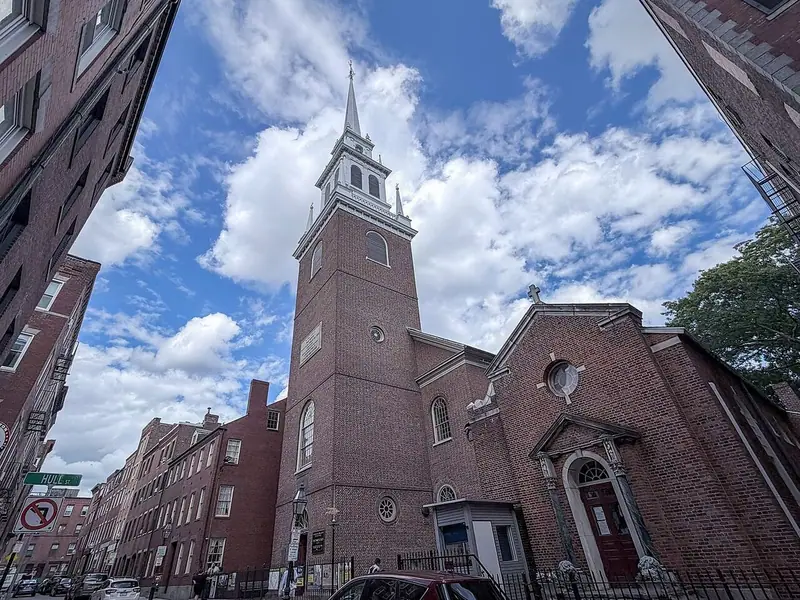 Colonial American9 stops · 1660s–1790s
Freedom Trail audio guide
Follow the red line from Boston Common past Faneuil Hall and Paul Revere’s house to the USS Constitution.
Every guide, in every country
Charleston and every other guide we publish, including future ones. One payment, no subscription.