Before you start
The Casbah is the old town of Algiers, a steep triangle of white houses climbing from the seafront to a citadel on the hill above the bay. It lies in the heart of the capital, next to the Place des Martyrs, and is easy to reach by metro, taxi or on foot from the modern city centre. UNESCO inscribed it as a World Heritage Site in 1992, and nearly fifty thousand people still live here, so this is a living neighbourhood, not an open-air museum. The lanes are narrow, steep and stepped, with a drop of more than a hundred metres from top to bottom; cars cannot enter, and wear sturdy shoes with a good grip. Dress modestly, ask before photographing people, and remove your shoes where required in mosques, which non-Muslims may not always be able to enter. Many visitors explore with a local guide, as the lanes are a maze. The route starts by the sea in the lower Casbah and climbs to the citadel, ending at the shrine of the city’s patron saint.
Use it as a self-guided tour of the Casbah of Algiers: 9 stops in visit order, each played when you’re ready, at your own pace.
 Free preview · Stop 1
Palais des Raïs
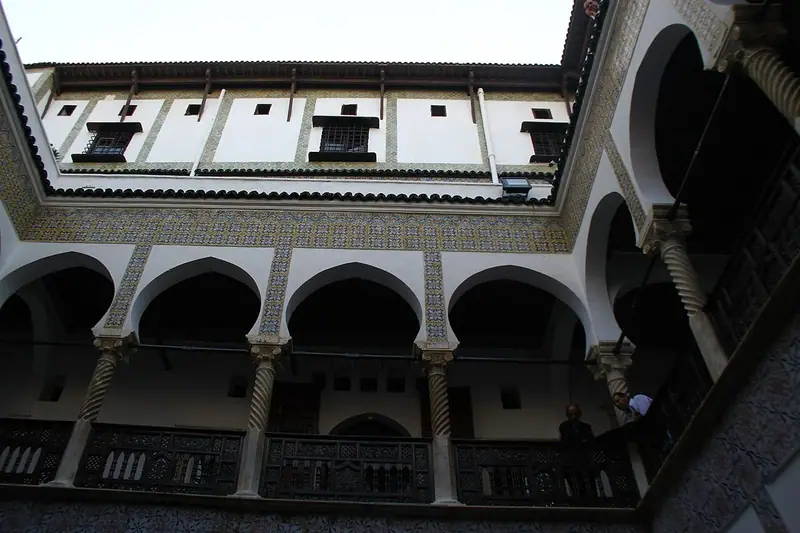
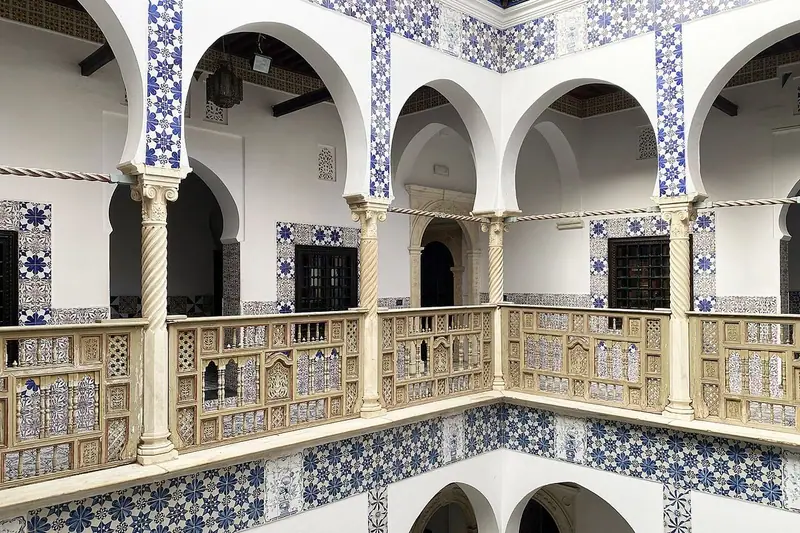
Begin on the seafront at the Palais des Raïs, also known as Bastion 23. This group of three palaces and six small fishermen’s houses, built between the sixteenth and eighteenth centuries, is one of the last surviving signs that the Casbah once ran right down to the sea, before the colonial waterfront boulevards cut it off. The story of the site begins with a fort, Bordj ez-Zoubia, built in 1576 by Ramdan Pacha to defend the lower town. Palace 18, the only one with a recorded history, was built around 1750 and is credited to Mami Arnaout, a corsair captain, or raïs. After 1830 it served as a girls' boarding school, the consulate of the United States and a library. Restored between 1987 and 1993, it opened in 1994 as an arts and cultural centre. Look up at the tiled galleries around its courtyards.
Photo: Bernard Gagnon · CC BY 4.0 · Wikimedia Commons
What to see at the Casbah of Algiers: 9 stops, in visit order
- 01
 Palais des RaïsThe last houses by the seaFree preview
- 02
 Djamaa el KebirThe oldest mosque in AlgiersIn the guide
- 03
 Djamaa el DjedidThe New Mosque by the harbourIn the guide
- 04
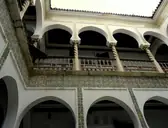 Dar AzizaA palace of the old rulersIn the guide
- 05
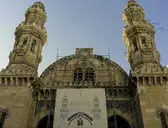 Ketchaoua MosqueMosque, cathedral and mosque againIn the guide
- 06
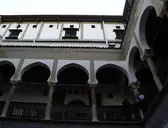 Dar Mustapha PachaHalf a million tilesIn the guide
- 07
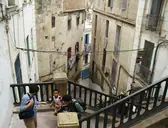 Upper CasbahLanes, patios and terracesIn the guide
- 08
 CitadelWhere a fan began a conquestIn the guide
- 09
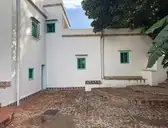 Sidi AbderrahmaneThe patron saint of AlgiersIn the guide
Site map of the Casbah of Algiers
History of the Casbah of Algiers
The Casbah was shaped by Berber dynasties and by the Ottoman Regency of Algiers. The Ottoman Empire, founded in Anatolia around 1299, grew into one of the great powers of the Mediterranean and lasted until 1922. The site began as a Phoenician trading post in the sixth century BCE, later the Roman town of Icosium. In the tenth century the Zirid Berber dynasty founded the medieval city of al-Djazaïr, which was then ruled by a succession of Berber dynasties. In 1516 the city’s leader called on the corsair Aruj Barbarossa to help against the Spanish, and Algiers became the capital of an Ottoman regency, ruled by pashas and later by deys. It grew rich as a base for corsairs, and the walls, palaces, mosques and patio houses that survive mostly date from this period.
The full history continues in the guide.
Casbah of Algiers guide: questions
How many stops does the Casbah of Algiers guide have?
9 stops, in visit order: 1. Palais des Raïs; 2. Djamaa el Kebir; 3. Djamaa el Djedid; 4. Dar Aziza; 5. Ketchaoua Mosque; 6. Dar Mustapha Pacha; 7. Upper Casbah; 8. Citadel; 9. Sidi Abderrahmane.
Can I do a self-guided tour of the Casbah of Algiers with this guide?
Yes. The guide is made for a self-guided tour: 9 stops in visit order, each with a photo, a story and a voice, so you can explore the Casbah of Algiers at your own pace, without joining a group. Download it before you go and it works offline.
How long do you need at the Casbah of Algiers?
We suggest allowing half a day. The 9 stops add up to about 7 minutes of listening, and you play each one when you’re ready, so you can linger wherever you like.
How long is each guide?
The 9 stops add up to about 7 minutes of listening in total. You play each stop when you’re ready, so you can go at your own pace.
Does the guide work offline?
Yes, once it’s downloaded. The guide is a single self-contained web page (about 8.1 MB) with the photos, text and audio built in. Download it to your phone before you go (Wi-Fi is best); after that it opens in any modern browser on iPhone or Android, with no app, account or mobile signal needed.
Does it use GPS or need my location?
No. The guide doesn’t use GPS and doesn’t know where you are: you play each stop when you reach it. It works on iPhone and Android in any modern browser, and it’s in English.
What’s included?
One self-contained HTML guide: 9 stops in visit order, each with a photo, text and a voice, plus the story of who built the site.
Who built the Casbah of Algiers?
The Casbah was shaped by Berber dynasties and by the Ottoman Regency of Algiers. The Ottoman Empire, founded in Anatolia around 1299, grew into one of the great powers of the Mediterranean and lasted until 1922.
Where is the Casbah of Algiers?
The Casbah is the old town of Algiers, a steep triangle of white houses climbing from the seafront to a citadel on the hill above the bay.
Is there a free audio guide to the Casbah of Algiers?
The first stop, Palais des Raïs, is free to read and hear on this page, so you can try the Casbah of Algiers audio tour before you buy. The full guide, with all 9 stops, is a one-off purchase: download it once and it’s yours to keep, working offline.
Is the Casbah of Algiers guide worth it?
If you’d like to know what you’re looking at, yes. For $10 you get 9 stops in visit order, each with a photo, a short history and a voice you play when you’re ready, plus a site map of the stops, and about 7 minutes of listening in all. It’s short on purpose, so you spend your time looking, not listening. It’s yours to keep, works offline and needs no app. The first stop is free on this page, so you can try it before you buy. If you’d like hours of detail, a guided tour will go deeper.
Audio guide or guided tour?
It depends how you like to visit. This guide lets you explore the Casbah of Algiers at your own pace, at any time, for a one-off price. A guided tour gives you a live expert you can ask questions, but at fixed times and usually for a higher price. Many people use both: a tour for the big picture, and the guide to read beforehand or to revisit the stops in their own time.
Is this the official Casbah of Algiers guide?
No. It’s an independent guide by The Historian Guide, not affiliated with or endorsed by the operator of the Casbah of Algiers. For tickets and opening hours, check the official site operator before you go.
Does the guide include entry tickets or opening hours?
No. The guide is a digital companion only. Admission to the Casbah of Algiers is separate, so check the official site operator for current tickets and opening hours before you go.
- Stop 1 · Palais des Raïs: Bernard Gagnon · CC BY 4.0 · Wikimedia Commons · resized
- Stop 2 · Djamaa el Kebir: Benzita Abdelhadi · CC BY-SA 4.0 · Wikimedia Commons · resized
- Stop 3 · Djamaa el Djedid: Kingdz16 · CC BY 4.0 · Wikimedia Commons · resized
- Stop 4 · Dar Aziza: InesNines · CC BY-SA 4.0 · Wikimedia Commons · resized
- Stop 5 · Ketchaoua Mosque: Dan Sloan · CC BY-SA 2.0 · Wikimedia Commons · resized
- Stop 6 · Dar Mustapha Pacha (also the cover): Credits to Reda Kerbush / Wikimedia Commons · CC BY-SA 3.0 · Wikimedia Commons · resized
- Stop 7 · Upper Casbah: Credits to Reda Kerbush / Wikimedia Commons · CC BY-SA 3.0 · Wikimedia Commons · resized
- Stop 8 · Citadel: Bernard Gagnon · CC BY 4.0 · Wikimedia Commons · resized
- Stop 9 · Sidi Abderrahmane: Reda Kerbush · CC BY-SA 4.0 · Wikimedia Commons · resized


All photographs from Wikimedia Commons under the licences shown.
More guides in Algeria
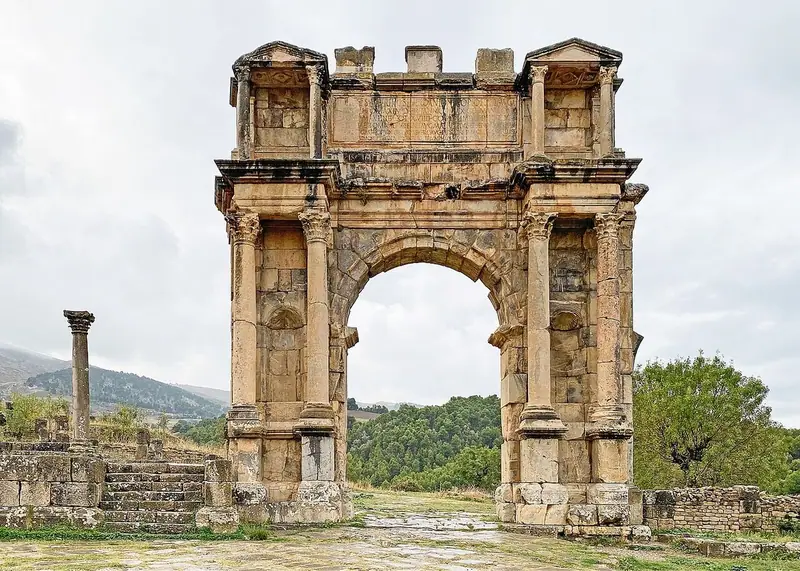 Roman8 stops · c. 96 CE – 6th century
Djémila audio guide
Roman Cuicul on its mountain spur, from the Severan square and the Arch of Caracalla to the theatre and the Christian quarter.
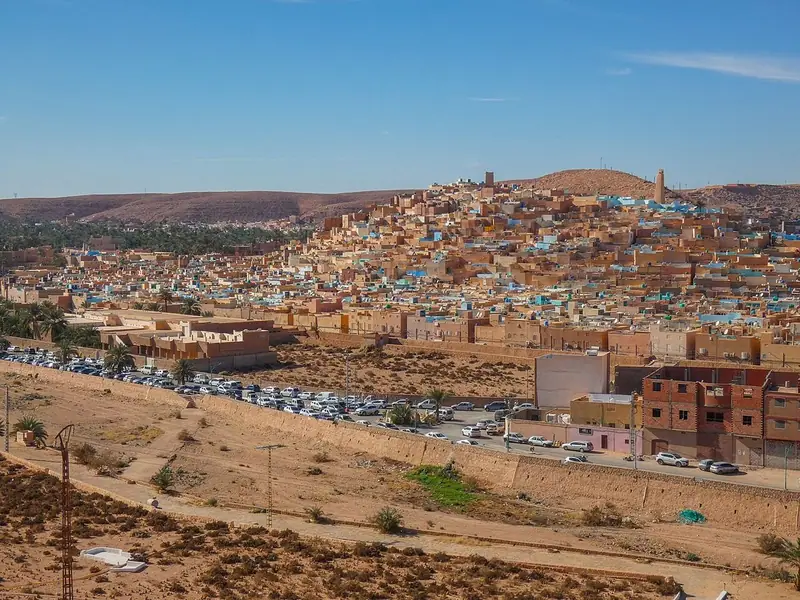 Amazigh9 stops · 1012 – 1350 (foundation of the five ksour)
M’zab Valley audio guide
Five fortified Ibadi towns of the northern Sahara: Ghardaïa, Melika, Beni Isguen, Bou Noura and El Atteuf, with watchtower minarets, palm groves and an ancient system for sharing floodwater.
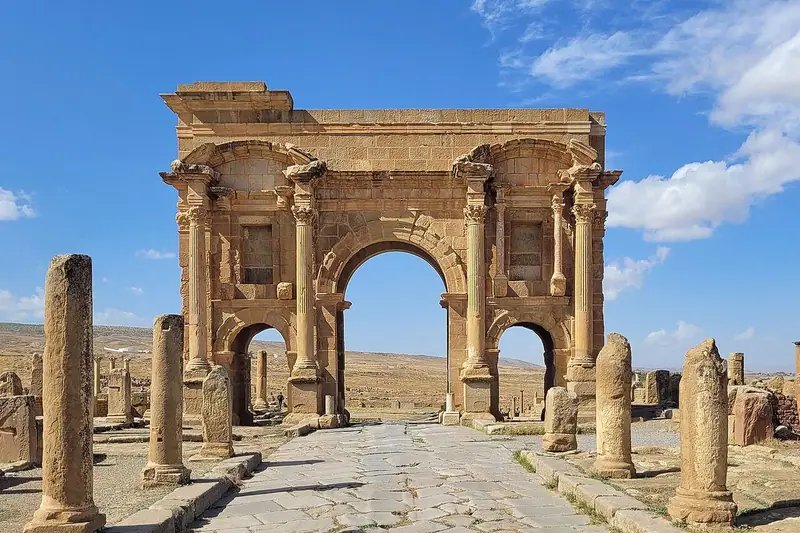 Roman8 stops · 100 CE – 7th century
Timgad audio guide
Trajan’s veterans' colony on the high plains: a perfect Roman grid of stone streets, a theatre, a library and the Arch of Trajan.
 Roman8 stops · 6th century BCE – 6th century CE
Tipasa audio guide
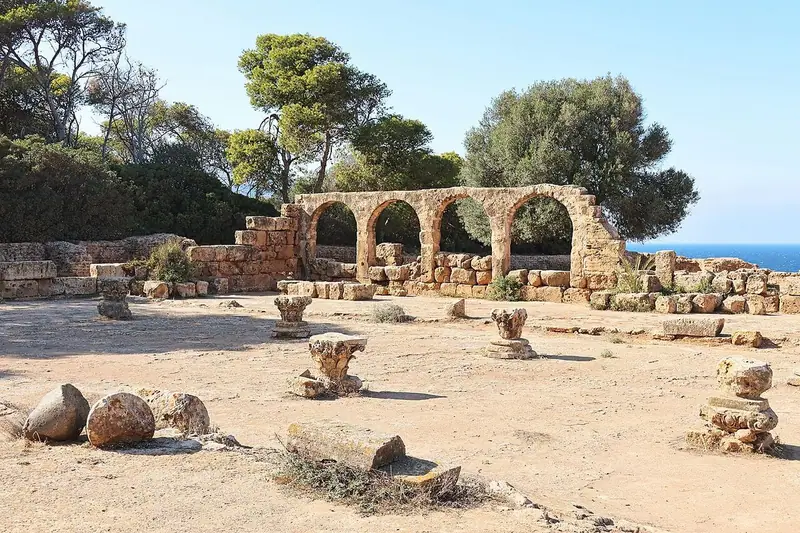
Roman ruins among pines above the Mediterranean, from the amphitheatre and the Great Basilica to Camus’s stele and the Royal Mausoleum of Mauretania.
Every guide, in every country
Casbah of Algiers and every other guide we publish, including future ones. One payment, no subscription.