Before you start
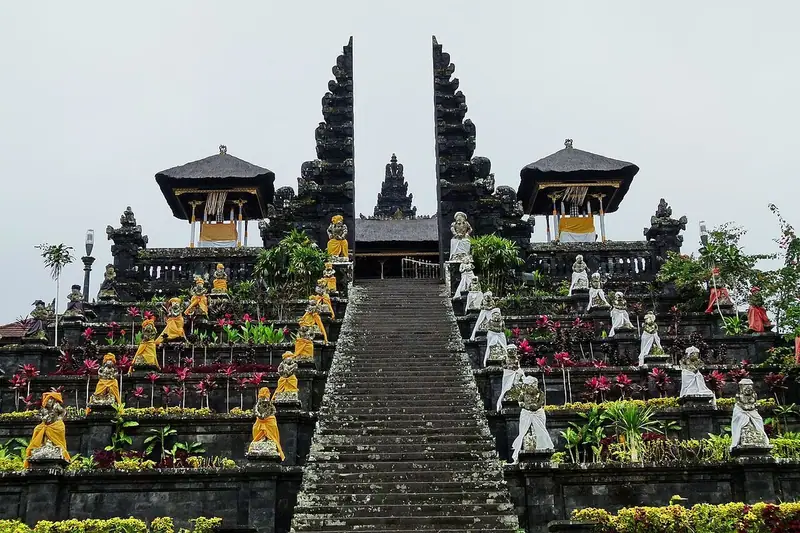
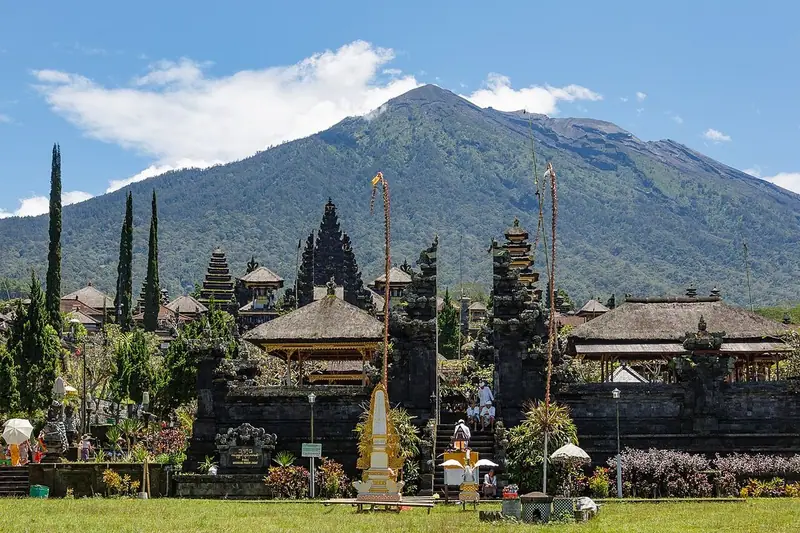
Pura Besakih climbs the south-western slopes of Mount Agung, Bali’s highest and holiest volcano, at a height of nearly a thousand metres. It is the largest and most sacred temple of Balinese Hinduism, often called the Mother Temple, and it is not a single building but a complex of twenty-three related temples spread along ridges, with the great temple of Pura Penataran Agung at its centre. It is a living place of worship, with dozens of festivals every year. Visitors walk the paths and outer terraces but may not enter the inner courtyards, which are reserved for worshippers. This guide climbs from the approach to Penataran Agung, then visits the temples of Vishnu and Brahma on either side, and ends with the mountain itself.
Use it as a self-guided tour of Besakih Temple: 8 stops in visit order, each played when you’re ready, at your own pace.
 Free preview · Stop 1
The Approach
Begin on the long approach to the temple, which climbs towards Mount Agung. Balinese temples are oriented towards the mountain, the direction considered most sacred, and at Besakih the whole complex is laid out along a single line that leads the worshipper upwards towards the peak. Look ahead at the tiers of shrines rising up the slope and the dark, pagoda-like roofs of the meru towers. On festival days the path is crowded with families in white and gold, carrying tall offerings of fruit, flowers and rice cakes on their heads. Visitors should wear a sarong and a sash, which are a sign of respect, and many local people also offer their services as guides. Remember that this is above all a place of worship, and that ceremonies take priority over sightseeing.
Photo: CEphoto, Uwe Aranas · CC BY-SA 3.0 · Wikimedia Commons
What to see at Besakih Temple: 8 stops, in visit order
- 01
 The ApproachPath to the MountainFree preview
- 02
 Candi BentarSplit GatewayIn the guide
- 03
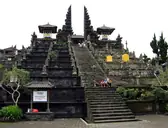 Kori AgungGreat GatewayIn the guide
- 04
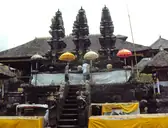 Padma TigaTriple Lotus ThroneIn the guide
- 05
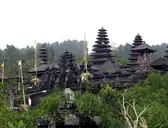 Pura Batu MadegTemple of VishnuIn the guide
- 06
 The Meru TowersRoofs of the GodsIn the guide
- 07
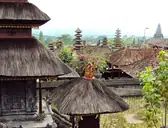 Pura Kiduling KretegTemple of BrahmaIn the guide
- 08
 Mount AgungThe Sacred VolcanoIn the guide
Site map of Besakih Temple
History of Besakih Temple
Besakih was built by the Hindu people of Bali, whose religion blends Hindu and Buddhist traditions from Java with older Balinese beliefs in the spirits of mountains and ancestors. The stepped stone bases of some of its temples resemble far older terraced sanctuaries, and the site was probably sacred long before Hinduism arrived. It was certainly a Hindu place of worship by the late thirteenth century, when Javanese rulers first extended their power to Bali. By the fifteenth century it had become the state temple of the Gelgel dynasty, which ruled Bali from the fourteenth century until 1686. Its successor, the kingdom of Klungkung, kept that role until the Dutch conquest of 1908. The temples have been rebuilt many times, and the central lotus throne probably dates from about the seventeenth century.
Besakih Temple guide: questions
How many stops does the Besakih Temple guide have?
8 stops, in visit order: 1. The Approach; 2. Candi Bentar; 3. Kori Agung; 4. Padma Tiga; 5. Pura Batu Madeg; 6. The Meru Towers; 7. Pura Kiduling Kreteg; 8. Mount Agung.
Can I do a self-guided tour of Besakih Temple with this guide?
Yes. The guide is made for a self-guided tour: 8 stops in visit order, each with a photo, a story and a voice, so you can explore Besakih Temple at your own pace, without joining a group. Download it before you go and it works offline.
How long is each guide?
The 8 stops add up to about 6 minutes of listening in total. You play each stop when you’re ready, so you can go at your own pace.
Does the guide work offline?
Yes, once it’s downloaded. The guide is a single self-contained web page (about 7.2 MB) with the photos, text and audio built in. Download it to your phone before you go (Wi-Fi is best); after that it opens in any modern browser on iPhone or Android, with no app, account or mobile signal needed.
Does it use GPS or need my location?
No. The guide doesn’t use GPS and doesn’t know where you are: you play each stop when you reach it. It works on iPhone and Android in any modern browser, and it’s in English.
What’s included?
One self-contained HTML guide: 8 stops in visit order, each with a photo, text and a voice, plus the story of who built the site.
Who built Besakih Temple?
Besakih was built by the Hindu people of Bali, whose religion blends Hindu and Buddhist traditions from Java with older Balinese beliefs in the spirits of mountains and ancestors. The stepped stone bases of some of its temples resemble far older terraced sanctuaries, and the site was probably sacred long before Hinduism arrived.
Where is Besakih Temple?
Pura Besakih climbs the south-western slopes of Mount Agung, Bali’s highest and holiest volcano, at a height of nearly a thousand metres.
Is there a free audio guide to Besakih Temple?
The first stop, The Approach, is free to read and hear on this page, so you can try the Besakih Temple audio tour before you buy. The full guide, with all 8 stops, is a one-off purchase: download it once and it’s yours to keep, working offline.
Is the Besakih Temple guide worth it?
If you’d like to know what you’re looking at, yes. For $10 you get 8 stops in visit order, each with a photo, a short history and a voice you play when you’re ready, plus a site map of the stops, and about 6 minutes of listening in all. It’s short on purpose, so you spend your time looking, not listening. It’s yours to keep, works offline and needs no app. The first stop is free on this page, so you can try it before you buy. If you’d like hours of detail, a guided tour will go deeper.
Audio guide or guided tour?
It depends how you like to visit. This guide lets you explore Besakih Temple at your own pace, at any time, for a one-off price. A guided tour gives you a live expert you can ask questions, but at fixed times and usually for a higher price. Many people use both: a tour for the big picture, and the guide to read beforehand or to revisit the stops in their own time.
Is this the official Besakih Temple guide?
No. It’s an independent guide by The Historian Guide, not affiliated with or endorsed by the operator of Besakih Temple. For tickets and opening hours, check the official site operator before you go.
Does the guide include entry tickets or opening hours?
No. The guide is a digital companion only. Admission to Besakih Temple is separate, so check the official site operator for current tickets and opening hours before you go.
- Stop 1 · The Approach: Photo by CEphoto, Uwe Aranas or alternatively © CEphoto, Uwe Aranas · CC BY-SA 3.0 · Wikimedia Commons · resized
- Stop 2 · Candi Bentar (also the cover): Schnobby · CC BY-SA 3.0 · Wikimedia Commons · resized
- Stop 3 · Kori Agung: Michael Gunther · CC BY-SA 4.0 · Wikimedia Commons · resized
- Stop 4 · Padma Tiga: DayakSibiriak · CC BY-SA 4.0 · Wikimedia Commons · resized
- Stop 5 · Pura Batu Madeg: Michael Gunther · CC BY-SA 4.0 · Wikimedia Commons · resized
- Stop 6 · The Meru Towers: Philip Nalangan · CC BY 4.0 · Wikimedia Commons · resized
- Stop 7 · Pura Kiduling Kreteg: DayakSibiriak · CC BY-SA 4.0 · Wikimedia Commons · resized
- Stop 8 · Mount Agung: Slleong · CC0 · Wikimedia Commons · resized


All photographs from Wikimedia Commons under the licences shown.
More guides in Indonesia
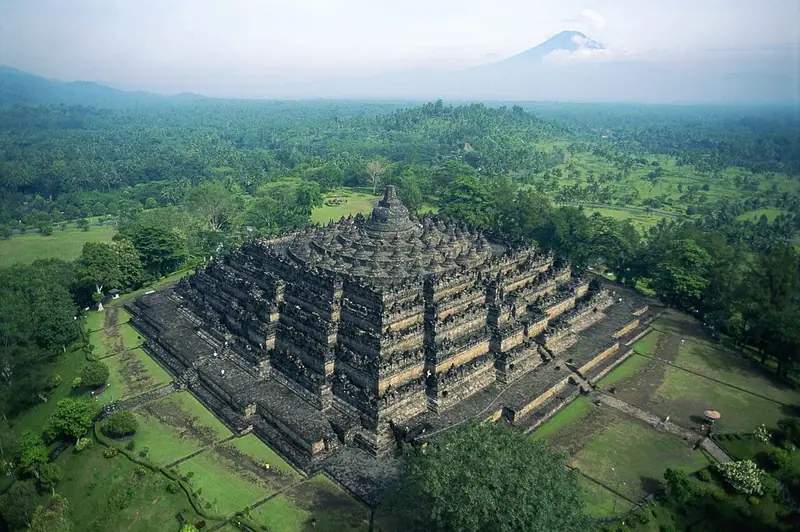 Sailendra8 stops · c. 780–830 CE
Borobudur audio guide
Circle upwards past the life of the Buddha in stone, gallery after gallery, to the stupas of the circular terraces.
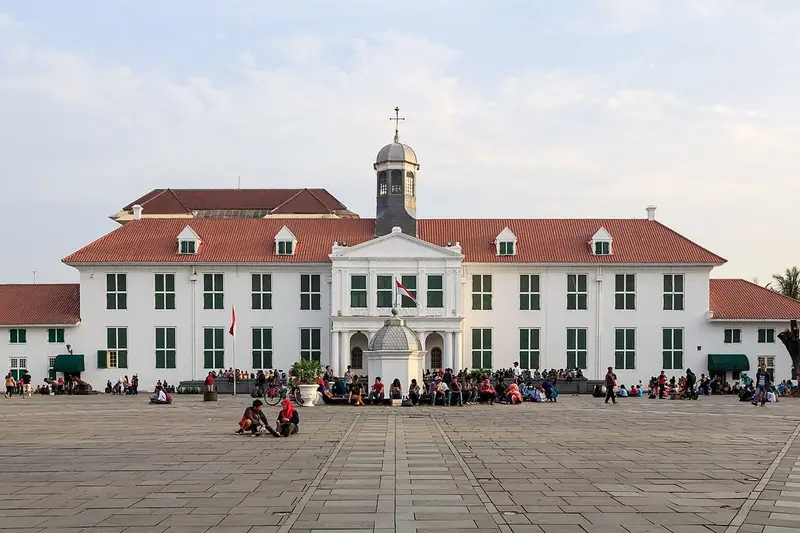 Dutch Colonial8 stops · 1619–1799 CE
Kota Tua Jakarta audio guide
The cobbled square of old Batavia, Asian headquarters of the Dutch East India Company, past the Red Shop to the old harbour of Sunda Kelapa.
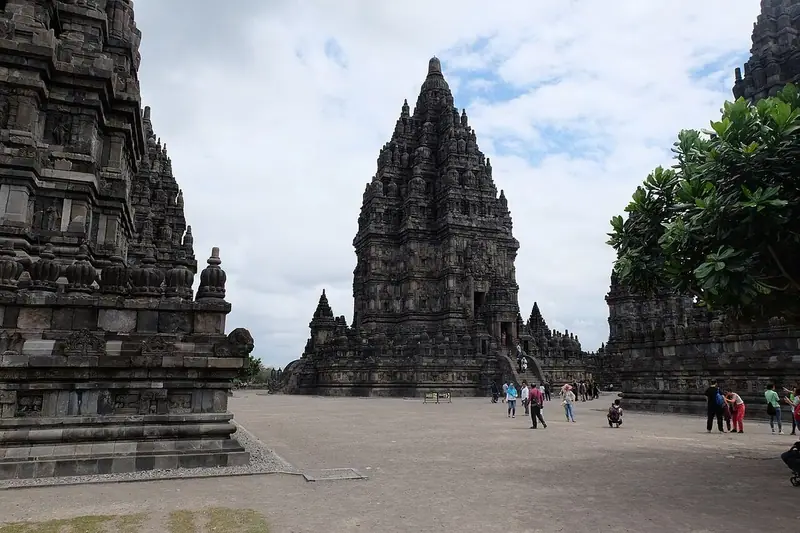 Mataram8 stops · c. 850 CE
Prambanan audio guide
Soaring stone towers to Shiva, Vishnu and Brahma, wrapped in reliefs of the Ramayana.
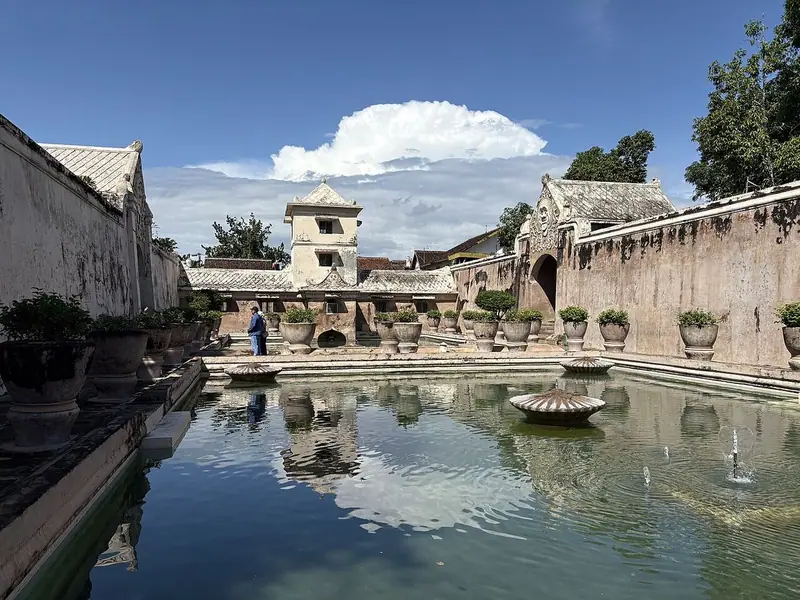 Yogyakarta Sultanate8 stops · from 1755 CE
Yogyakarta Kraton audio guide
Explore the living palace of the Sultan of Yogyakarta, built in 1755–56, then walk on through the old lanes to Taman Sari, the Water Castle.
Every guide, in every country
Besakih Temple and every other guide we publish, including future ones. One payment, no subscription.