Before you start
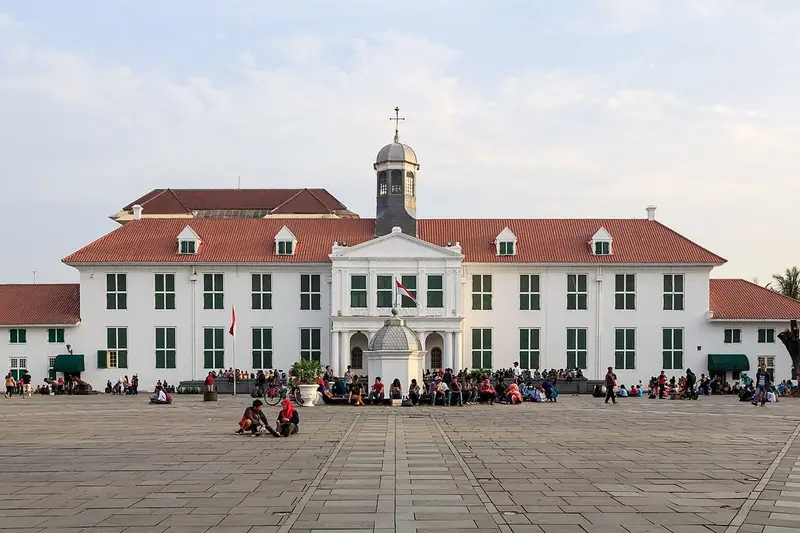
Kota Tua, the Old Town, is the historic heart of Jakarta, in the north of the city near the sea. Here stood Batavia, the walled port that the Dutch East India Company made its Asian headquarters in the seventeenth century, and many of its colonial buildings survive around the cobbled square of Fatahillah. Today the area is busy with museums, cafés, street performers and families hiring brightly painted bicycles. This guide begins on Fatahillah Square with the old city hall and the museums around it, then heads north along the old canal of Kali Besar, past the Red Shop and the old drawbridge, to the historic harbour of Sunda Kelapa. The route is flat, but the heat can be intense, so start early.
Use it as a self-guided tour of Kota Tua Jakarta: 8 stops in visit order, each played when you’re ready, at your own pace.
 Free preview · Stop 1
Fatahillah Square
Begin on Fatahillah Square, the old town square of Batavia, today a wide cobbled space surrounded by colonial buildings. It is named after Fatahillah, the commander from the Sultanate of Demak who took the port of Sunda Kelapa in 1527 and renamed it Jayakarta, a date which Jakarta still celebrates as its foundation. Under Dutch rule this was the centre of civic life, where proclamations were read, markets were held and criminals were publicly punished. Look at the fountain in the middle, rebuilt after old drawings. Around you stand the old city hall to the south, the former court of justice to the east and the Wayang Museum to the west. On the north side is the well-known Café Batavia, in a nineteenth-century building. Watch the crowds of visitors cycling round the square on hired bicycles.
Photo: CEphoto, Uwe Aranas · CC BY-SA 3.0 · Wikimedia Commons
What to see at Kota Tua Jakarta: 8 stops, in visit order
- 01
 Fatahillah SquareHeart of BataviaFree preview
- 02
 Jakarta History MuseumThe Old City HallIn the guide
- 03
 Fine Arts and Ceramics MuseumThe Old Court of JusticeIn the guide
- 04
 Si JagurThe Lucky CannonIn the guide
- 05
 Wayang MuseumPuppets and a Lost ChurchIn the guide
- 06
 Kali Besar and Toko MerahCanal and Red ShopIn the guide
- 07
 Kota Intan BridgeThe Old DrawbridgeIn the guide
- 08
 Sunda KelapaThe Old HarbourIn the guide
Site map of Kota Tua Jakarta
History of Kota Tua Jakarta
Kota Tua was built largely by the Dutch East India Company, the VOC, a trading company founded in 1602 that ruled much of the Indonesian archipelago until it was dissolved in 1799, when the Dutch state took over its possessions. In 1619 the company’s governor-general, Jan Pieterszoon Coen, captured the Javanese port of Jayakarta and founded Batavia on its ruins. The town was laid out with canals, walls and a castle, in the manner of a Dutch city, and grew rich on the spice trade. Its population included Chinese, Javanese and other Asian communities as well as Europeans. In the nineteenth century the colonial government moved its centre south, and Batavia, renamed Jakarta, became the capital of independent Indonesia, proclaimed in 1945.
Kota Tua Jakarta guide: questions
How many stops does the Kota Tua Jakarta guide have?
8 stops, in visit order: 1. Fatahillah Square; 2. Jakarta History Museum; 3. Fine Arts and Ceramics Museum; 4. Si Jagur; 5. Wayang Museum; 6. Kali Besar and Toko Merah; 7. Kota Intan Bridge; 8. Sunda Kelapa.
Can I do a self-guided tour of Kota Tua Jakarta with this guide?
Yes. The guide is made for a self-guided tour: 8 stops in visit order, each with a photo, a story and a voice, so you can explore Kota Tua Jakarta at your own pace, without joining a group. Download it before you go and it works offline.
How long is each guide?
The 8 stops add up to about 6 minutes of listening in total. You play each stop when you’re ready, so you can go at your own pace.
Does the guide work offline?
Yes, once it’s downloaded. The guide is a single self-contained web page (about 7.2 MB) with the photos, text and audio built in. Download it to your phone before you go (Wi-Fi is best); after that it opens in any modern browser on iPhone or Android, with no app, account or mobile signal needed.
Does it use GPS or need my location?
No. The guide doesn’t use GPS and doesn’t know where you are: you play each stop when you reach it. It works on iPhone and Android in any modern browser, and it’s in English.
What’s included?
One self-contained HTML guide: 8 stops in visit order, each with a photo, text and a voice, plus the story of who built the site.
Who built Kota Tua Jakarta?
Kota Tua was built largely by the Dutch East India Company, the VOC, a trading company founded in 1602 that ruled much of the Indonesian archipelago until it was dissolved in 1799, when the Dutch state took over its possessions. In 1619 the company’s governor-general, Jan Pieterszoon Coen, captured the Javanese port of Jayakarta and founded Batavia on its ruins.
Where is Kota Tua Jakarta?
Kota Tua, the Old Town, is the historic heart of Jakarta, in the north of the city near the sea.
Is there a free audio guide to Kota Tua Jakarta?
The first stop, Fatahillah Square, is free to read and hear on this page, so you can try the Kota Tua Jakarta audio tour before you buy. The full guide, with all 8 stops, is a one-off purchase: download it once and it’s yours to keep, working offline.
Is the Kota Tua Jakarta guide worth it?
If you’d like to know what you’re looking at, yes. For $10 you get 8 stops in visit order, each with a photo, a short history and a voice you play when you’re ready, plus a site map of the stops, and about 6 minutes of listening in all. It’s short on purpose, so you spend your time looking, not listening. It’s yours to keep, works offline and needs no app. The first stop is free on this page, so you can try it before you buy. If you’d like hours of detail, a guided tour will go deeper.
Audio guide or guided tour?
It depends how you like to visit. This guide lets you explore Kota Tua Jakarta at your own pace, at any time, for a one-off price. A guided tour gives you a live expert you can ask questions, but at fixed times and usually for a higher price. Many people use both: a tour for the big picture, and the guide to read beforehand or to revisit the stops in their own time.
Is this the official Kota Tua Jakarta guide?
No. It’s an independent guide by The Historian Guide, not affiliated with or endorsed by the operator of Kota Tua Jakarta. For tickets and opening hours, check the official site operator before you go.
Does the guide include entry tickets or opening hours?
No. The guide is a digital companion only. Admission to Kota Tua Jakarta is separate, so check the official site operator for current tickets and opening hours before you go.
- Stop 1 · Fatahillah Square: Photo by CEphoto, Uwe Aranas or alternatively © CEphoto, Uwe Aranas · CC BY-SA 3.0 · Wikimedia Commons · resized
- Stop 2 · Jakarta History Museum (also the cover): Photo by CEphoto, Uwe Aranas or alternatively © CEphoto, Uwe Aranas · CC BY-SA 3.0 · Wikimedia Commons · resized
- Stop 3 · Fine Arts and Ceramics Museum: Radosław Botev · CC BY 3.0 pl · Wikimedia Commons · resized
- Stop 4 · Si Jagur: Photo by CEphoto, Uwe Aranas or alternatively © CEphoto, Uwe Aranas · CC BY-SA 3.0 · Wikimedia Commons · resized
- Stop 5 · Wayang Museum: Chainwit. · CC BY 4.0 · Wikimedia Commons · resized
- Stop 6 · Kali Besar and Toko Merah: Anak Agung Satria Wirayudha · CC BY-SA 4.0 · Wikimedia Commons · resized
- Stop 7 · Kota Intan Bridge: Panina Manina · CC BY-SA 4.0 · Wikimedia Commons · resized
- Stop 8 · Sunda Kelapa: Photo by CEphoto, Uwe Aranas or alternatively © CEphoto, Uwe Aranas · CC BY-SA 3.0 · Wikimedia Commons · resized


All photographs from Wikimedia Commons under the licences shown.
More guides in Indonesia
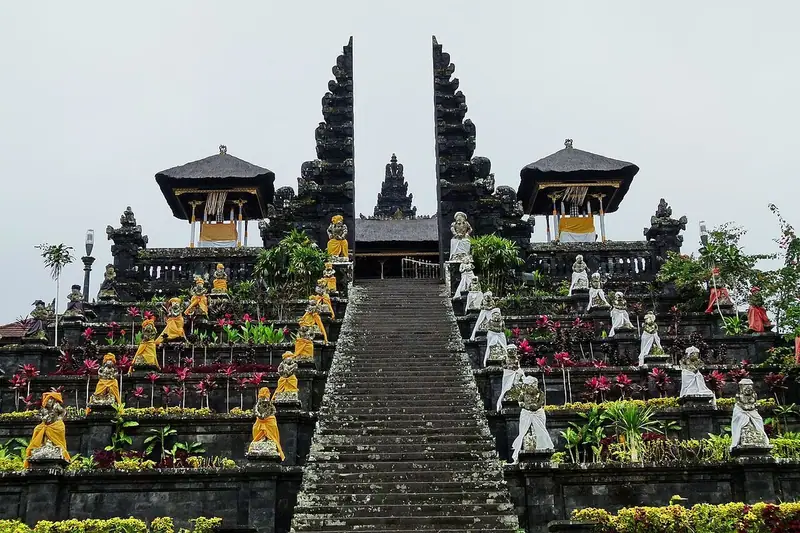 Balinese Hindu8 stops · from the 13th century CE
Besakih Temple audio guide
Climb the slopes of Mount Agung to Bali’s Mother Temple: twenty-three temples along the ridges, with the great Pura Penataran Agung at their heart.
 Sailendra8 stops · c. 780–830 CE
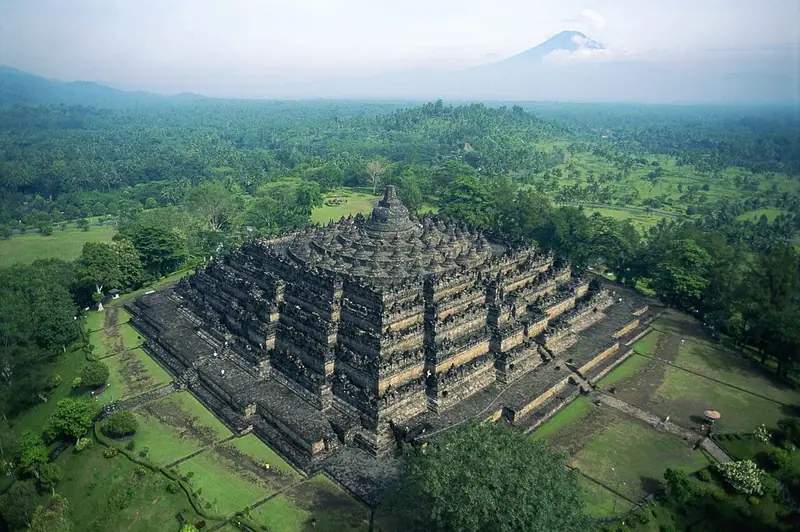
Borobudur audio guide
Circle upwards past the life of the Buddha in stone, gallery after gallery, to the stupas of the circular terraces.
 Mataram8 stops · c. 850 CE
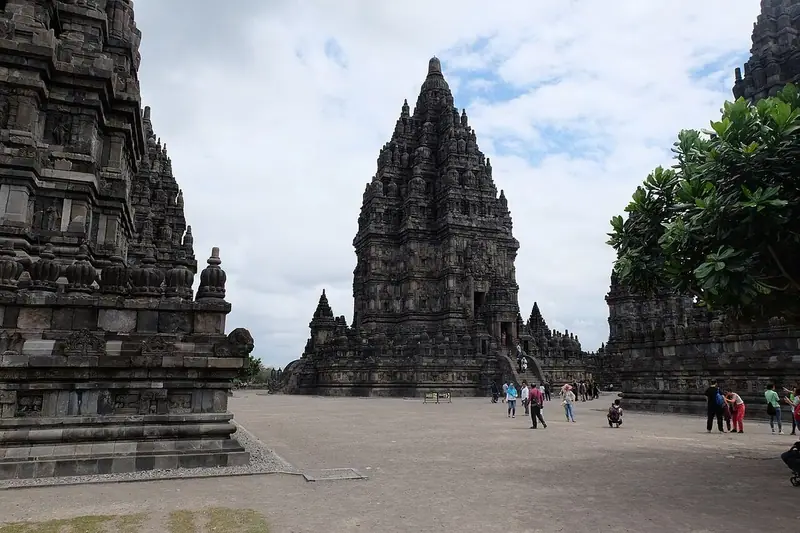
Prambanan audio guide
Soaring stone towers to Shiva, Vishnu and Brahma, wrapped in reliefs of the Ramayana.
 Yogyakarta Sultanate8 stops · from 1755 CE
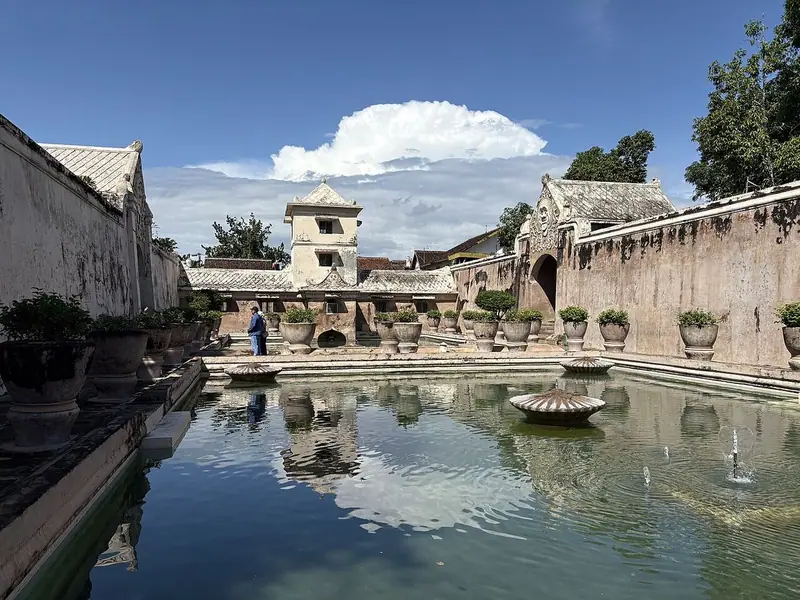
Yogyakarta Kraton audio guide
Explore the living palace of the Sultan of Yogyakarta, built in 1755–56, then walk on through the old lanes to Taman Sari, the Water Castle.
Every guide, in every country
Kota Tua Jakarta and every other guide we publish, including future ones. One payment, no subscription.