Before you start
Mount Vernon, George Washington’s home, stands on a bluff above the Potomac River in Virginia, about 25 kilometres south of Washington, DC. It is not a government site: since 1858 it has been owned and cared for by a private charity, the Mount Vernon Ladies’ Association, which bought the estate to save it from ruin. Tickets for the grounds include a timed entry to the mansion, so arrange yours in advance, especially at weekends and in summer. The estate is large, with gravel paths and some slopes, but the main stops in this guide lie within an easy walk of one another. This guide begins at the Ford Orientation Center and the Bowling Green, visits the gardens and the enslaved workers’ quarters, the mansion and its river front, and the outbuildings, then follows the lane down to Washington’s tomb and on to the Pioneer Farm by the river.
Use it as a self-guided tour of Mount Vernon: 9 stops in visit order, each played when you’re ready, at your own pace.
 Free preview · Stop 1
Bowling Green
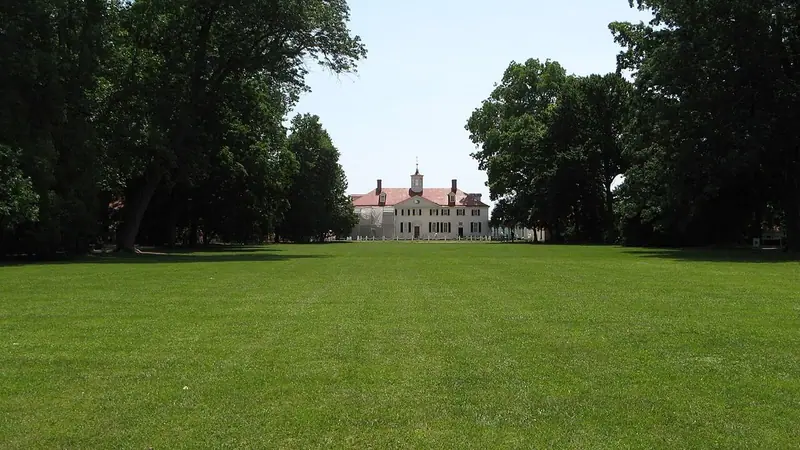
Pass through the Ford Orientation Center, where a short film introduces Washington’s life, and walk out to the Bowling Green, the long oval lawn that leads to the house. This is how Washington meant his guests to arrive: along curving paths lined with trees and shrubs, many of them native American species that he collected and planted himself, with the mansion appearing slowly at the far end. Notice how the lawn is framed by the house and its curving covered walkways, which link the mansion to the kitchen and other buildings on either side. Look too at the white walls; they are not stone but wooden boards, cut and painted with sand to imitate blocks of masonry. On the roof, a cupola is crowned by a weathervane in the shape of a dove of peace, which Washington ordered in 1787.
Photo: olekinderhook · CC BY 3.0 · Wikimedia Commons
What to see at Mount Vernon: 9 stops, in visit order
- 01
 Bowling GreenThe approach to the mansionFree preview
- 02
 Upper GardenFlowers and fruitIn the guide
- 03
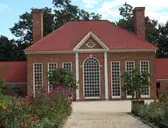 Slave QuartersLife in bondageIn the guide
- 04
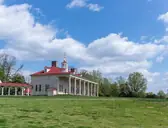 The MansionGeorge Washington’s houseIn the guide
- 05
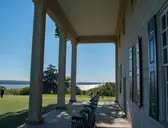 The PiazzaView over the PotomacIn the guide
- 06
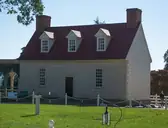 Kitchen and OutbuildingsThe working heart of the estateIn the guide
- 07
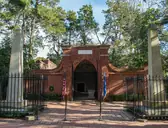 Washington’s TombFinal resting placeIn the guide
- 08
 Slave Memorial and Burial GroundRemembering the enslavedIn the guide
- 09
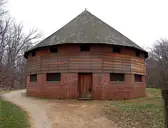 Pioneer FarmWashington the farmerIn the guide
Site map of Mount Vernon
History of Mount Vernon
Mount Vernon was built and run by the Washington family and by the enslaved African Americans who did most of the work on the estate. The land along the Potomac was home to Algonquian-speaking peoples before English colonists arrived in Virginia, the first permanent English colony in America, founded at Jamestown in 1607. Washington’s great-grandfather John Washington acquired a share of the land in 1674, and Washington’s father, Augustine, built a modest house here in the 1730s. George Washington lived at Mount Vernon from 1754 and greatly enlarged the house in two campaigns, in 1758 and from 1774, turning it into the mansion you see today. Virginia remained a British colony until the War of Independence, which Washington led, and he lived here as a private citizen after serving as the first president. He died at Mount Vernon in 1799.
Mount Vernon guide: questions
How many stops does the Mount Vernon guide have?
9 stops, in visit order: 1. Bowling Green; 2. Upper Garden; 3. Slave Quarters; 4. The Mansion; 5. The Piazza; 6. Kitchen and Outbuildings; 7. Washington’s Tomb; 8. Slave Memorial and Burial Ground; 9. Pioneer Farm.
Can I do a self-guided tour of Mount Vernon with this guide?
Yes. The guide is made for a self-guided tour: 9 stops in visit order, each with a photo, a story and a voice, so you can explore Mount Vernon at your own pace, without joining a group. Download it before you go and it works offline.
How long is each guide?
The 9 stops add up to about 6 minutes of listening in total. You play each stop when you’re ready, so you can go at your own pace.
Does the guide work offline?
Yes, once it’s downloaded. The guide is a single self-contained web page (about 8.3 MB) with the photos, text and audio built in. Download it to your phone before you go (Wi-Fi is best); after that it opens in any modern browser on iPhone or Android, with no app, account or mobile signal needed.
Does it use GPS or need my location?
No. The guide doesn’t use GPS and doesn’t know where you are: you play each stop when you reach it. It works on iPhone and Android in any modern browser, and it’s in English.
What’s included?
One self-contained HTML guide: 9 stops in visit order, each with a photo, text and a voice, plus the story of who built the site.
Who built Mount Vernon?
Mount Vernon was built and run by the Washington family and by the enslaved African Americans who did most of the work on the estate. The land along the Potomac was home to Algonquian-speaking peoples before English colonists arrived in Virginia, the first permanent English colony in America, founded at Jamestown in 1607.
Where is Mount Vernon?
Mount Vernon, George Washington’s home, stands on a bluff above the Potomac River in Virginia, about 25 kilometres south of Washington, DC.
Is there a free audio guide to Mount Vernon?
The first stop, Bowling Green, is free to read and hear on this page, so you can try the Mount Vernon audio tour before you buy. The full guide, with all 9 stops, is a one-off purchase: download it once and it’s yours to keep, working offline.
Is the Mount Vernon guide worth it?
If you’d like to know what you’re looking at, yes. For $10 you get 9 stops in visit order, each with a photo, a short history and a voice you play when you’re ready, plus a site map of the stops, and about 6 minutes of listening in all. It’s short on purpose, so you spend your time looking, not listening. It’s yours to keep, works offline and needs no app. The first stop is free on this page, so you can try it before you buy. If you’d like hours of detail, a guided tour will go deeper.
Audio guide or guided tour?
It depends how you like to visit. This guide lets you explore Mount Vernon at your own pace, at any time, for a one-off price. A guided tour gives you a live expert you can ask questions, but at fixed times and usually for a higher price. Many people use both: a tour for the big picture, and the guide to read beforehand or to revisit the stops in their own time.
Is this the official Mount Vernon guide?
No. It’s an independent guide by The Historian Guide, not affiliated with or endorsed by the operator of Mount Vernon. For tickets and opening hours, check the official site operator before you go.
Does the guide include entry tickets or opening hours?
No. The guide is a digital companion only. Admission to Mount Vernon is separate, so check the official site operator for current tickets and opening hours before you go.
- Stop 1 · Bowling Green: olekinderhook · CC BY 3.0 · Wikimedia Commons · resized
- Stop 2 · Upper Garden: Danmuth · CC BY-SA 4.0 · Wikimedia Commons · resized
- Stop 3 · Slave Quarters: Thaidragon27 · CC BY-SA 3.0 · Wikimedia Commons · resized
- Stop 4 · The Mansion (also the cover): Otherspice · CC BY-SA 4.0 · Wikimedia Commons · resized
- Stop 5 · The Piazza: Tim Evanson · CC BY-SA 2.0 · Wikimedia Commons · resized
- Stop 6 · Kitchen and Outbuildings: Tim Evanson · CC BY-SA 2.0 · Wikimedia Commons · resized
- Stop 7 · Washington’s Tomb: Tim Evanson · CC BY-SA 2.0 · Wikimedia Commons · resized
- Stop 8 · Slave Memorial and Burial Ground: Tim Evanson · CC BY-SA 2.0 · Wikimedia Commons · resized
- Stop 9 · Pioneer Farm: Galen Parks Smith · CC BY-SA 3.0 · Wikimedia Commons · resized


All photographs from Wikimedia Commons under the licences shown.
More guides in United States
 Spanish Colonial7 stops · 1718–1782
Alamo and San Antonio Missions audio guide
From the battle-scarred Alamo to Mission San José and the Espada Aqueduct, the five missions that made San Antonio.
 Modern8 stops · 1853–1963
Alcatraz audio guide
Step off the boat into the cellhouse, walk D Block and the yard, and hear the story of the 1962 escape.
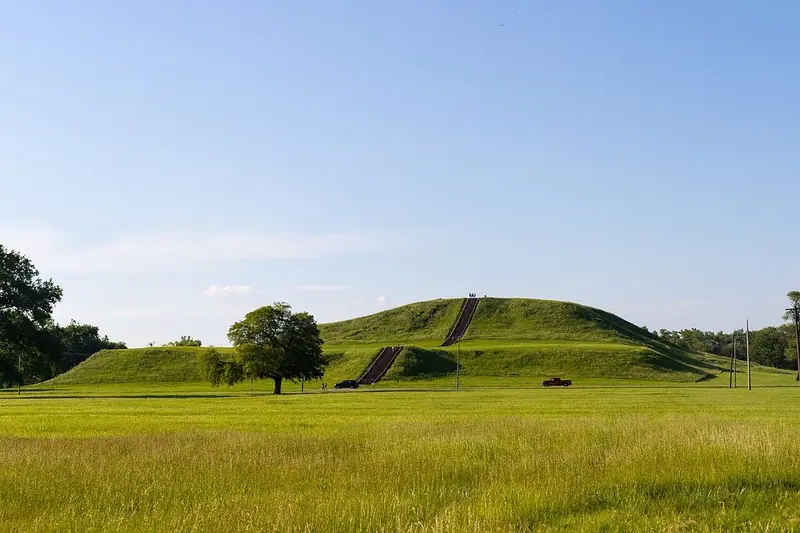 Mississippian8 stops · c. 1050 – 1350 CE
Cahokia Mounds audio guide
The largest pre-Columbian city north of Mexico, with Monks Mound, the Grand Plaza and the remains of its solar calendar posts.
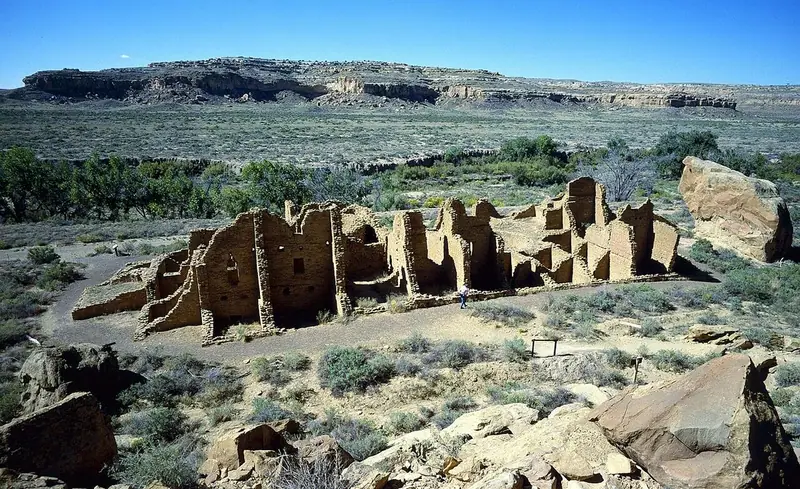 Ancestral Puebloan8 stops · c. 850–1150 CE
Chaco Canyon audio guide
The great houses of Pueblo Bonito and Chetro Ketl, planned buildings of stone that rose several storeys high.
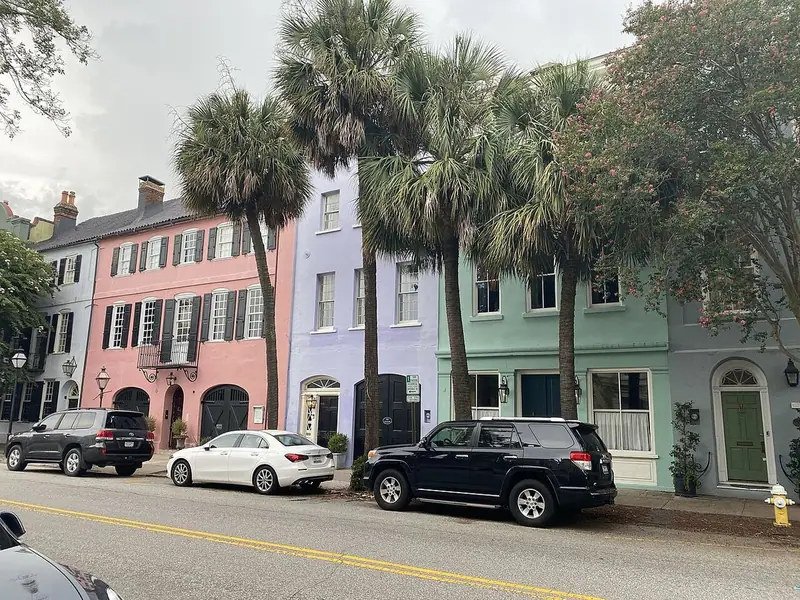 Colonial American12 stops · 17th–20th century CE
Charleston audio guide
Mother Emanuel and Beth Elohim, St Philip’s and the Huguenot Church, the Old Slave Mart, the Four Corners of Law, Rainbow Row and the Battery.
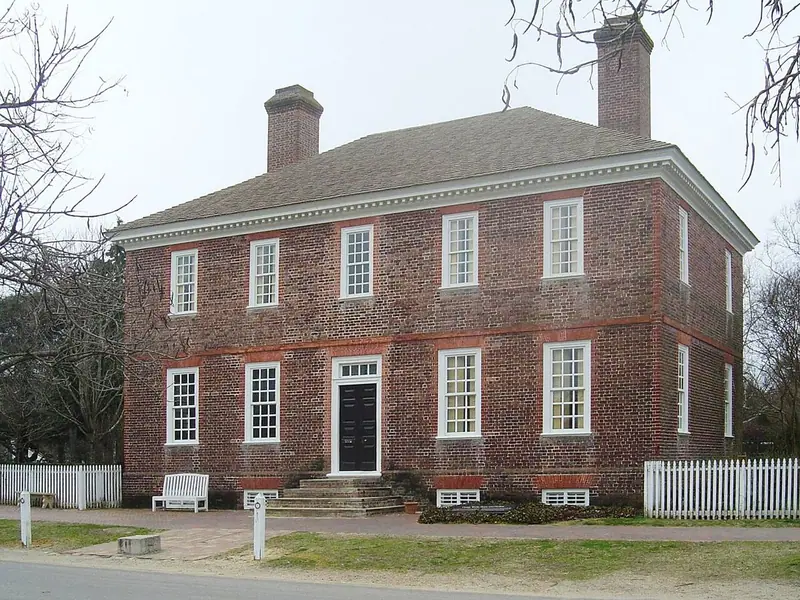 Colonial American8 stops · 1699–1780
Colonial Williamsburg audio guide
Duke of Gloucester Street, from the Capitol to the Governor’s Palace, in the restored capital of colonial Virginia.
Every guide, in every country
Mount Vernon and every other guide we publish, including future ones. One payment, no subscription.