Before you start
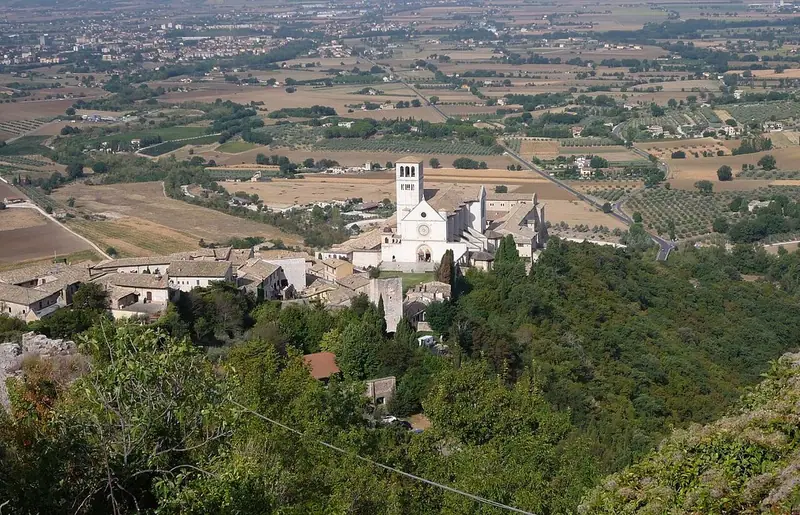
Assisi climbs the western slope of Monte Subasio, above the wide green valley of Umbria, its houses and churches built of the mountain’s pale pink and white stone. An Umbrian and then Roman town, it became world famous through Saint Francis, born here around 1181, and his follower Saint Clare, whose movement of poverty, peace and love for creation spread across the world. The basilica raised over Francis’s tomb, painted by Cimabue, Giotto, Simone Martini and Pietro Lorenzetti, became a turning point in European art. UNESCO inscribed Assisi, the Basilica of San Francesco and other Franciscan sites as a World Heritage Site in 2000. This guide begins in the plain at the Porziuncola, climbs to the basilica and through the town to its castle, and ends at the sanctuaries of San Damiano and the hermitage on the mountain.
Use it as a self-guided tour of Assisi: 10 stops in visit order, each played when you’re ready, at your own pace.
 Free preview · Stop 1
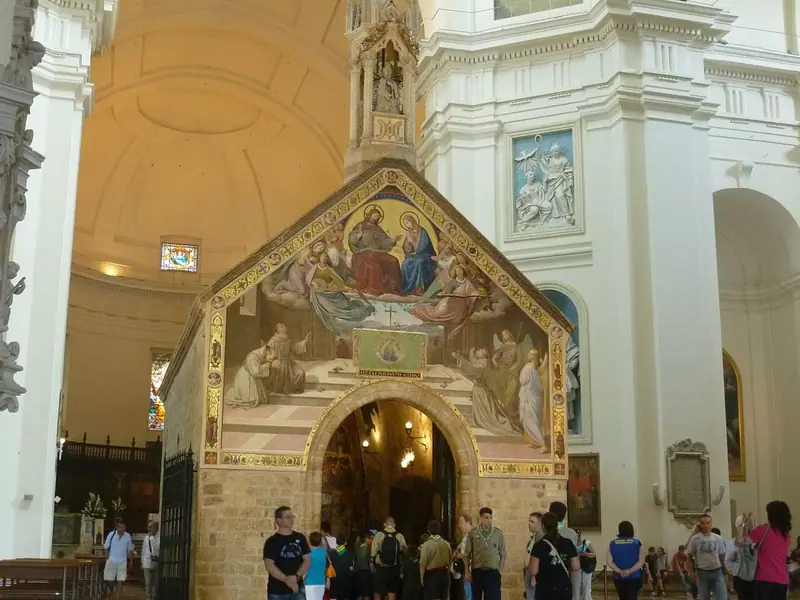
The Porziuncola
Begin in the plain below the town, at the great domed Basilica of Santa Maria degli Angeli, which stands over a tiny stone chapel, the Porziuncola, or little portion. Francis restored this ruined chapel early in his new life, and it became the home of his first brothers. Here, on Palm Sunday 1211, he received the young Clare, who cut her hair and took the habit, beginning the order of the Poor Clares. Here, too, Francis died on the evening of 3 October 1226, in a cell a few paces away, now the Chapel of the Transitus. In the sixteenth century Pope Pius V ordered the vast basilica built around the chapel, to plans by Giacomo Barozzi da Vignola and Galeazzo Alessi; much of it was rebuilt after an earthquake in 1832. In the garden grow thornless roses, which legend links to a moment of temptation in the saint’s life.
Photo: Diego Baglieri · CC BY-SA 4.0 · Wikimedia Commons
What to see at Assisi: 10 stops, in visit order
- 01
 The PorziuncolaThe little portionFree preview
- 02
 The Lower ChurchThe basilica on the hill of paradiseIn the guide
- 03
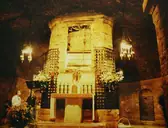 The Tomb of Saint FrancisHidden for six centuriesIn the guide
- 04
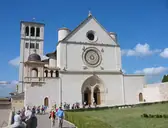 The Upper ChurchThe life of Saint FrancisIn the guide
- 05
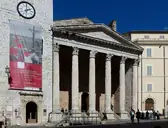 The Temple of MinervaA Roman front in the main squareIn the guide
- 06
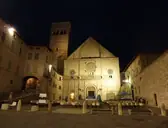 The Cathedral of San RufinoThe font of saintsIn the guide
- 07
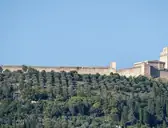 The Rocca MaggioreThe castle above the townIn the guide
- 08
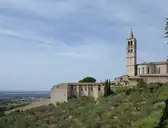 The Basilica of Santa ChiaraThe cross that spokeIn the guide
- 09
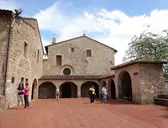 San DamianoWhere Clare lived and Francis sangIn the guide
- 10
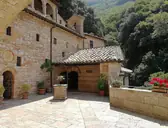 The Eremo delle CarceriThe hermitage in the forestIn the guide
Site map of Assisi
History of Assisi
The Umbrians settled this hillside before the Romans, who built the town of Asisium on terraces along the slope; the Latin poet Propertius is generally thought to have been born here. In the Middle Ages Assisi was a busy commune, often at war with its larger neighbour Perugia. Francis, son of the wealthy cloth merchant Pietro di Bernardone, fought in one of those wars around 1202 and spent a year as a prisoner. He then renounced his inheritance, embraced poverty and gathered followers, the Friars Minor, whose rule was approved by the pope; Clare, a young noblewoman, founded the Poor Ladies, later the Poor Clares. Francis died in 1226 and was declared a saint only two years later, and the friars at once began a great basilica in his honour. For centuries Assisi was part of the Papal States, until it joined united Italy in 1860, and it remains one of the most visited places of pilgrimage in the world.
Assisi guide: questions
How many stops does the Assisi guide have?
10 stops, in visit order: 1. The Porziuncola; 2. The Lower Church; 3. The Tomb of Saint Francis; 4. The Upper Church; 5. The Temple of Minerva; 6. The Cathedral of San Rufino; 7. The Rocca Maggiore; 8. The Basilica of Santa Chiara; 9. San Damiano; 10. The Eremo delle Carceri.
Can I do a self-guided tour of Assisi with this guide?
Yes. The guide is made for a self-guided tour: 10 stops in visit order, each with a photo, a story and a voice, so you can explore Assisi at your own pace, without joining a group. Download it before you go and it works offline.
How long do you need at Assisi?
We suggest allowing A full day. The 10 stops add up to about 8 minutes of listening, and you play each one when you’re ready, so you can linger wherever you like.
How long is each guide?
The 10 stops add up to about 8 minutes of listening in total. You play each stop when you’re ready, so you can go at your own pace.
Does the guide work offline?
Yes, once it’s downloaded. The guide is a single self-contained web page (about 9.1 MB) with the photos, text and audio built in. Download it to your phone before you go (Wi-Fi is best); after that it opens in any modern browser on iPhone or Android, with no app, account or mobile signal needed.
Does it use GPS or need my location?
No. The guide doesn’t use GPS and doesn’t know where you are: you play each stop when you reach it. It works on iPhone and Android in any modern browser, and it’s in English.
What’s included?
One self-contained HTML guide: 10 stops in visit order, each with a photo, text and a voice, plus the story of who built the site.
Who built Assisi?
The Umbrians settled this hillside before the Romans, who built the town of Asisium on terraces along the slope; the Latin poet Propertius is generally thought to have been born here. In the Middle Ages Assisi was a busy commune, often at war with its larger neighbour Perugia.
Where is Assisi?
Assisi climbs the western slope of Monte Subasio, above the wide green valley of Umbria, its houses and churches built of the mountain’s pale pink and white stone.
Is there a free audio guide to Assisi?
The first stop, The Porziuncola, is free to read and hear on this page, so you can try the Assisi audio tour before you buy. The full guide, with all 10 stops, is a one-off purchase: download it once and it’s yours to keep, working offline.
Is the Assisi guide worth it?
If you’d like to know what you’re looking at, yes. For $10 you get 10 stops in visit order, each with a photo, a short history and a voice you play when you’re ready, plus a site map of the stops, and about 8 minutes of listening in all. It’s short on purpose, so you spend your time looking, not listening. It’s yours to keep, works offline and needs no app. The first stop is free on this page, so you can try it before you buy. If you’d like hours of detail, a guided tour will go deeper.
Audio guide or guided tour?
It depends how you like to visit. This guide lets you explore Assisi at your own pace, at any time, for a one-off price. A guided tour gives you a live expert you can ask questions, but at fixed times and usually for a higher price. Many people use both: a tour for the big picture, and the guide to read beforehand or to revisit the stops in their own time.
Is this the official Assisi guide?
No. It’s an independent guide by The Historian Guide, not affiliated with or endorsed by the operator of Assisi. For tickets and opening hours, check the official site operator before you go.
Does the guide include entry tickets or opening hours?
No. The guide is a digital companion only. Admission to Assisi is separate, so check the official site operator for current tickets and opening hours before you go.
- Stop 1 · The Porziuncola: Diego Baglieri · CC BY-SA 4.0 · Wikimedia Commons · resized
- Stop 2 · The Lower Church (also the cover): Francesco Valma · CC BY-SA 3.0 · Wikimedia Commons · resized
- Stop 3 · The Tomb of Saint Francis: Gary Todd from Xinzheng, China · CC0 · Wikimedia Commons · resized
- Stop 4 · The Upper Church: Fantasy · CC BY-SA 3.0 · Wikimedia Commons · resized
- Stop 5 · The Temple of Minerva: Feldstein · CC BY-SA 4.0 · Wikimedia Commons · resized
- Stop 6 · The Cathedral of San Rufino: Diego Baglieri · CC BY-SA 4.0 · Wikimedia Commons · resized
- Stop 7 · The Rocca Maggiore: Stifone · CC BY-SA 4.0 · Wikimedia Commons · resized
- Stop 8 · The Basilica of Santa Chiara: Berthold Werner · CC BY-SA 4.0 · Wikimedia Commons · resized
- Stop 9 · San Damiano: Superchilum · CC BY-SA 3.0 · Wikimedia Commons · resized
- Stop 10 · The Eremo delle Carceri: Andreas Lattmann · CC0 · Wikimedia Commons · resized


All photographs from Wikimedia Commons under the licences shown.
More guides in Italy
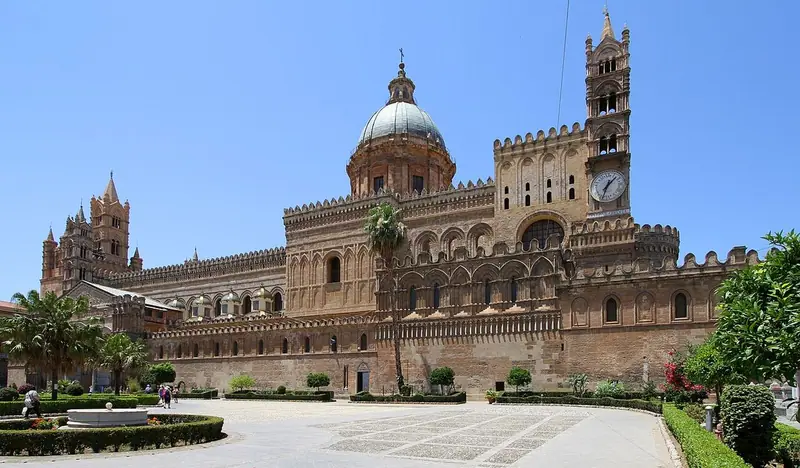 Arab-Norman11 stops · 1130 – 1194 (Norman kings of Sicily)
Arab-Norman Palermo, Monreale and Cefalù audio guide
Norman kings, Byzantine mosaicists and Arab craftsmen together: the Palatine Chapel, red-domed churches, the Zisa palace and the golden cathedrals of Monreale and Cefalù.
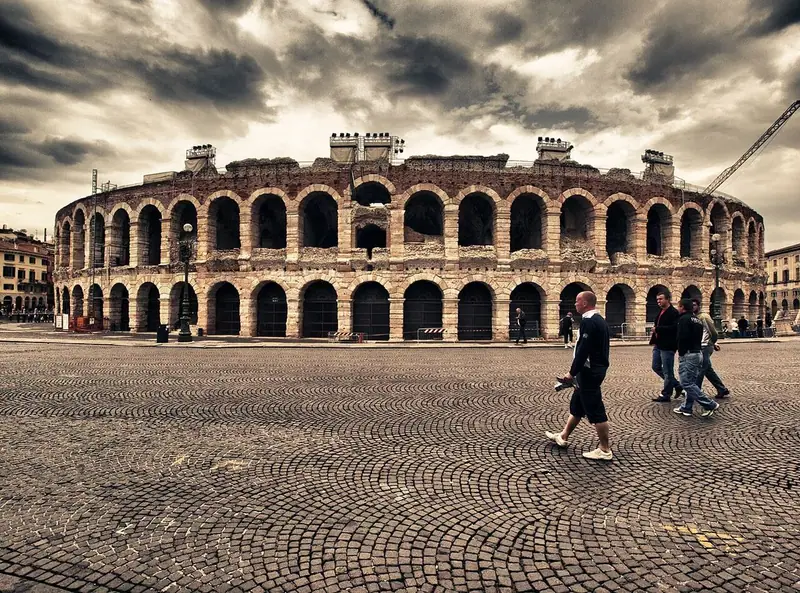 Roman11 stops · 1st c. BCE – 1797 (Roman colony to the end of Venetian rule)
City of Verona audio guide
A Roman arena still used for opera, the towers and tombs of the della Scala lords, and the Romanesque splendour of San Zeno, in a bend of the Adige.
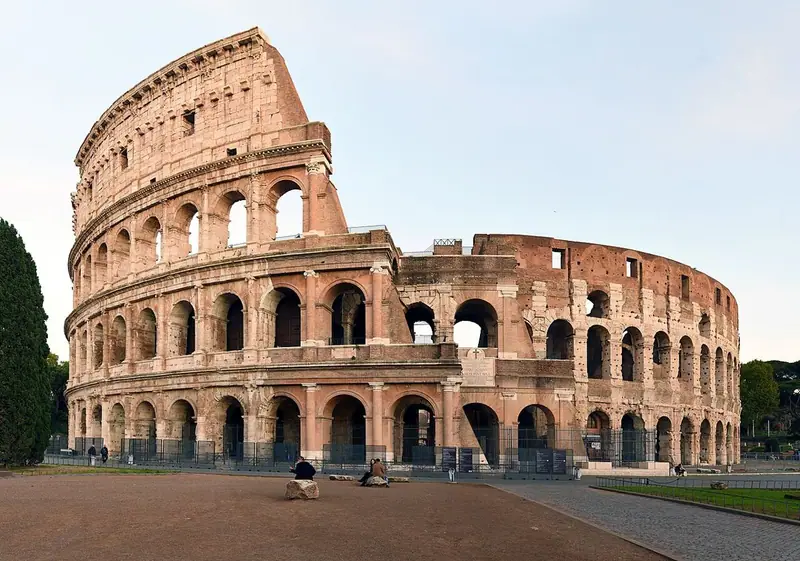 Roman7 stops · 70–80 CE
Colosseum audio guide
From the outer façade into the corridors and seating, then down to the arena floor and the hypogeum beneath it.
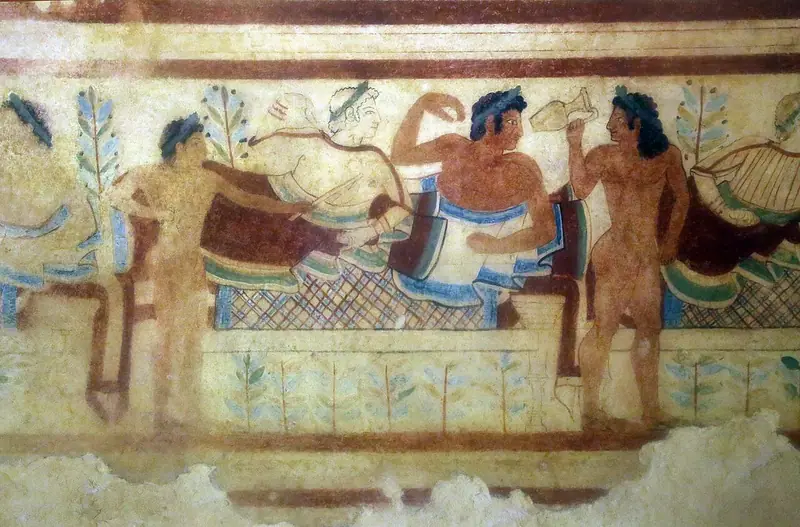 Etruscan9 stops · 9th – 3rd century BCE
Etruscan Necropolises of Cerveteri and Tarquinia audio guide
The Etruscan cities of the dead: the tumuli and tomb streets of the Banditaccia at Cerveteri, the Tomb of the Reliefs, and the painted tombs of Tarquinia’s Monterozzi necropolis.
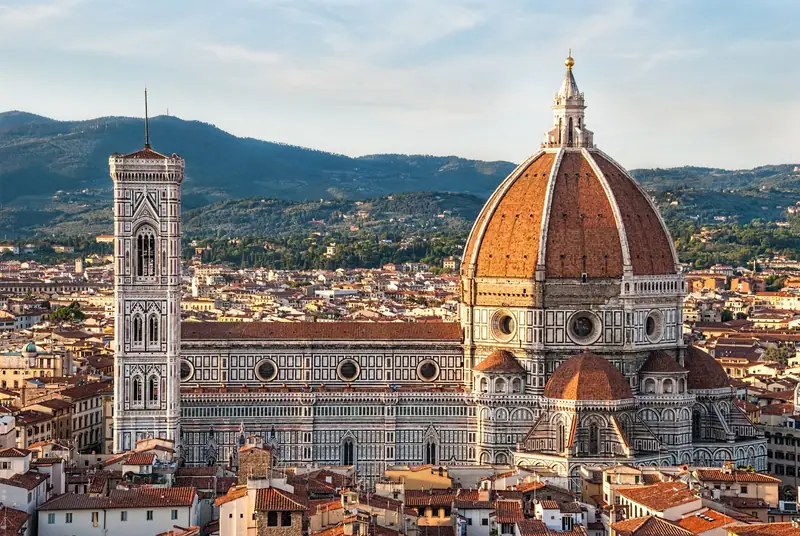 Renaissance7 stops · 1296–1436
Florence Duomo audio guide
The Gates of Paradise, Giotto’s Campanile and Brunelleschi’s dome, the great monument of Renaissance Florence.
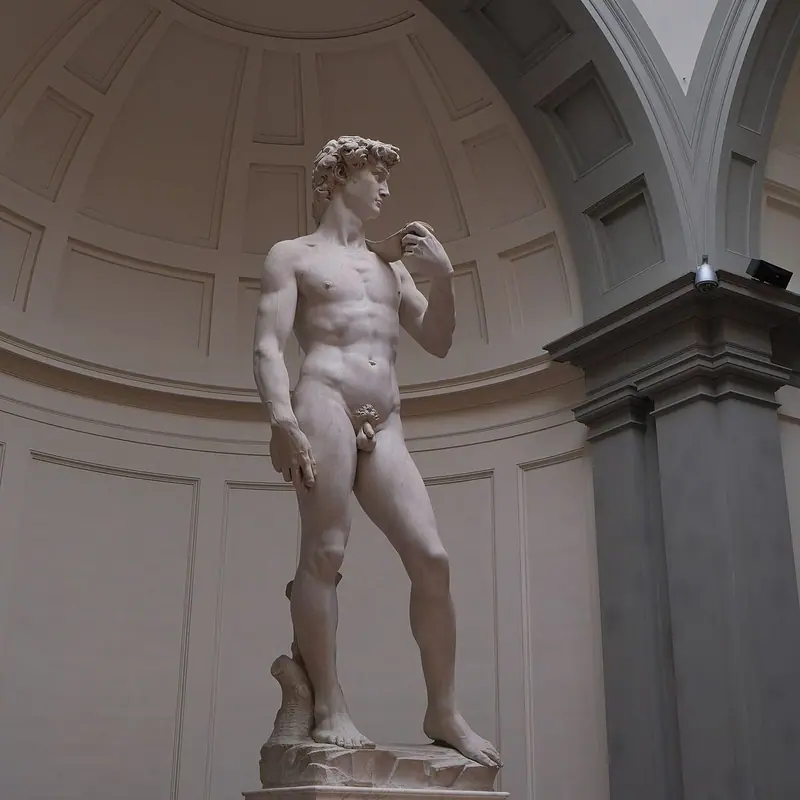 Renaissance8 stops · High Renaissance
Galleria dell’Accademia audio guide
Michelangelo’s unfinished Prisoners and the tribune of his David, then the plaster models and the Medici musical instruments.
Every guide, in every country
Assisi and every other guide we publish, including future ones. One payment, no subscription.