Before you start
Verona lies in a tight loop of the River Adige at the foot of the Lessini Mountains, where the roads from the Alps meet the plain of the Po. It became a Roman town in the first century BCE and still keeps one of the richest collections of Roman remains in northern Italy, from the great amphitheatre to gates, a bridge and a theatre. In the thirteenth and fourteenth centuries the della Scala family, the Scaligers, made it the capital of a powerful lordship, and from 1405 it flourished for almost four centuries as part of the Republic of Venice. UNESCO inscribed the City of Verona as a World Heritage Site in 2000, as a town that has grown without interruption for two thousand years. This guide starts at the Arena, crosses the medieval heart of the city to the river, and ends at the great Romanesque church of San Zeno.
Use it as a self-guided tour of City of Verona: 11 stops in visit order, each played when you’re ready, at your own pace.
 Free preview · Stop 1
The Arena
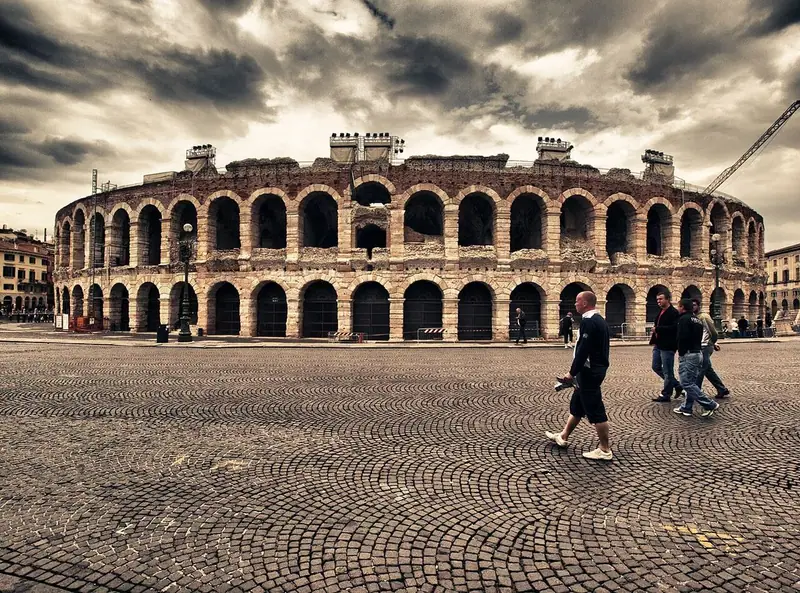
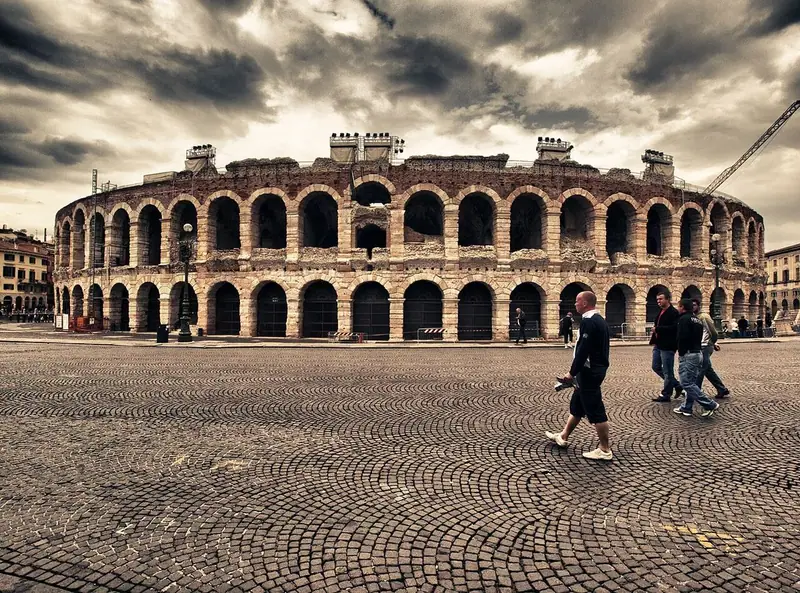
Begin in the Piazza Bra, the city’s largest square, dominated by the Arena, one of the best-preserved Roman amphitheatres anywhere. No inscription records when it was built, but most scholars place it in the first century, and one suggests it was complete by about 30 CE. It stood just outside the Roman walls and was built for gladiator fights and wild beast shows; gravestones of gladiators who died here have been found in Verona. The pink and white limestone came from the Valpolicella hills nearby. Earthquakes, above all the great earthquake of January 1117, brought down almost all of the outer ring, and only a fragment of four arches, known as the wing, still stands to its full height. The seating survived, and since 1913 the Arena has hosted a summer opera festival, interrupted only by war, and its tiers still fill with audiences on summer nights.
Photo: Kevin Poh · CC BY 2.0 · Wikimedia Commons
What to see at City of Verona: 11 stops, in visit order
- 01
 The ArenaA Roman amphitheatre still in useFree preview
- 02
 Juliet’s HouseA legend given a balconyIn the guide
- 03
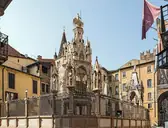 The Scaliger TombsKnights above the streetIn the guide
- 04
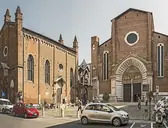 Sant’AnastasiaThe hunchbacks of the holy waterIn the guide
- 05
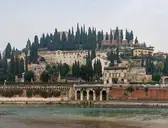 The Roman TheatrePlays on the hillsideIn the guide
- 06
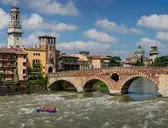 Ponte PietraThe oldest bridge in VeronaIn the guide
- 07
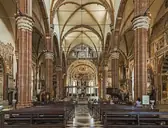 Verona CathedralGriffins at the doorIn the guide
- 08
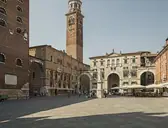 Piazza dei Signori and the Torre dei LambertiThe square of the lordsIn the guide
- 09
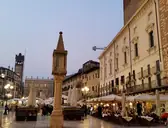 Piazza delle ErbeThe old Roman forumIn the guide
- 10
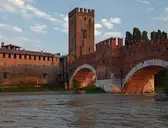 CastelvecchioThe castle and its bridgeIn the guide
- 11
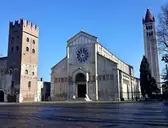 The Basilica of San ZenoThe smiling bishopIn the guide
Site map of City of Verona
History of City of Verona
A settlement stood here before the Romans, and in the first century BCE Verona became a Roman municipium, laid out on a grid inside the river bend, with the Via Postumia as its main street. After Rome fell it was a favoured seat of the Ostrogothic king Theodoric, then of Lombard kings, and in 774 it passed to Charlemagne. In the twelfth century Verona became a self-governing commune, and in the thirteenth the Scaligers rose to power; under Cangrande I, the patron of Dante, they ruled much of north-eastern Italy. Verona submitted to Venice in 1405, and the winged lion of Saint Mark still appears on its squares. Napoleon’s troops arrived in 1797, after which the city passed to Austria, which made it one of the strongest fortresses in its empire. Verona joined the Kingdom of Italy in 1866, and the city was badly damaged in the Second World War, when its bridges were blown up.
City of Verona guide: questions
How many stops does the City of Verona guide have?
11 stops, in visit order: 1. The Arena; 2. Juliet’s House; 3. The Scaliger Tombs; 4. Sant’Anastasia; 5. The Roman Theatre; 6. Ponte Pietra; 7. Verona Cathedral; 8. Piazza dei Signori and the Torre dei Lamberti; 9. Piazza delle Erbe; 10. Castelvecchio; 11. The Basilica of San Zeno.
Can I do a self-guided tour of City of Verona with this guide?
Yes. The guide is made for a self-guided tour: 11 stops in visit order, each with a photo, a story and a voice, so you can explore City of Verona at your own pace, without joining a group. Download it before you go and it works offline.
How long do you need at City of Verona?
We suggest allowing A full day. The 11 stops add up to about 9 minutes of listening, and you play each one when you’re ready, so you can linger wherever you like.
How long is each guide?
The 11 stops add up to about 9 minutes of listening in total. You play each stop when you’re ready, so you can go at your own pace.
Does the guide work offline?
Yes, once it’s downloaded. The guide is a single self-contained web page (about 10.6 MB) with the photos, text and audio built in. Download it to your phone before you go (Wi-Fi is best); after that it opens in any modern browser on iPhone or Android, with no app, account or mobile signal needed.
Does it use GPS or need my location?
No. The guide doesn’t use GPS and doesn’t know where you are: you play each stop when you reach it. It works on iPhone and Android in any modern browser, and it’s in English.
What’s included?
One self-contained HTML guide: 11 stops in visit order, each with a photo, text and a voice, plus the story of who built the site.
Who built City of Verona?
A settlement stood here before the Romans, and in the first century BCE Verona became a Roman municipium, laid out on a grid inside the river bend, with the Via Postumia as its main street. After Rome fell it was a favoured seat of the Ostrogothic king Theodoric, then of Lombard kings, and in 774 it passed to Charlemagne.
Where is City of Verona?
Verona lies in a tight loop of the River Adige at the foot of the Lessini Mountains, where the roads from the Alps meet the plain of the Po.
Is there a free audio guide to City of Verona?
The first stop, The Arena, is free to read and hear on this page, so you can try the City of Verona audio tour before you buy. The full guide, with all 11 stops, is a one-off purchase: download it once and it’s yours to keep, working offline.
Is the City of Verona guide worth it?
If you’d like to know what you’re looking at, yes. For $10 you get 11 stops in visit order, each with a photo, a short history and a voice you play when you’re ready, plus a site map of the stops, and about 9 minutes of listening in all. It’s short on purpose, so you spend your time looking, not listening. It’s yours to keep, works offline and needs no app. The first stop is free on this page, so you can try it before you buy. If you’d like hours of detail, a guided tour will go deeper.
Audio guide or guided tour?
It depends how you like to visit. This guide lets you explore City of Verona at your own pace, at any time, for a one-off price. A guided tour gives you a live expert you can ask questions, but at fixed times and usually for a higher price. Many people use both: a tour for the big picture, and the guide to read beforehand or to revisit the stops in their own time.
Is this the official City of Verona guide?
No. It’s an independent guide by The Historian Guide, not affiliated with or endorsed by the operator of City of Verona. For tickets and opening hours, check the official site operator before you go.
Does the guide include entry tickets or opening hours?
No. The guide is a digital companion only. Admission to City of Verona is separate, so check the official site operator for current tickets and opening hours before you go.
- Stop 1 · The Arena (also the cover): Kevin Poh · CC BY 2.0 · Wikimedia Commons · resized
- Stop 2 · Juliet’s House: MaryG90 · CC BY-SA 3.0 · Wikimedia Commons · resized
- Stop 3 · The Scaliger Tombs: Didier Descouens · CC BY-SA 4.0 · Wikimedia Commons · resized
- Stop 4 · Sant’Anastasia: Didier Descouens · CC BY-SA 4.0 · Wikimedia Commons · resized
- Stop 5 · The Roman Theatre: Photo by CEphoto, Uwe Aranas or alternatively © CEphoto, Uwe Aranas · CC BY-SA 3.0 · Wikimedia Commons · resized
- Stop 6 · Ponte Pietra: Ввласенко · CC BY-SA 3.0 · Wikimedia Commons · resized
- Stop 7 · Verona Cathedral: Didier Descouens · CC BY-SA 4.0 · Wikimedia Commons · resized
- Stop 8 · Piazza dei Signori and the Torre dei Lamberti: Didier Descouens · CC BY-SA 4.0 · Wikimedia Commons · resized
- Stop 9 · Piazza delle Erbe: Orledio · CC BY-SA 4.0 · Wikimedia Commons · resized
- Stop 10 · Castelvecchio: Ввласенко · CC BY-SA 3.0 · Wikimedia Commons · resized
- Stop 11 · The Basilica of San Zeno: Adert · CC BY-SA 4.0 · Wikimedia Commons · resized


All photographs from Wikimedia Commons under the licences shown.
More guides in Italy
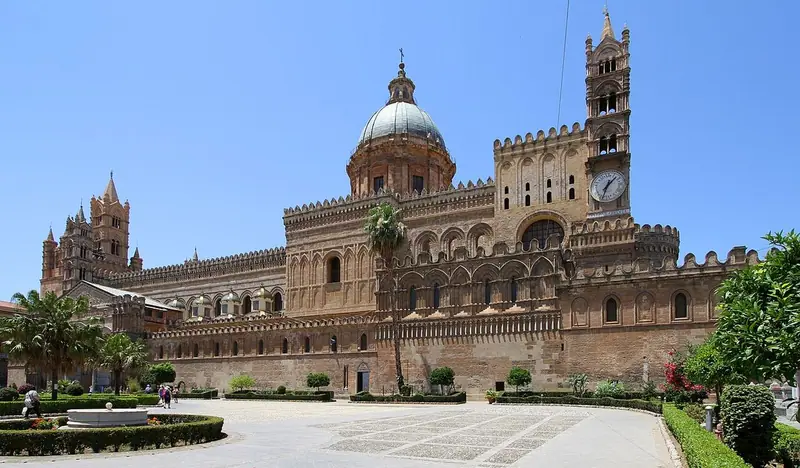 Arab-Norman11 stops · 1130 – 1194 (Norman kings of Sicily)
Arab-Norman Palermo, Monreale and Cefalù audio guide
Norman kings, Byzantine mosaicists and Arab craftsmen together: the Palatine Chapel, red-domed churches, the Zisa palace and the golden cathedrals of Monreale and Cefalù.
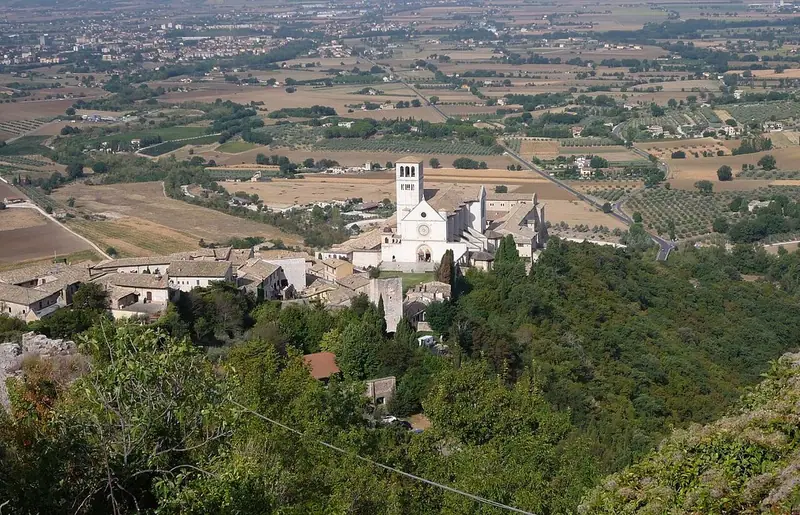 Franciscan10 stops · 1182 – 1253 (lives of Francis and Clare; basilica begun 1228)
Assisi audio guide
The hill town of Saint Francis: the double basilica with Giotto’s frescoes, his tomb, Santa Chiara, San Damiano and a Roman temple on the main square.
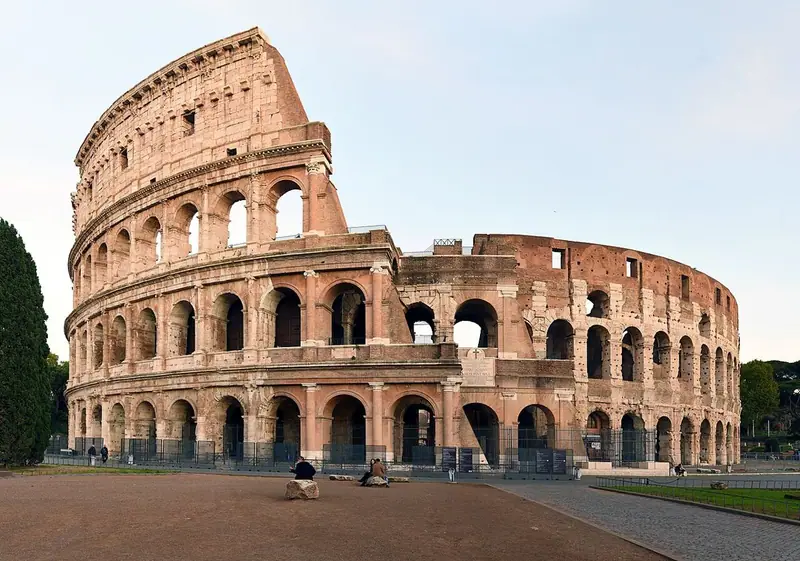 Roman7 stops · 70–80 CE
Colosseum audio guide
From the outer façade into the corridors and seating, then down to the arena floor and the hypogeum beneath it.
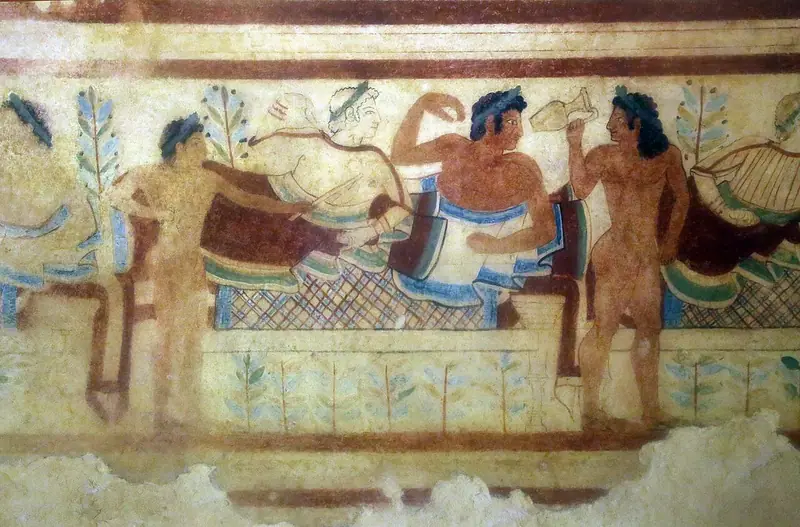 Etruscan9 stops · 9th – 3rd century BCE
Etruscan Necropolises of Cerveteri and Tarquinia audio guide
The Etruscan cities of the dead: the tumuli and tomb streets of the Banditaccia at Cerveteri, the Tomb of the Reliefs, and the painted tombs of Tarquinia’s Monterozzi necropolis.
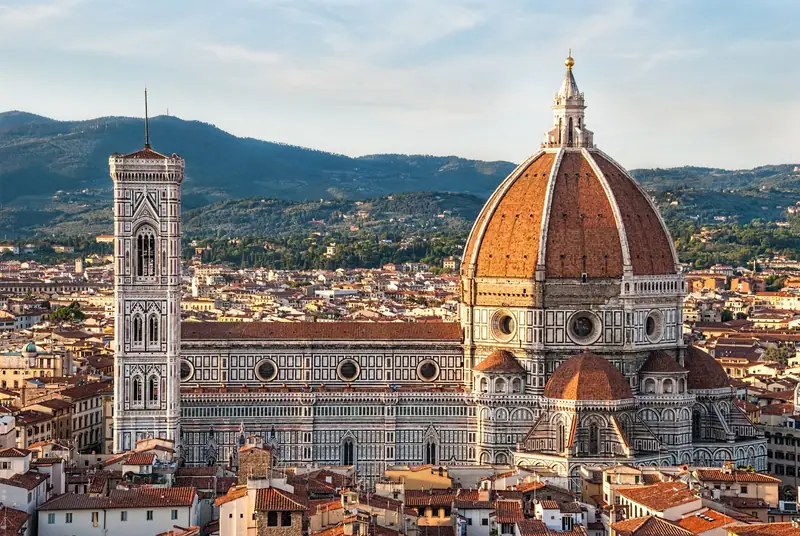 Renaissance7 stops · 1296–1436
Florence Duomo audio guide
The Gates of Paradise, Giotto’s Campanile and Brunelleschi’s dome, the great monument of Renaissance Florence.
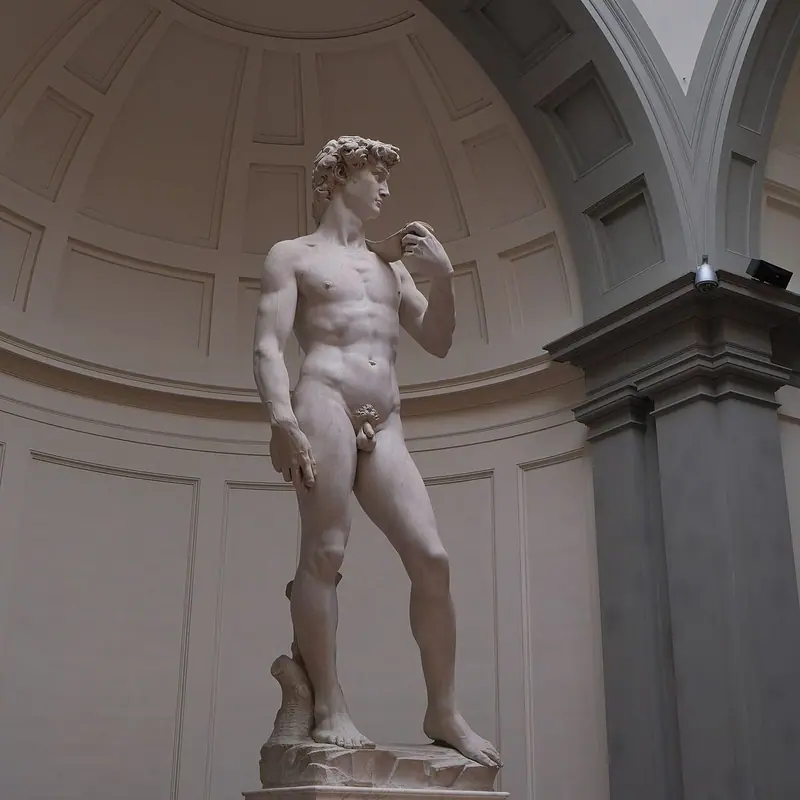 Renaissance8 stops · High Renaissance
Galleria dell’Accademia audio guide
Michelangelo’s unfinished Prisoners and the tribune of his David, then the plaster models and the Medici musical instruments.
Every guide, in every country
City of Verona and every other guide we publish, including future ones. One payment, no subscription.