Before you start
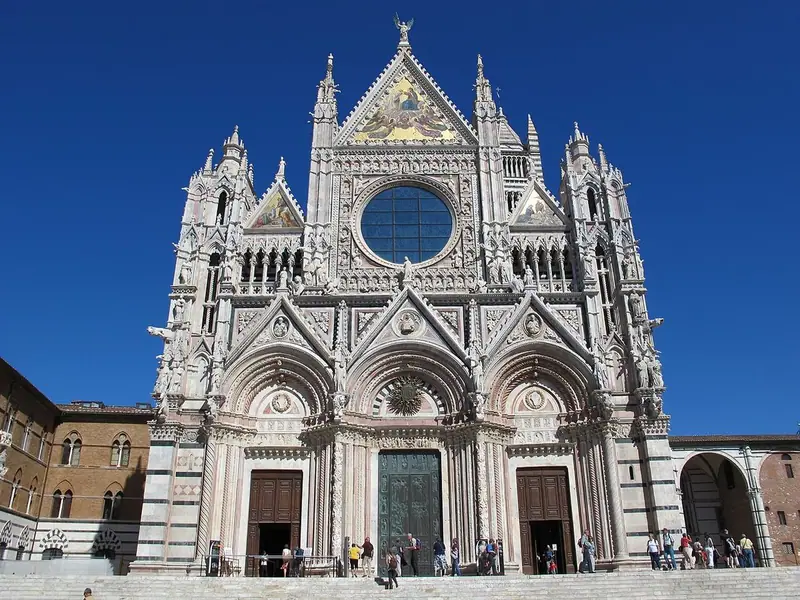
Siena rises on three hills in the heart of Tuscany, joined by three main streets that meet in a hollow where the city built its great square, the Piazza del Campo. Between the twelfth and fifteenth centuries Siena was a rich, self-governing republic of bankers, wool merchants and painters, and it kept the Gothic face it acquired in those years: towers, brick palaces, the striped cathedral and the pointed Sienese arch. Its painters, Duccio, Simone Martini and the brothers Pietro and Ambrogio Lorenzetti, changed the course of European art. UNESCO inscribed the Historic Centre of Siena as a World Heritage Site in 1995, calling it the embodiment of a medieval city. This guide begins in the Campo, climbs north to the bankers' square and the church of Saint Catherine, and ends among the treasures around the cathedral.
Use it as a self-guided tour of the Historic Centre of Siena: 11 stops in visit order, each played when you’re ready, at your own pace.
 Free preview · Stop 1
Piazza del Campo
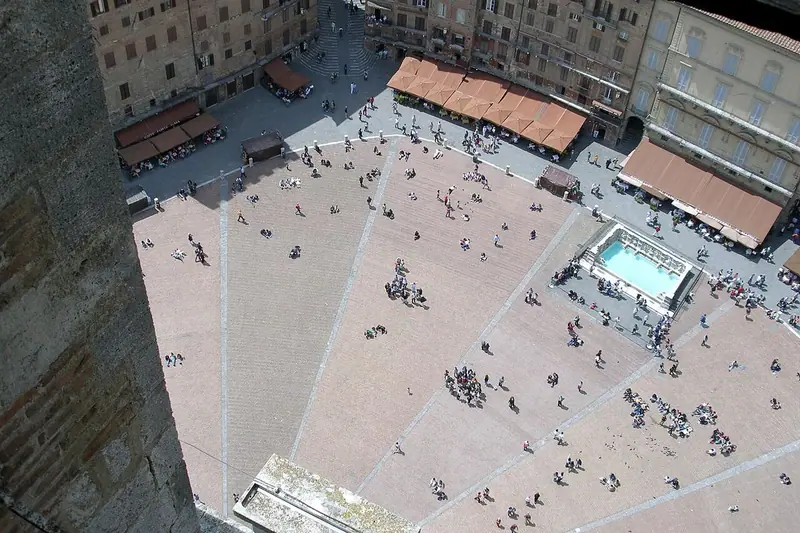
Begin in the Piazza del Campo, one of the great squares of medieval Europe. It grew on a sloping site where Siena’s three hillside communities met, first as a marketplace, and it was shaped and paved under the government of the Nine. Its brick paving fans out from the town hall in nine segments, often said to honour that council of merchants, so that the whole square resembles an open scallop shell. Around its edge the houses and palaces were built to a common line, with windows in a matching style, as city statutes required. Twice a year, on 2 July and 16 August, the square becomes the track for the Palio, a horse race around its rim in which ten of the city’s seventeen contrade, or wards, compete. The race lasts only about ninety seconds, but rivalry between the contrade continues all year.
Photo: Vyacheslav Argenberg · CC BY 4.0 · Wikimedia Commons
What to see at the Historic Centre of Siena: 11 stops, in visit order
- 01
 Piazza del CampoThe shell-shaped squareFree preview
- 02
 Fonte GaiaThe fountain of joyIn the guide
- 03
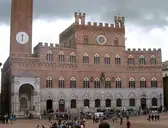 The Palazzo PubblicoGood and bad governmentIn the guide
- 04
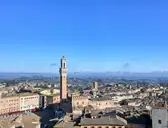 The Torre del MangiaA tower named after a bell-ringerIn the guide
- 05
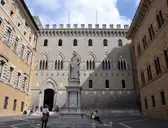 Piazza SalimbeniThe bankers of SienaIn the guide
- 06
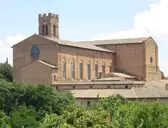 San DomenicoThe church of Saint CatherineIn the guide
- 07
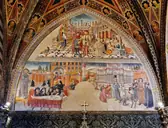 The Baptistery of San GiovanniBeneath the cathedralIn the guide
- 08
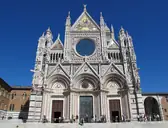 Siena CathedralBlack and white marbleIn the guide
- 09
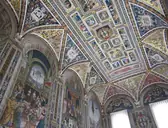 The Piccolomini LibraryA pope’s life in frescoIn the guide
- 10
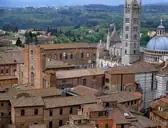 The New CathedralA dream stopped by the plagueIn the guide
- 11
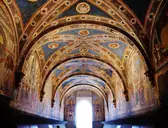 Santa Maria della ScalaThe hospital before the stepsIn the guide
Site map of the Historic Centre of Siena
History of the Historic Centre of Siena
Siena may have had Etruscan beginnings, and the Romans founded a small colony here, Saena Julia, but the city we see is medieval. From the twelfth century it governed itself as a commune, the Republic of Siena, and grew rich on banking, trade and its position on the Via Francigena, the pilgrim road from northern Europe to Rome. In 1260 its army defeated Florence at the battle of Montaperti, and from 1287 to 1355 the city was ruled by the Nine, a council of merchants, under whom much of the Campo, the town hall and the cathedral took shape. The Black Death of 1348 killed a large share of the population and halted the boldest building plans. After a siege of some eighteen months, the republic surrendered to the forces of Emperor Charles V in 1555, and Siena soon passed to Cosimo I de' Medici. As a quiet provincial city it was spared later rebuilding, which is why its medieval fabric survives so completely.
Historic Centre of Siena guide: questions
How many stops does the Historic Centre of Siena guide have?
11 stops, in visit order: 1. Piazza del Campo; 2. Fonte Gaia; 3. The Palazzo Pubblico; 4. The Torre del Mangia; 5. Piazza Salimbeni; 6. San Domenico; 7. The Baptistery of San Giovanni; 8. Siena Cathedral; 9. The Piccolomini Library; 10. The New Cathedral; 11. Santa Maria della Scala.
Can I do a self-guided tour of the Historic Centre of Siena with this guide?
Yes. The guide is made for a self-guided tour: 11 stops in visit order, each with a photo, a story and a voice, so you can explore the Historic Centre of Siena at your own pace, without joining a group. Download it before you go and it works offline.
How long do you need at the Historic Centre of Siena?
We suggest allowing A full day. The 11 stops add up to about 8 minutes of listening, and you play each one when you’re ready, so you can linger wherever you like.
How long is each guide?
The 11 stops add up to about 8 minutes of listening in total. You play each stop when you’re ready, so you can go at your own pace.
Does the guide work offline?
Yes, once it’s downloaded. The guide is a single self-contained web page (about 10.7 MB) with the photos, text and audio built in. Download it to your phone before you go (Wi-Fi is best); after that it opens in any modern browser on iPhone or Android, with no app, account or mobile signal needed.
Does it use GPS or need my location?
No. The guide doesn’t use GPS and doesn’t know where you are: you play each stop when you reach it. It works on iPhone and Android in any modern browser, and it’s in English.
What’s included?
One self-contained HTML guide: 11 stops in visit order, each with a photo, text and a voice, plus the story of who built the site.
Who built the Historic Centre of Siena?
Siena may have had Etruscan beginnings, and the Romans founded a small colony here, Saena Julia, but the city we see is medieval. From the twelfth century it governed itself as a commune, the Republic of Siena, and grew rich on banking, trade and its position on the Via Francigena, the pilgrim road from northern Europe to Rome.
Where is the Historic Centre of Siena?
Siena rises on three hills in the heart of Tuscany, joined by three main streets that meet in a hollow where the city built its great square, the Piazza del Campo.
Is there a free audio guide to the Historic Centre of Siena?
The first stop, Piazza del Campo, is free to read and hear on this page, so you can try the Historic Centre of Siena audio tour before you buy. The full guide, with all 11 stops, is a one-off purchase: download it once and it’s yours to keep, working offline.
Is the Historic Centre of Siena guide worth it?
If you’d like to know what you’re looking at, yes. For $10 you get 11 stops in visit order, each with a photo, a short history and a voice you play when you’re ready, plus a site map of the stops, and about 8 minutes of listening in all. It’s short on purpose, so you spend your time looking, not listening. It’s yours to keep, works offline and needs no app. The first stop is free on this page, so you can try it before you buy. If you’d like hours of detail, a guided tour will go deeper.
Audio guide or guided tour?
It depends how you like to visit. This guide lets you explore the Historic Centre of Siena at your own pace, at any time, for a one-off price. A guided tour gives you a live expert you can ask questions, but at fixed times and usually for a higher price. Many people use both: a tour for the big picture, and the guide to read beforehand or to revisit the stops in their own time.
Is this the official Historic Centre of Siena guide?
No. It’s an independent guide by The Historian Guide, not affiliated with or endorsed by the operator of the Historic Centre of Siena. For tickets and opening hours, check the official site operator before you go.
Does the guide include entry tickets or opening hours?
No. The guide is a digital companion only. Admission to the Historic Centre of Siena is separate, so check the official site operator for current tickets and opening hours before you go.
- Stop 1 · Piazza del Campo: © Vyacheslav Argenberg / http://www.vascoplanet.com/ · CC BY 4.0 · Wikimedia Commons · resized
- Stop 2 · Fonte Gaia: Berthold Werner · CC BY-SA 4.0 · Wikimedia Commons · resized
- Stop 3 · The Palazzo Pubblico: Albarubescens · CC BY-SA 4.0 · Wikimedia Commons · resized
- Stop 4 · The Torre del Mangia: TeKappa · CC BY-SA 4.0 · Wikimedia Commons · resized
- Stop 5 · Piazza Salimbeni: Herbert Frank from Wien (Vienna), AT · CC BY 2.0 · Wikimedia Commons · resized
- Stop 6 · San Domenico: Luca Aless · CC BY-SA 3.0 · Wikimedia Commons · resized
- Stop 7 · The Baptistery of San Giovanni: Zairon · CC BY 4.0 · Wikimedia Commons · resized
- Stop 8 · Siena Cathedral (also the cover): I, Sailko · CC BY-SA 3.0 · Wikimedia Commons · resized
- Stop 9 · The Piccolomini Library: Luca Aless · CC BY-SA 3.0 · Wikimedia Commons · resized
- Stop 10 · The New Cathedral: Superchilum · CC BY-SA 4.0 · Wikimedia Commons · resized
- Stop 11 · Santa Maria della Scala: Zairon · CC BY 4.0 · Wikimedia Commons · resized


All photographs from Wikimedia Commons under the licences shown.
More guides in Italy
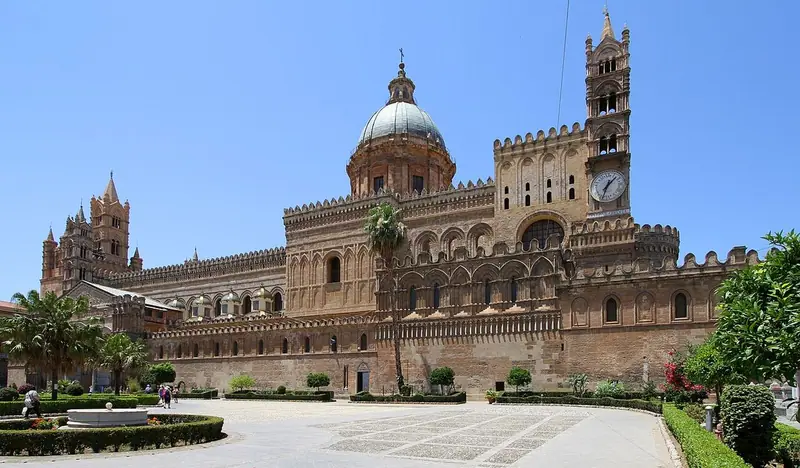 Arab-Norman11 stops · 1130 – 1194 (Norman kings of Sicily)
Arab-Norman Palermo, Monreale and Cefalù audio guide
Norman kings, Byzantine mosaicists and Arab craftsmen together: the Palatine Chapel, red-domed churches, the Zisa palace and the golden cathedrals of Monreale and Cefalù.
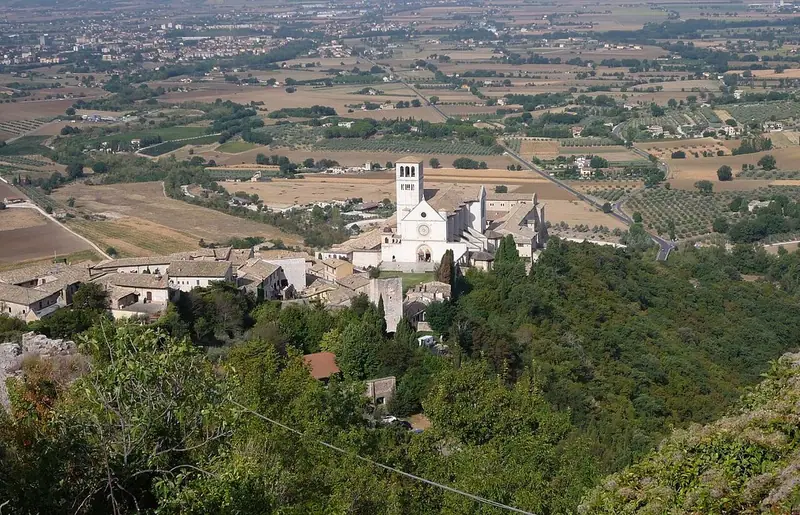 Franciscan10 stops · 1182 – 1253 (lives of Francis and Clare; basilica begun 1228)
Assisi audio guide
The hill town of Saint Francis: the double basilica with Giotto’s frescoes, his tomb, Santa Chiara, San Damiano and a Roman temple on the main square.
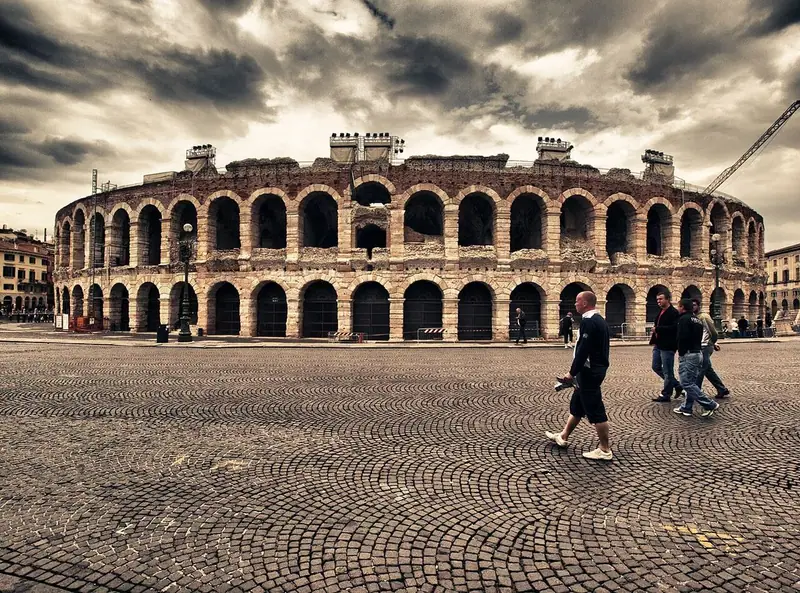 Roman11 stops · 1st c. BCE – 1797 (Roman colony to the end of Venetian rule)
City of Verona audio guide
A Roman arena still used for opera, the towers and tombs of the della Scala lords, and the Romanesque splendour of San Zeno, in a bend of the Adige.
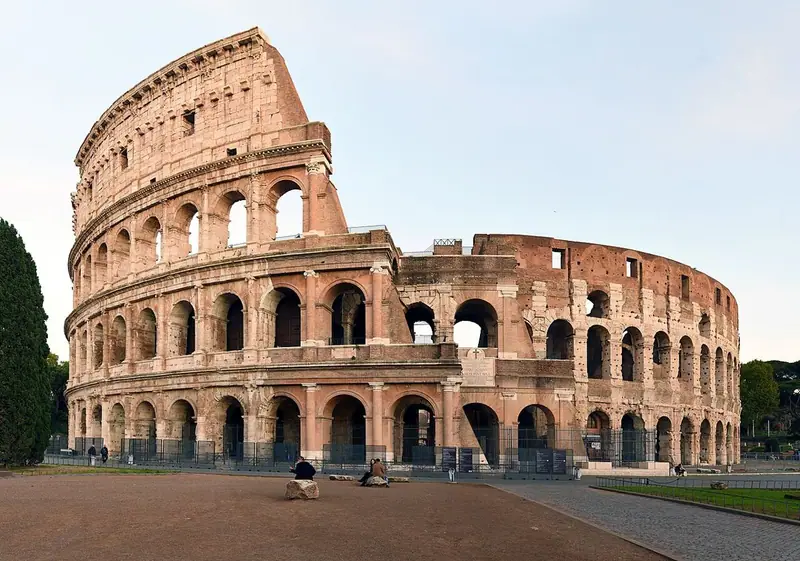 Roman7 stops · 70–80 CE
Colosseum audio guide
From the outer façade into the corridors and seating, then down to the arena floor and the hypogeum beneath it.
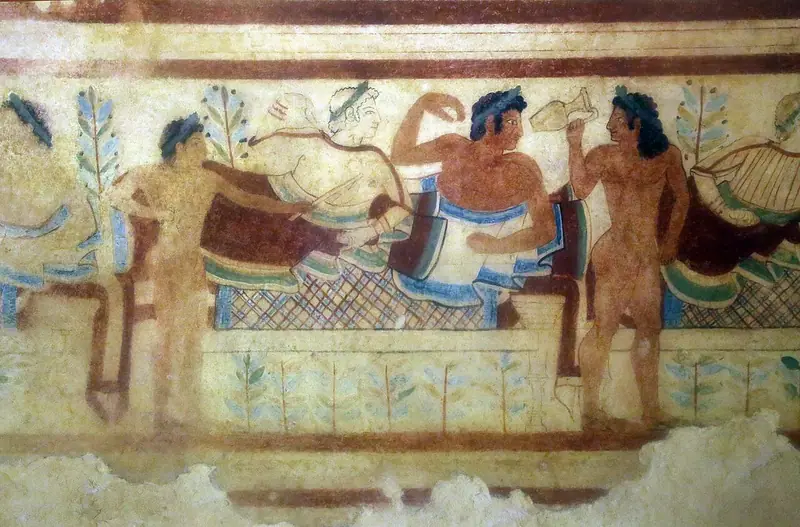 Etruscan9 stops · 9th – 3rd century BCE
Etruscan Necropolises of Cerveteri and Tarquinia audio guide
The Etruscan cities of the dead: the tumuli and tomb streets of the Banditaccia at Cerveteri, the Tomb of the Reliefs, and the painted tombs of Tarquinia’s Monterozzi necropolis.
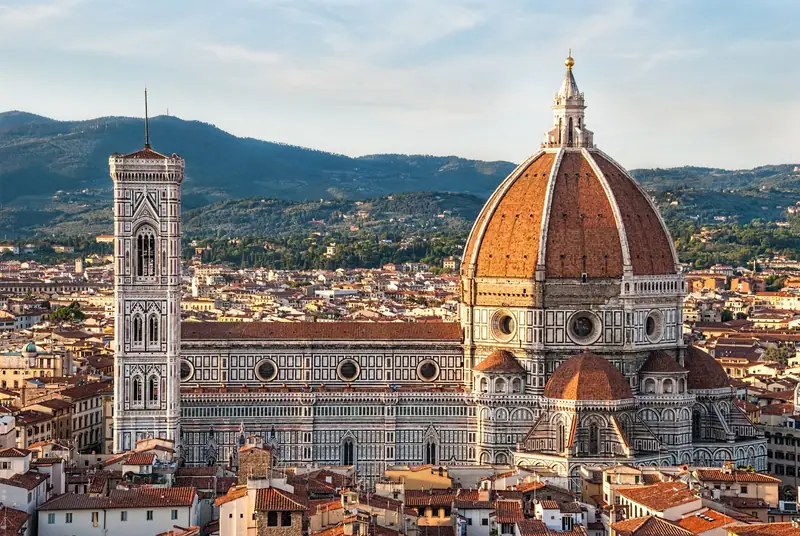 Renaissance7 stops · 1296–1436
Florence Duomo audio guide
The Gates of Paradise, Giotto’s Campanile and Brunelleschi’s dome, the great monument of Renaissance Florence.
Every guide, in every country
Historic Centre of Siena and every other guide we publish, including future ones. One payment, no subscription.