Before you start
Paestum lies on the coastal plain south of Salerno in Campania, southern Italy, about 40 kilometres south of Salerno and close to the sea. Since 1998 it has been part of a UNESCO World Heritage Site, the Cilento and Vallo di Diano National Park with the Archaeological Sites of Paestum and Velia and the Certosa di Padula, and it is managed by the Parco Archeologico di Paestum e Velia. This guide follows a simple route through the walled city: from the so-called Basilica to the Temple of Neptune, across the Roman Forum and past the Amphitheatre to the Temple of Athena, ending in the museum with the famous Tomb of the Diver.
Use it as a self-guided tour of Paestum: 6 stops in visit order, each played when you’re ready, at your own pace.
 Free preview · Stop 1
The ‘Basilica’
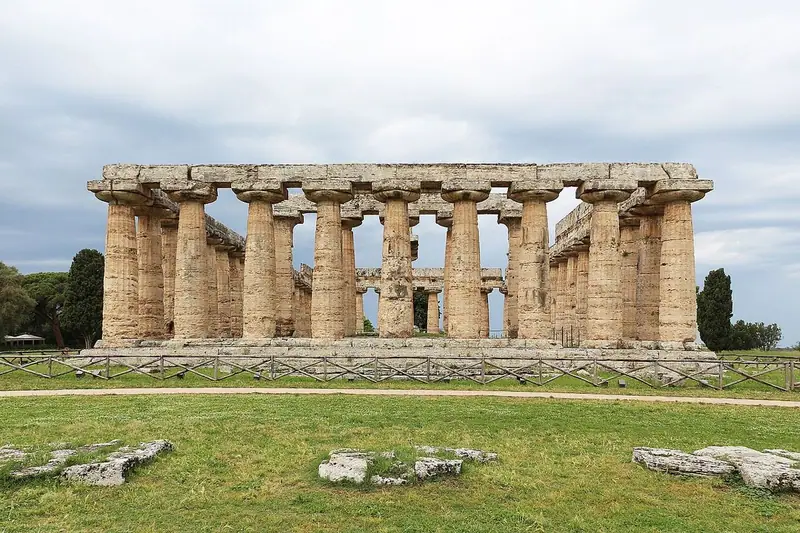
Begin with the oldest temple at Paestum, built around 550 BCE. Eighteenth-century scholars, seeing no pediment or gods, mistook it for a Roman civic building and called it the Basilica, a name that has stuck. In fact it was a temple, probably dedicated to Hera, wife of Zeus and the city’s principal goddess. Look at its unusual features. The front has nine columns, an odd number that left no central gap for an entrance, and the columns swell strongly in the middle, an effect called entasis, and taper towards the top, crowned with broad, cushion-like capitals. These are signs of an early, experimental Doric style. Inside, a row of columns ran down the middle, dividing the space in two. Walk all the way round: with its fifty columns standing, it is one of the most complete archaic Greek temples anywhere.
Photo: Bernard Gagnon · CC BY 4.0 · Wikimedia Commons
What to see at Paestum: 6 stops, in visit order
- 01
 The ‘Basilica’Tempio di HeraFree preview
- 02
 Temple of NeptuneTempio di NettunoIn the guide
- 03
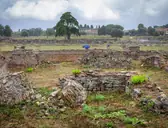 The ForumIl ForoIn the guide
- 04
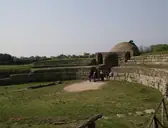 The AmphitheatreL’AnfiteatroIn the guide
- 05
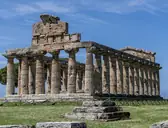 Temple of AthenaTempio di AtenaIn the guide
- 06
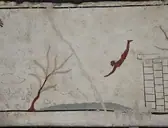 The Tomb of the DiverMuseo ArcheologicoIn the guide
Site map of Paestum
History of Paestum
Paestum was built by Greek colonists and later reshaped by Lucanians and Romans. Greek civilisation itself had deep roots. The Bronze Age palaces of Minoan Crete and Mycenaean Greece flourished from around 2000 to 1200 BCE; after a period of decline, the Greek world revived in the eighth century BCE, when the alphabet was adopted and Greek cities began founding colonies across the Mediterranean. Southern Italy and Sicily were settled so densely that the Romans later called them Magna Graecia, ‘Great Greece’. The Classical age followed in the fifth and fourth centuries BCE, then the Hellenistic world created by Alexander the Great, until Rome absorbed the Greek states in the second and first centuries BCE; Greek language and culture lived on in the Byzantine Empire until 1453.
The full history continues in the guide.
Paestum guide: questions
How many stops does the Paestum guide have?
6 stops, in visit order: 1. The ‘Basilica’; 2. Temple of Neptune; 3. The Forum; 4. The Amphitheatre; 5. Temple of Athena; 6. The Tomb of the Diver.
Can I do a self-guided tour of Paestum with this guide?
Yes. The guide is made for a self-guided tour: 6 stops in visit order, each with a photo, a story and a voice, so you can explore Paestum at your own pace, without joining a group. Download it before you go and it works offline.
How long is each guide?
The 6 stops add up to about 5 minutes of listening in total. You play each stop when you’re ready, so you can go at your own pace.
Does the guide work offline?
Yes, once it’s downloaded. The guide is a single self-contained web page (about 6.7 MB) with the photos, text and audio built in. Download it to your phone before you go (Wi-Fi is best); after that it opens in any modern browser on iPhone or Android, with no app, account or mobile signal needed.
Does it use GPS or need my location?
No. The guide doesn’t use GPS and doesn’t know where you are: you play each stop when you reach it. It works on iPhone and Android in any modern browser, and it’s in English.
What’s included?
One self-contained HTML guide: 6 stops in visit order, each with a photo, text and a voice, plus the story of who built the site.
Who built Paestum?
Paestum was built by Greek colonists and later reshaped by Lucanians and Romans. Greek civilisation itself had deep roots.
Where is Paestum?
Paestum lies on the coastal plain south of Salerno in Campania, southern Italy, about 40 kilometres south of Salerno and close to the sea.
Is there a free audio guide to Paestum?
The first stop, The ‘Basilica’, is free to read and hear on this page, so you can try the Paestum audio tour before you buy. The full guide, with all 6 stops, is a one-off purchase: download it once and it’s yours to keep, working offline.
Is the Paestum guide worth it?
If you’d like to know what you’re looking at, yes. For $10 you get 6 stops in visit order, each with a photo, a short history and a voice you play when you’re ready, plus a site map of the stops, and about 5 minutes of listening in all. It’s short on purpose, so you spend your time looking, not listening. It’s yours to keep, works offline and needs no app. The first stop is free on this page, so you can try it before you buy. If you’d like hours of detail, a guided tour will go deeper.
Audio guide or guided tour?
It depends how you like to visit. This guide lets you explore Paestum at your own pace, at any time, for a one-off price. A guided tour gives you a live expert you can ask questions, but at fixed times and usually for a higher price. Many people use both: a tour for the big picture, and the guide to read beforehand or to revisit the stops in their own time.
Is this the official Paestum guide?
No. It’s an independent guide by The Historian Guide, not affiliated with or endorsed by the operator of Paestum. For tickets and opening hours, check the official site operator before you go.
Does the guide include entry tickets or opening hours?
No. The guide is a digital companion only. Admission to Paestum is separate, so check the official site operator for current tickets and opening hours before you go.
- Stop 1 · The ‘Basilica’: Bernard Gagnon · CC BY 4.0 · Wikimedia Commons · resized
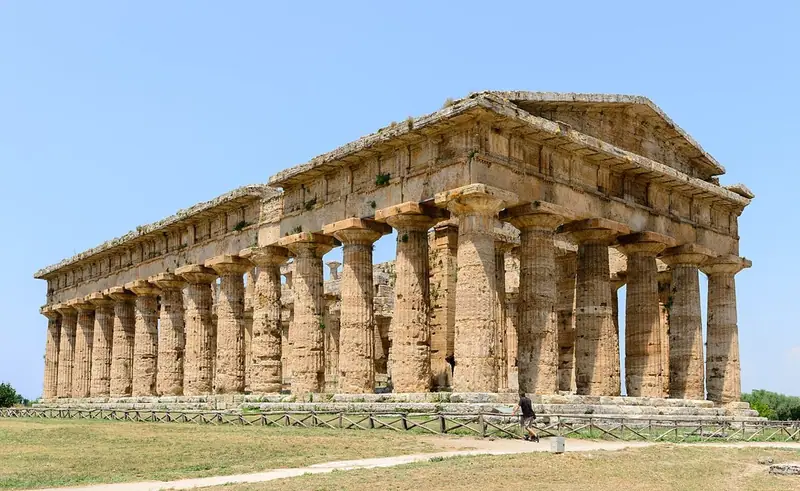
- Stop 2 · Temple of Neptune (also the cover): Norbert Nagel · CC BY-SA 3.0 · Wikimedia Commons · resized
- Stop 3 · The Forum: Ugeorge · CC BY-SA 4.0 · Wikimedia Commons · resized
- Stop 4 · The Amphitheatre: Domenicomarconi · CC BY-SA 4.0 · Wikimedia Commons · resized
- Stop 5 · Temple of Athena: PaestumPaestum · CC BY-SA 4.0 · Wikimedia Commons · resized
- Stop 6 · The Tomb of the Diver: Carole Raddato · CC BY-SA 2.0 · Wikimedia Commons · resized


All photographs from Wikimedia Commons under the licences shown.
More guides in Italy
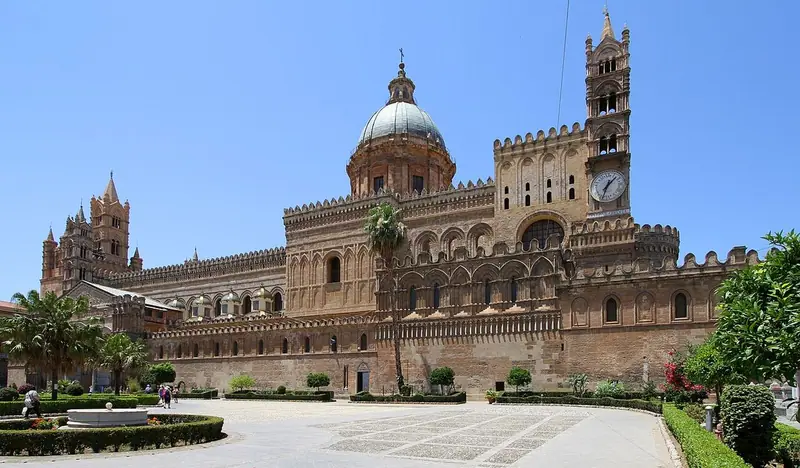 Arab-Norman11 stops · 1130 – 1194 (Norman kings of Sicily)
Arab-Norman Palermo, Monreale and Cefalù audio guide
Norman kings, Byzantine mosaicists and Arab craftsmen together: the Palatine Chapel, red-domed churches, the Zisa palace and the golden cathedrals of Monreale and Cefalù.
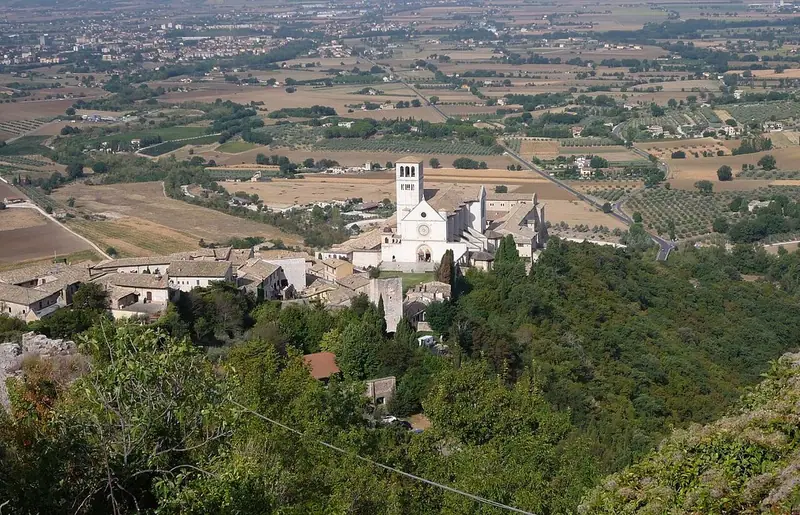 Franciscan10 stops · 1182 – 1253 (lives of Francis and Clare; basilica begun 1228)
Assisi audio guide
The hill town of Saint Francis: the double basilica with Giotto’s frescoes, his tomb, Santa Chiara, San Damiano and a Roman temple on the main square.
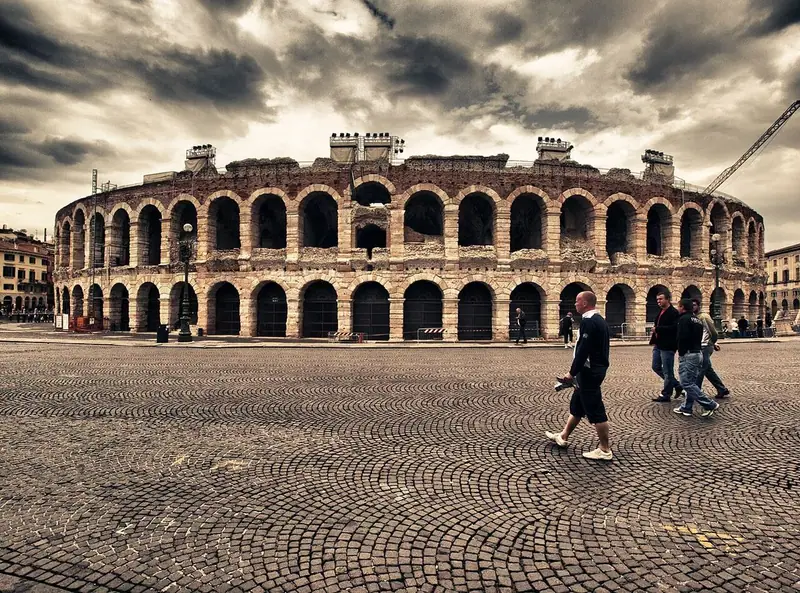 Roman11 stops · 1st c. BCE – 1797 (Roman colony to the end of Venetian rule)
City of Verona audio guide
A Roman arena still used for opera, the towers and tombs of the della Scala lords, and the Romanesque splendour of San Zeno, in a bend of the Adige.
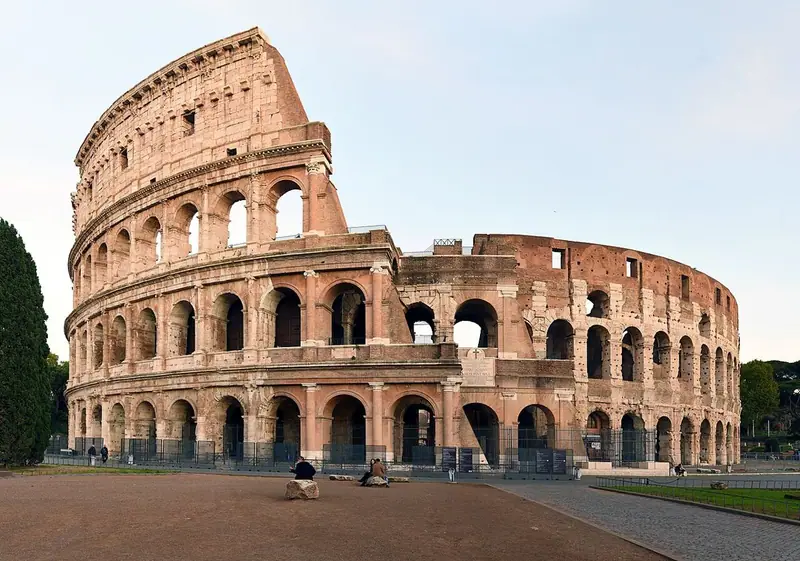 Roman7 stops · 70–80 CE
Colosseum audio guide
From the outer façade into the corridors and seating, then down to the arena floor and the hypogeum beneath it.
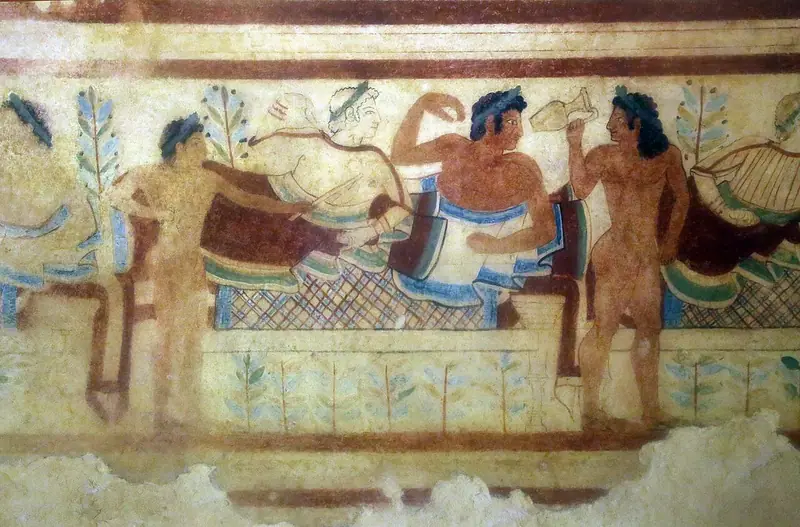 Etruscan9 stops · 9th – 3rd century BCE
Etruscan Necropolises of Cerveteri and Tarquinia audio guide
The Etruscan cities of the dead: the tumuli and tomb streets of the Banditaccia at Cerveteri, the Tomb of the Reliefs, and the painted tombs of Tarquinia’s Monterozzi necropolis.
 Renaissance7 stops · 1296–1436
Florence Duomo audio guide
The Gates of Paradise, Giotto’s Campanile and Brunelleschi’s dome, the great monument of Renaissance Florence.
Every guide, in every country
Paestum and every other guide we publish, including future ones. One payment, no subscription.