Before you start
Ravenna is a compact, mostly flat city in Emilia-Romagna, about ten kilometres inland from the Adriatic coast, and most of its great monuments lie within a 20-minute walk of the railway station. Eight of them make up the UNESCO World Heritage Site of the Early Christian Monuments of Ravenna, inscribed in 1996. Several are run by the Opera di Religione della Diocesi di Ravenna, and others by the Italian state. This guide is a city route rather than a single site: from the basilica of San Vitale and the little Mausoleum of Galla Placidia in the same grounds, across the centre to the Neonian Baptistery and the Archiepiscopal Chapel, east to the Arian Baptistery and Sant’Apollinare Nuovo, out to the Mausoleum of Theodoric, and finally a short bus or train ride south to Sant’Apollinare in Classe.
Use it as a self-guided tour of the Ravenna Mosaics: 8 stops in visit order, each played when you’re ready, at your own pace.
 Free preview · Stop 1
San Vitale
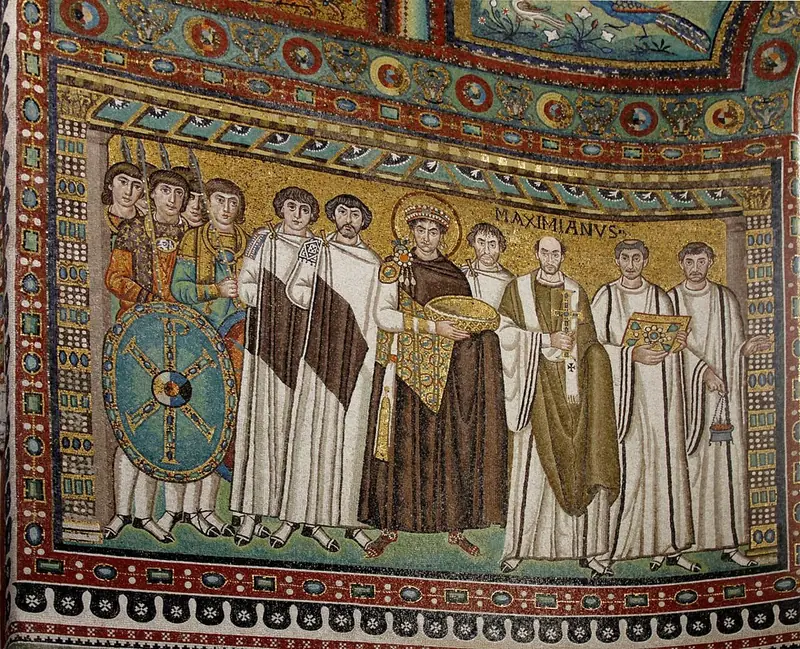
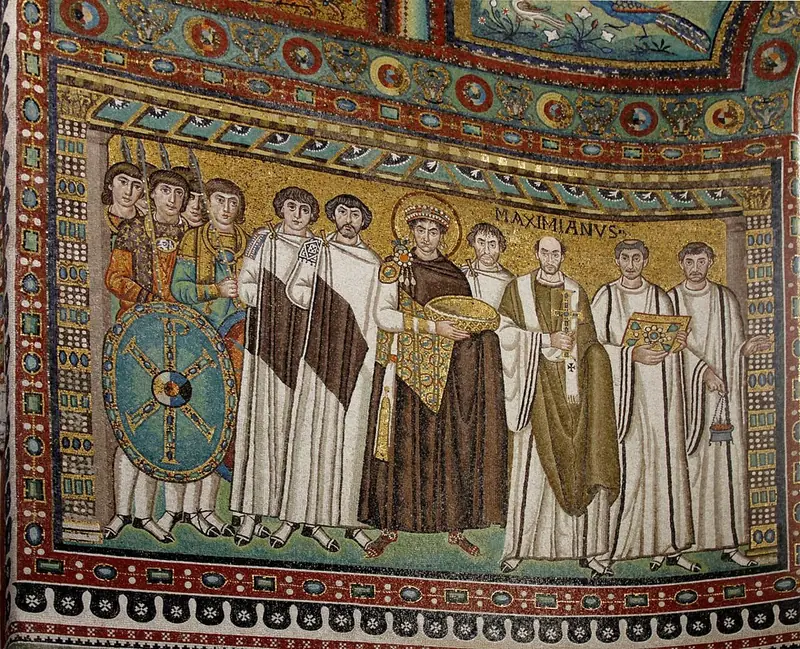
Start at the basilica of San Vitale, the most famous church in Ravenna. It was begun around 526 under Bishop Ecclesius, paid for by a wealthy banker, Julius Argentarius, and consecrated in 547 or 548, after the Byzantine conquest. Its octagonal plan, with a central dome and a two-storey ambulatory, is quite unlike a Roman basilica, and owes much to Constantinople. Walk to the apse. On either side are the two most celebrated mosaics of the age: on the left, the emperor Justinian, in purple and gold, with Bishop Maximian, soldiers and clergy; on the right, the empress Theodora with her ladies, carrying a golden chalice. Neither of them ever visited Ravenna; the mosaics declared their presence and authority. Look up too, at the vault, where four angels support the Lamb of God, set within a thick garland of leaves, birds and flowers.
Photo: José Luiz · CC BY-SA 4.0 · Wikimedia Commons
What to see at the Ravenna Mosaics: 8 stops, in visit order
- 01
 San VitaleGiustiniano e TeodoraFree preview
- 02
 Mausoleum of Galla PlacidiaMausoleo di Galla PlacidiaIn the guide
- 03
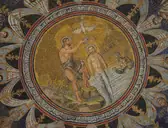 Neonian BaptisteryBattistero NeonianoIn the guide
- 04
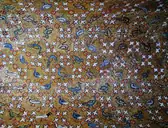 Archiepiscopal ChapelCappella ArcivescovileIn the guide
- 05
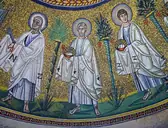 Arian BaptisteryBattistero degli ArianiIn the guide
- 06
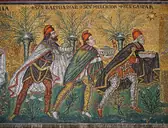 Sant’Apollinare NuovoLa chiesa palatina di TeodoricoIn the guide
- 07
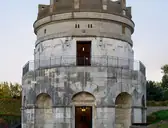 Mausoleum of TheodoricMausoleo di TeodoricoIn the guide
- 08
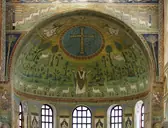 Sant’Apollinare in ClasseIl prato verde dell’absideIn the guide
Site map of the Ravenna Mosaics
History of the Ravenna Mosaics
Ravenna’s monuments were built by three successive powers: the last emperors of the Western Roman Empire, the Ostrogothic kings of Italy, and the Byzantine emperors. Rome’s civilisation, founded by tradition in 753 BCE, grew from kingdom and Republic into an empire that, by the fourth century CE, had become Christian. In 402 the emperor Honorius moved his court from Milan to Ravenna, protected by marshes and close to the fleet, and it remained the capital of the West until the last emperor was deposed in 476. In 493 the Ostrogoth Theodoric took the city and ruled Italy from here until 526, as an Arian Christian king of Romans and Goths alike. In 540 the armies of Justinian, emperor of the Eastern Roman, or Byzantine, Empire, captured Ravenna, which became the seat of the Byzantine governor of Italy, the exarch, until the Lombards took it in 751.
The full history continues in the guide.
Ravenna Mosaics guide: questions
How many stops does the Ravenna Mosaics guide have?
8 stops, in visit order: 1. San Vitale; 2. Mausoleum of Galla Placidia; 3. Neonian Baptistery; 4. Archiepiscopal Chapel; 5. Arian Baptistery; 6. Sant’Apollinare Nuovo; 7. Mausoleum of Theodoric; 8. Sant’Apollinare in Classe.
Can I do a self-guided tour of the Ravenna Mosaics with this guide?
Yes. The guide is made for a self-guided tour: 8 stops in visit order, each with a photo, a story and a voice, so you can explore the Ravenna Mosaics at your own pace, without joining a group. Download it before you go and it works offline.
How long is each guide?
The 8 stops add up to about 8 minutes of listening in total. You play each stop when you’re ready, so you can go at your own pace.
Does the guide work offline?
Yes, once it’s downloaded. The guide is a single self-contained web page (about 11.0 MB) with the photos, text and audio built in. Download it to your phone before you go (Wi-Fi is best); after that it opens in any modern browser on iPhone or Android, with no app, account or mobile signal needed.
Does it use GPS or need my location?
No. The guide doesn’t use GPS and doesn’t know where you are: you play each stop when you reach it. It works on iPhone and Android in any modern browser, and it’s in English.
What’s included?
One self-contained HTML guide: 8 stops in visit order, each with a photo, text and a voice, plus the story of who built the site.
Who built the Ravenna Mosaics?
Ravenna’s monuments were built by three successive powers: the last emperors of the Western Roman Empire, the Ostrogothic kings of Italy, and the Byzantine emperors. Rome’s civilisation, founded by tradition in 753 BCE, grew from kingdom and Republic into an empire that, by the fourth century CE, had become Christian.
Where is the Ravenna Mosaics?
Ravenna is a compact, mostly flat city in Emilia-Romagna, about ten kilometres inland from the Adriatic coast, and most of its great monuments lie within a 20-minute walk of the railway station.
Is there a free audio guide to the Ravenna Mosaics?
The first stop, San Vitale, is free to read and hear on this page, so you can try the Ravenna Mosaics audio tour before you buy. The full guide, with all 8 stops, is a one-off purchase: download it once and it’s yours to keep, working offline.
Is the Ravenna Mosaics guide worth it?
If you’d like to know what you’re looking at, yes. For $10 you get 8 stops in visit order, each with a photo, a short history and a voice you play when you’re ready, plus a site map of the stops, and about 8 minutes of listening in all. It’s short on purpose, so you spend your time looking, not listening. It’s yours to keep, works offline and needs no app. The first stop is free on this page, so you can try it before you buy. If you’d like hours of detail, a guided tour will go deeper.
Audio guide or guided tour?
It depends how you like to visit. This guide lets you explore the Ravenna Mosaics at your own pace, at any time, for a one-off price. A guided tour gives you a live expert you can ask questions, but at fixed times and usually for a higher price. Many people use both: a tour for the big picture, and the guide to read beforehand or to revisit the stops in their own time.
Is this the official Ravenna Mosaics guide?
No. It’s an independent guide by The Historian Guide, not affiliated with or endorsed by the operator of the Ravenna Mosaics. For tickets and opening hours, check the official site operator before you go.
Does the guide include entry tickets or opening hours?
No. The guide is a digital companion only. Admission to the Ravenna Mosaics is separate, so check the official site operator for current tickets and opening hours before you go.
- Stop 1 · San Vitale (also the cover): © José Luiz Bernardes Ribeiro · CC BY-SA 4.0 · Wikimedia Commons · resized
- Stop 2 · Mausoleum of Galla Placidia: Petar Milošević · CC BY-SA 4.0 · Wikimedia Commons · resized
- Stop 3 · Neonian Baptistery: Following Hadrian · CC BY-SA 2.0 · Wikimedia Commons · resized
- Stop 4 · Archiepiscopal Chapel: Zairon · CC BY-SA 4.0 · Wikimedia Commons · resized
- Stop 5 · Arian Baptistery: Ввласенко · CC BY-SA 3.0 · Wikimedia Commons · resized
- Stop 6 · Sant’Apollinare Nuovo: Ввласенко · CC BY-SA 3.0 · Wikimedia Commons · resized
- Stop 7 · Mausoleum of Theodoric: ThePhotografer · CC BY-SA 4.0 · Wikimedia Commons · resized
- Stop 8 · Sant’Apollinare in Classe: © José Luiz Bernardes Ribeiro · CC BY-SA 4.0 · Wikimedia Commons · resized


All photographs from Wikimedia Commons under the licences shown.
More guides in Italy
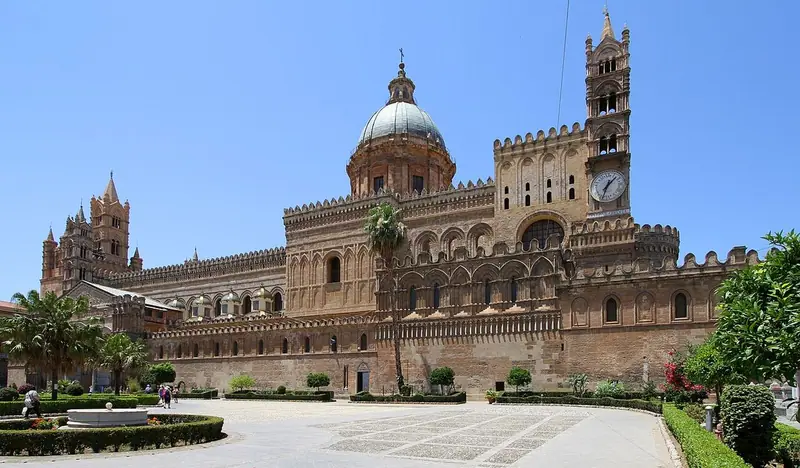 Arab-Norman11 stops · 1130 – 1194 (Norman kings of Sicily)
Arab-Norman Palermo, Monreale and Cefalù audio guide
Norman kings, Byzantine mosaicists and Arab craftsmen together: the Palatine Chapel, red-domed churches, the Zisa palace and the golden cathedrals of Monreale and Cefalù.
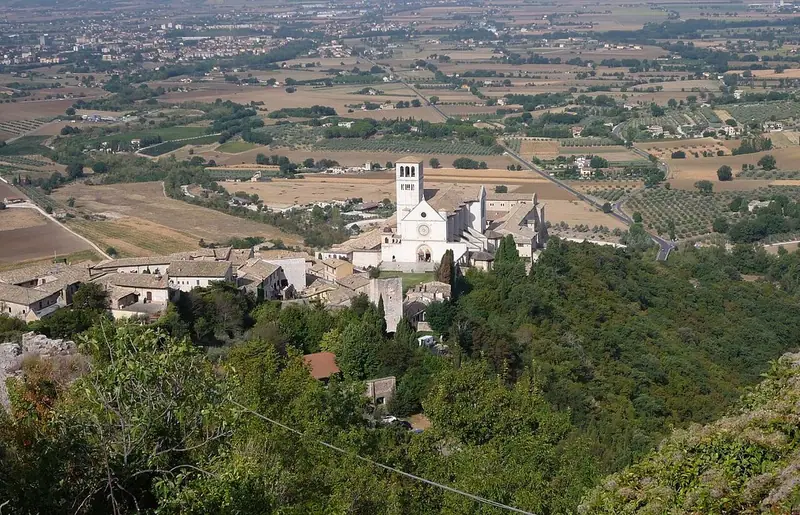 Franciscan10 stops · 1182 – 1253 (lives of Francis and Clare; basilica begun 1228)
Assisi audio guide
The hill town of Saint Francis: the double basilica with Giotto’s frescoes, his tomb, Santa Chiara, San Damiano and a Roman temple on the main square.
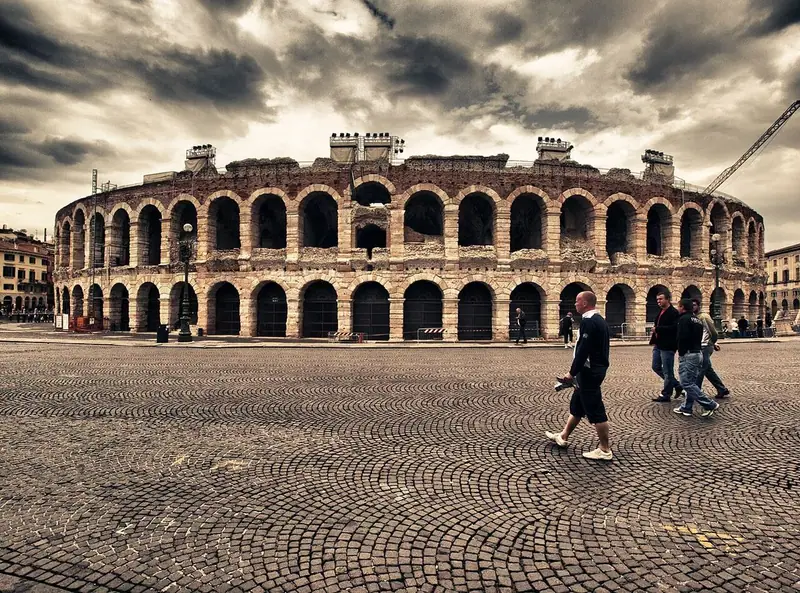 Roman11 stops · 1st c. BCE – 1797 (Roman colony to the end of Venetian rule)
City of Verona audio guide
A Roman arena still used for opera, the towers and tombs of the della Scala lords, and the Romanesque splendour of San Zeno, in a bend of the Adige.
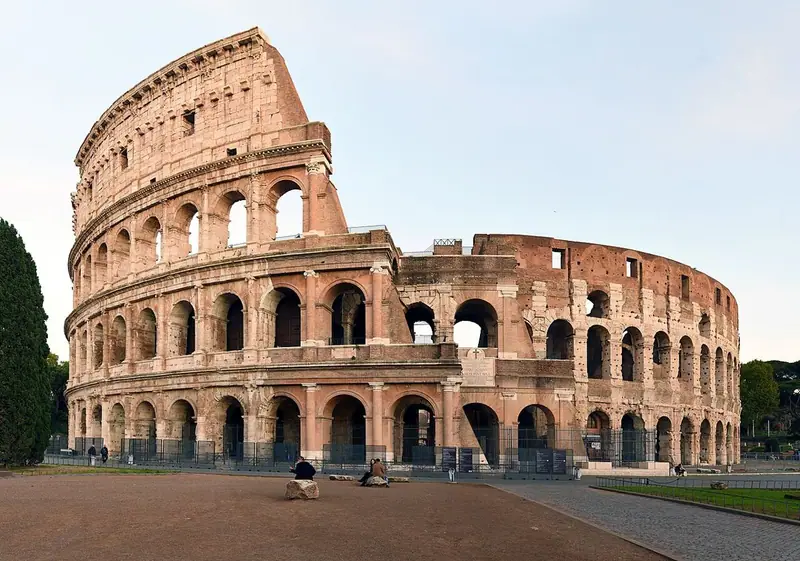 Roman7 stops · 70–80 CE
Colosseum audio guide
From the outer façade into the corridors and seating, then down to the arena floor and the hypogeum beneath it.
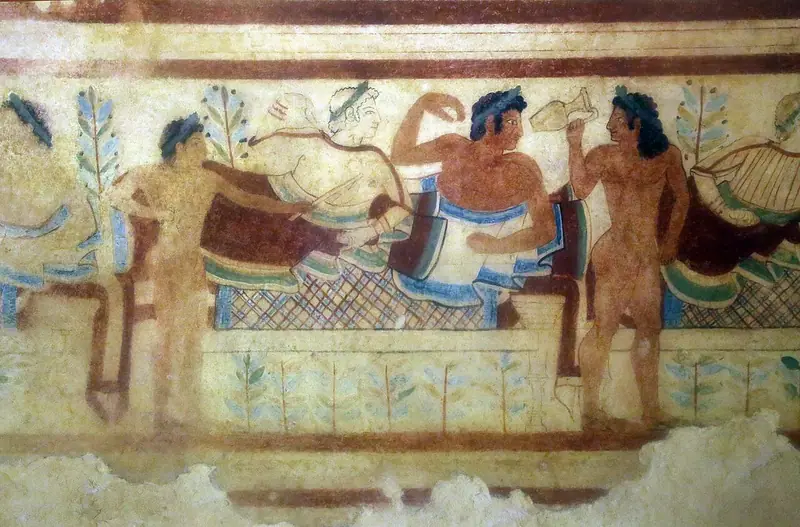 Etruscan9 stops · 9th – 3rd century BCE
Etruscan Necropolises of Cerveteri and Tarquinia audio guide
The Etruscan cities of the dead: the tumuli and tomb streets of the Banditaccia at Cerveteri, the Tomb of the Reliefs, and the painted tombs of Tarquinia’s Monterozzi necropolis.
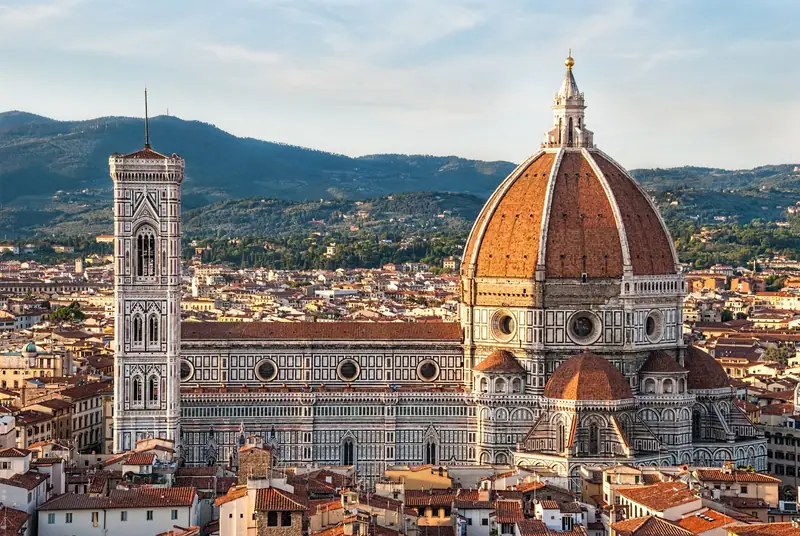 Renaissance7 stops · 1296–1436
Florence Duomo audio guide
The Gates of Paradise, Giotto’s Campanile and Brunelleschi’s dome, the great monument of Renaissance Florence.
Every guide, in every country
Ravenna Mosaics and every other guide we publish, including future ones. One payment, no subscription.