Before you start
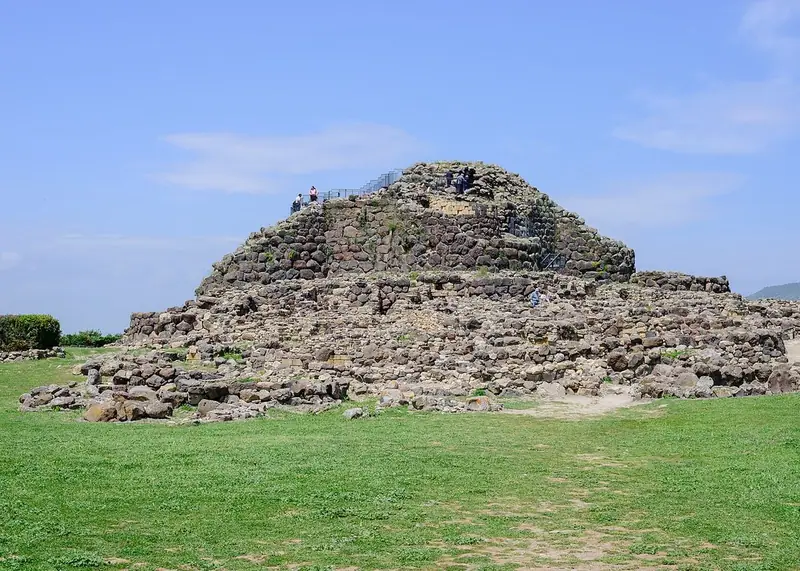
Su Nuraxi stands on a low rise about a kilometre west of the village of Barumini, in the Marmilla, the gentle hill country of south-central Sardinia. Its name simply means the nuraghe in Campidanese, the southern form of the Sardinian language. It is a fortress of five towers, the core of which was raised in the Bronze Age, ringed by an outer wall and by the remains of a large village of round stone huts. It is regarded as the finest surviving expression of the Nuragic civilisation, and UNESCO inscribed it as a World Heritage Site in 1997. Visits to the fortress are made in guided groups, and inside the towers the passages are narrow, low and dark, with steep stone steps. The route circles the village, enters the bastion and climbs into the central tower, then ends in Barumini at Casa Zapata.
Use it as a self-guided tour of Su Nuraxi di Barumini: 8 stops in visit order, each played when you’re ready, at your own pace.
 Free preview · Stop 1
The Approach
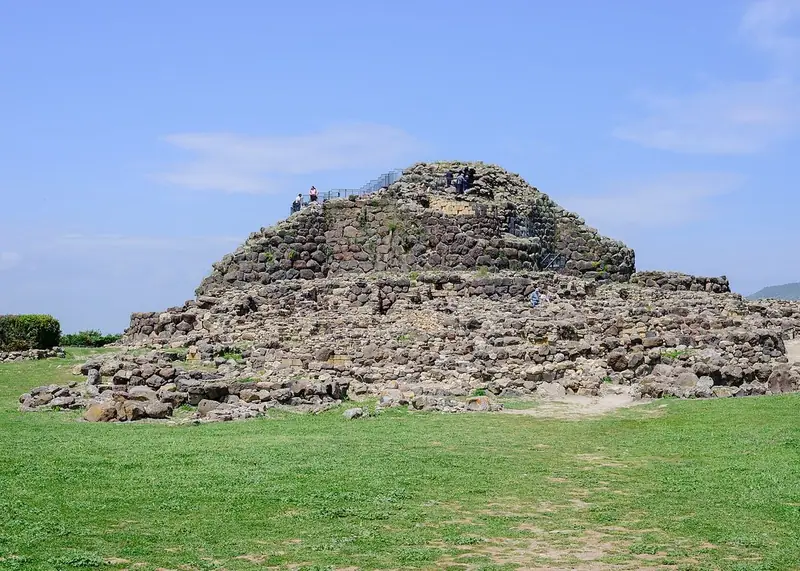
Begin on the approach, where the fortress rises ahead as a great dome of dark stone. Until the middle of the twentieth century there was little to see here but a grassy mound, for the whole complex lay buried under earth and rubble. Look around at the landscape of the Marmilla, a name said to mean breast, after the rounded hills that shape it. North of Barumini rises the Giara di Gesturi, a basalt plateau. The fortress stood on the boundary between the Marmilla and the Sarcidano, and it is thought to have watched over a route from the Campidano plain, the lowland that runs south to Cagliari, into the interior of the island. Scholars have seen it as the centre of a small territory ruled from here, one of many such strongholds that once dotted Sardinia.
Photo: Norbert Nagel · CC BY-SA 3.0 · Wikimedia Commons
What to see at Su Nuraxi di Barumini: 8 stops, in visit order
- 01
 The ApproachA fortress in the MarmillaFree preview
- 02
 Lilliu’s DiscoveryThe excavation of the 1950sIn the guide
- 03
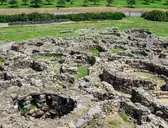 The VillageHuts of stone and timberIn the guide
- 04
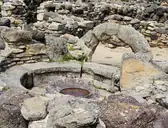 The Later HousesCourtyards, lanes and drainsIn the guide
- 05
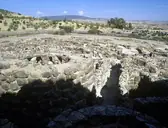 The Outer WallTowers of the forward defencesIn the guide
- 06
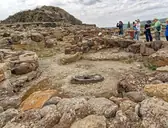 The CourtyardThe well at the heart of the bastionIn the guide
- 07
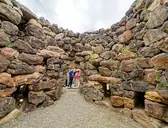 Inside the BastionPassages and corbelled roomsIn the guide
- 08
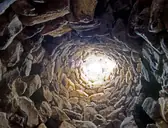 The Central TowerThe keep and its stone domeIn the guide
Site map of Su Nuraxi di Barumini
History of Su Nuraxi di Barumini
The nuraghi are the stone towers of the Nuragic civilisation, which flourished on Sardinia in the Bronze Age and the Iron Age, in the second and first millennia BCE. More than seven thousand of them still stand across the island, built of great blocks laid without mortar. The people who built them left no writing, so their own name for themselves is unknown, and the purpose of the towers is still debated; many were fortresses, but some scholars see religious or civic roles as well. At Su Nuraxi a central tower stands within a bastion of four corner towers, enclosed in turn by an outer wall with towers of its own, while a village grew up around it. In the sixth century BCE the settlement was destroyed, and it was later reused in the Carthaginian and Roman periods before it was finally abandoned.
Su Nuraxi di Barumini guide: questions
How many stops does the Su Nuraxi di Barumini guide have?
8 stops, in visit order: 1. The Approach; 2. Lilliu’s Discovery; 3. The Village; 4. The Later Houses; 5. The Outer Wall; 6. The Courtyard; 7. Inside the Bastion; 8. The Central Tower.
Can I do a self-guided tour of Su Nuraxi di Barumini with this guide?
Yes. The guide is made for a self-guided tour: 8 stops in visit order, each with a photo, a story and a voice, so you can explore Su Nuraxi di Barumini at your own pace, without joining a group. Download it before you go and it works offline.
How long do you need at Su Nuraxi di Barumini?
We suggest allowing about 2 hours. The 8 stops add up to about 5 minutes of listening, and you play each one when you’re ready, so you can linger wherever you like.
How long is each guide?
The 8 stops add up to about 5 minutes of listening in total. You play each stop when you’re ready, so you can go at your own pace.
Does the guide work offline?
Yes, once it’s downloaded. The guide is a single self-contained web page (about 8.0 MB) with the photos, text and audio built in. Download it to your phone before you go (Wi-Fi is best); after that it opens in any modern browser on iPhone or Android, with no app, account or mobile signal needed.
Does it use GPS or need my location?
No. The guide doesn’t use GPS and doesn’t know where you are: you play each stop when you reach it. It works on iPhone and Android in any modern browser, and it’s in English.
What’s included?
One self-contained HTML guide: 8 stops in visit order, each with a photo, text and a voice, plus the story of who built the site.
Who built Su Nuraxi di Barumini?
The nuraghi are the stone towers of the Nuragic civilisation, which flourished on Sardinia in the Bronze Age and the Iron Age, in the second and first millennia BCE. More than seven thousand of them still stand across the island, built of great blocks laid without mortar.
Where is Su Nuraxi di Barumini?
Su Nuraxi stands on a low rise about a kilometre west of the village of Barumini, in the Marmilla, the gentle hill country of south-central Sardinia.
Is there a free audio guide to Su Nuraxi di Barumini?
The first stop, The Approach, is free to read and hear on this page, so you can try the Su Nuraxi di Barumini audio tour before you buy. The full guide, with all 8 stops, is a one-off purchase: download it once and it’s yours to keep, working offline.
Is the Su Nuraxi di Barumini guide worth it?
If you’d like to know what you’re looking at, yes. For $10 you get 8 stops in visit order, each with a photo, a short history and a voice you play when you’re ready, plus a site map of the stops, and about 5 minutes of listening in all. It’s short on purpose, so you spend your time looking, not listening. It’s yours to keep, works offline and needs no app. The first stop is free on this page, so you can try it before you buy. If you’d like hours of detail, a guided tour will go deeper.
Audio guide or guided tour?
It depends how you like to visit. This guide lets you explore Su Nuraxi di Barumini at your own pace, at any time, for a one-off price. A guided tour gives you a live expert you can ask questions, but at fixed times and usually for a higher price. Many people use both: a tour for the big picture, and the guide to read beforehand or to revisit the stops in their own time.
Is this the official Su Nuraxi di Barumini guide?
No. It’s an independent guide by The Historian Guide, not affiliated with or endorsed by the operator of Su Nuraxi di Barumini. For tickets and opening hours, check the official site operator before you go.
Does the guide include entry tickets or opening hours?
No. The guide is a digital companion only. Admission to Su Nuraxi di Barumini is separate, so check the official site operator for current tickets and opening hours before you go.
- Stop 1 · The Approach (also the cover): Norbert Nagel · CC BY-SA 3.0 · Wikimedia Commons · resized
- Stop 2 · Lilliu’s Discovery: Holger Uwe Schmitt · CC BY-SA 4.0 · Wikimedia Commons · resized
- Stop 3 · The Village: Norbert Nagel · CC BY-SA 3.0 · Wikimedia Commons · resized
- Stop 4 · The Later Houses: Norbert Nagel · CC BY-SA 3.0 · Wikimedia Commons · resized
- Stop 5 · The Outer Wall: Falk2 · CC BY-SA 4.0 · Wikimedia Commons · resized
- Stop 6 · The Courtyard: Holger Uwe Schmitt · CC BY-SA 4.0 · Wikimedia Commons · resized
- Stop 7 · Inside the Bastion: Holger Uwe Schmitt · CC BY-SA 4.0 · Wikimedia Commons · resized
- Stop 8 · The Central Tower: Falk2 · CC BY-SA 4.0 · Wikimedia Commons · resized


All photographs from Wikimedia Commons under the licences shown.
More guides in Italy
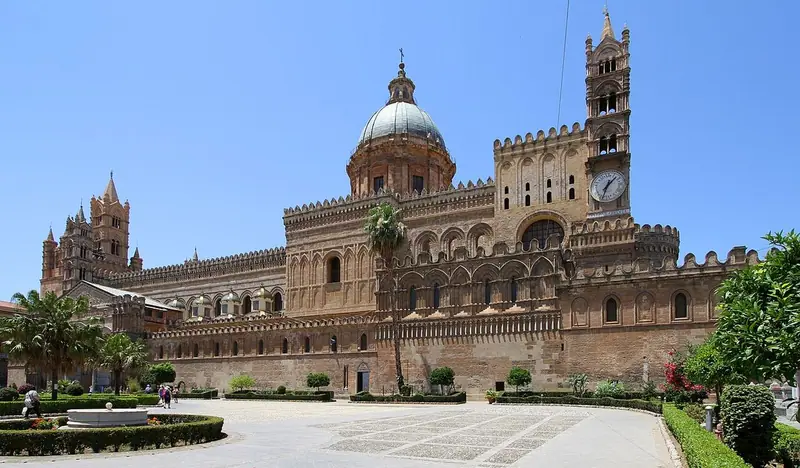 Arab-Norman11 stops · 1130 – 1194 (Norman kings of Sicily)
Arab-Norman Palermo, Monreale and Cefalù audio guide
Norman kings, Byzantine mosaicists and Arab craftsmen together: the Palatine Chapel, red-domed churches, the Zisa palace and the golden cathedrals of Monreale and Cefalù.
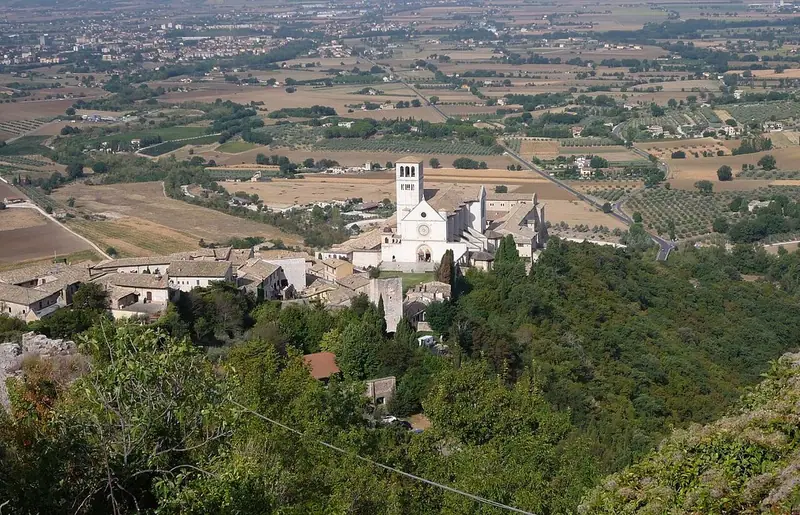 Franciscan10 stops · 1182 – 1253 (lives of Francis and Clare; basilica begun 1228)
Assisi audio guide
The hill town of Saint Francis: the double basilica with Giotto’s frescoes, his tomb, Santa Chiara, San Damiano and a Roman temple on the main square.
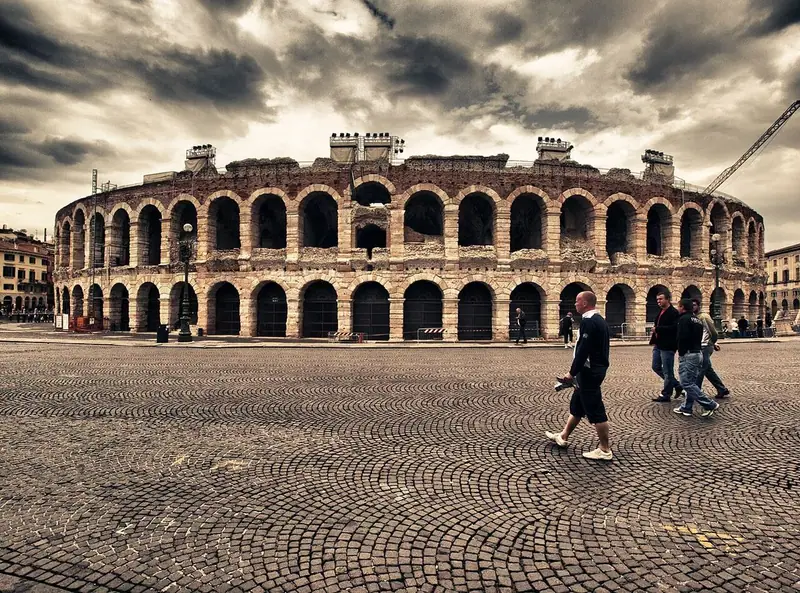 Roman11 stops · 1st c. BCE – 1797 (Roman colony to the end of Venetian rule)
City of Verona audio guide
A Roman arena still used for opera, the towers and tombs of the della Scala lords, and the Romanesque splendour of San Zeno, in a bend of the Adige.
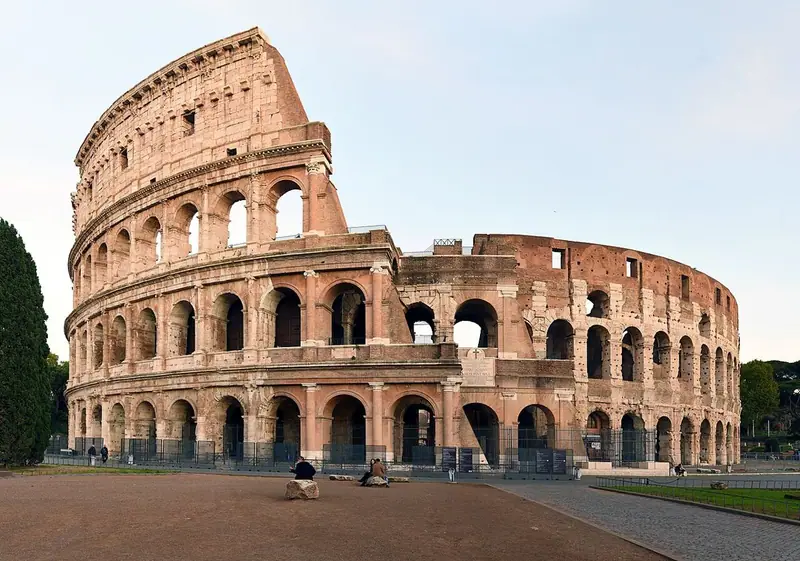 Roman7 stops · 70–80 CE
Colosseum audio guide
From the outer façade into the corridors and seating, then down to the arena floor and the hypogeum beneath it.
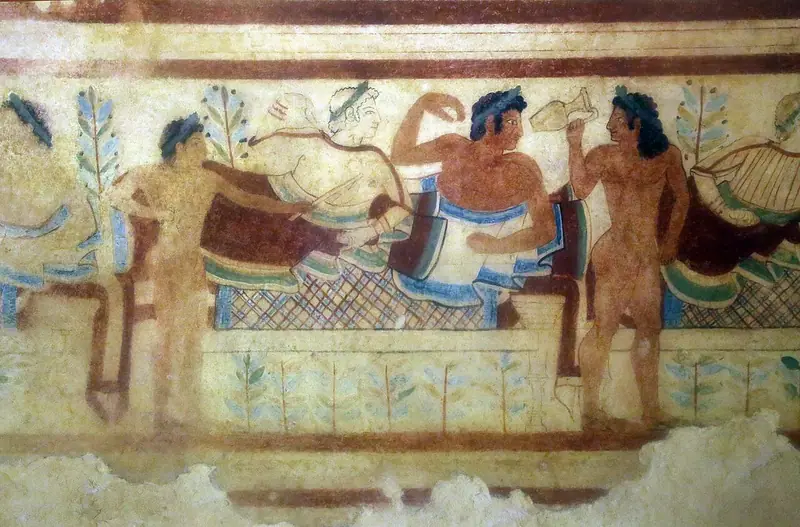 Etruscan9 stops · 9th – 3rd century BCE
Etruscan Necropolises of Cerveteri and Tarquinia audio guide
The Etruscan cities of the dead: the tumuli and tomb streets of the Banditaccia at Cerveteri, the Tomb of the Reliefs, and the painted tombs of Tarquinia’s Monterozzi necropolis.
 Renaissance7 stops · 1296–1436
Florence Duomo audio guide
The Gates of Paradise, Giotto’s Campanile and Brunelleschi’s dome, the great monument of Renaissance Florence.
Every guide, in every country
Su Nuraxi di Barumini and every other guide we publish, including future ones. One payment, no subscription.